Two aircraft. Two manufacturers. One market. The Boeing 787-9 and Airbus A350-900 have been fighting for airline orders since 2014. Both use composite construction. Both promise fuel savings. But they win on different things. This guide breaks down exactly where each aircraft pulls ahead – and where it falls short.
Airlines choosing between these jets face a decision that affects fleet economics for decades. The A350-900 brings greater range and capacity. The 787-9 offers lower operating costs per flight and fits more route profiles.
This comparison breaks down specifications, real-world performance, operating economics, and passenger experience to show where each aircraft holds an advantage.
Contents
Specifications at a Glance
Numbers don’t lie. Before getting into what they mean in practice, here’s the side-by-side breakdown straight from manufacturer data.
| Specification | Boeing 787-9 | Airbus A350-900 |
|---|---|---|
| Length | 62.8 m (206 ft) | 66.8 m (219 ft) LONGER |
| Wingspan | 60.1 m (197 ft) | 64.8 m (212 ft) |
| Cabin Width | 5.74 m (18.8 ft) | 5.96 m (19.5 ft) WIDER |
| Typical Capacity (3-class) | 290 passengers | 325 passengers MORE SEATS |
| Max Capacity | 420 passengers | 440 passengers |
| Range | 7,635 nm (14,140 km) | 8,100 nm (15,000 km) LONGER |
| MTOW | 254,000 kg | 280,000 kg |
| Fuel Capacity | 126,372 L (33,383 gal) | 141,000 L (37,248 gal) |
| Engines | GE GEnx / RR Trent 1000 | Rolls-Royce Trent XWB |
| Cruise Speed | Mach 0.85 | Mach 0.85 |
| Composite Material | 50% by weight | 53% by weight |
| First Flight | September 2013 | June 2013 |
| Service Entry | 2014 (All Nippon Airways) | 2015 (Qatar Airways) |
Range: Where the A350-900 Pulls Ahead
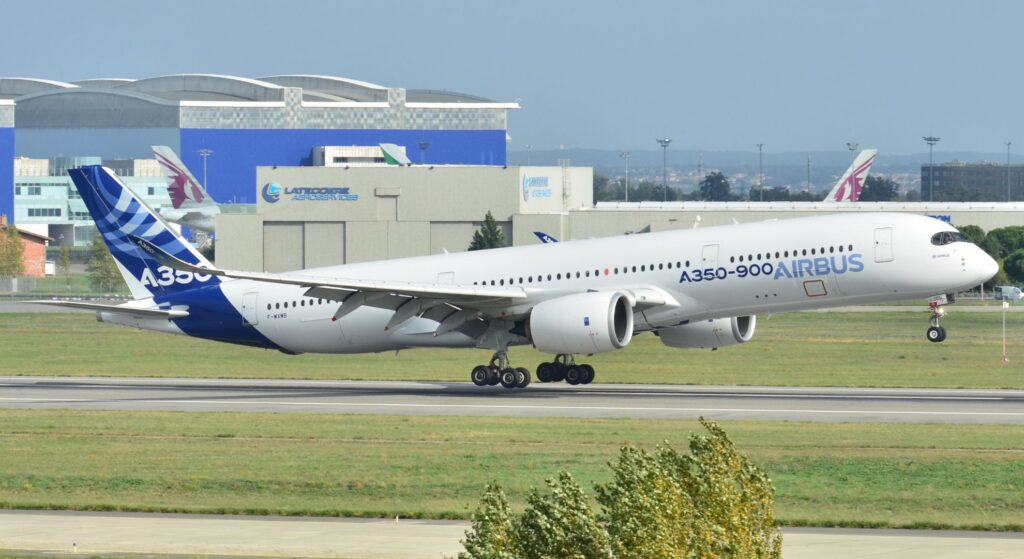
The A350-900 flies 465 nautical miles farther than the 787-9 on a full load. That gap doesn’t sound massive. But at cruise speed, it adds roughly one hour of flight time. On ultra-long routes, one hour is the difference between landing with reserves and diverting.
Singapore Airlines proved this point in 2018. Their A350-900ULR took over the Singapore to New York route, covering 8,285 nautical miles nonstop. The 787-9 simply can’t do that flight with a full cabin and safe fuel reserves.
That said, the 787-9’s range still covers 95% of the world’s long-haul city pairs. Perth to London needs the A350. Newark to London? Either jet works fine.
Cabin Width and Seating
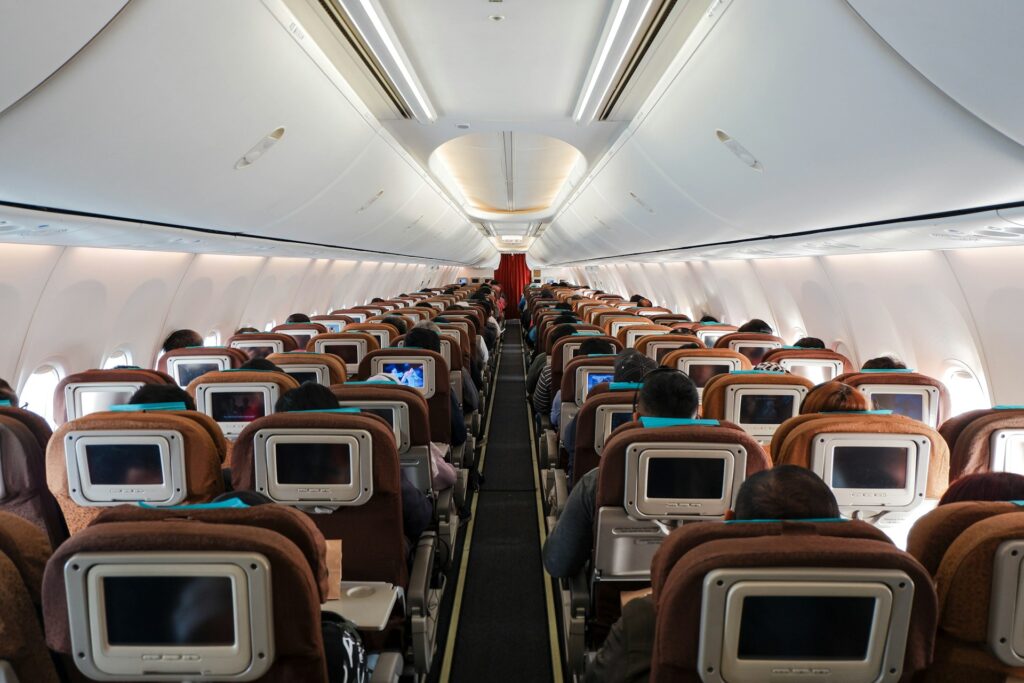
Cabin width creates real passenger experience differences. The A350-900 runs 5.96 meters wide. The 787-9 measures 5.74 meters. Both use a 3-3-3 economy layout, but the numbers shake out differently.
On the A350-900, economy seats typically measure 18 inches wide. On the 787-9, most airlines configure seats at 17 inches. One inch. Sounds trivial. Fly 14 hours and tell us it doesn’t matter.
Business class favors the A350 too. The wider fuselage fits 1-2-1 reverse herringbone layouts more comfortably, giving every business passenger direct aisle access. The 787-9 manages similar products, but spacing gets tighter.
Operating Economics: The Real Fight
Specs matter. But airlines buy aircraft on economics. Industry cost data from Skailark’s 2022 database across North American and European carriers gives us actual numbers to work with.
| Cost Metric | Boeing 787-9 | Airbus A350-900 |
|---|---|---|
| Cost per Seat-Mile | $0.1250 | $0.1210 LOWER |
| Cost per Block Hour | $16,899 LOWER | $18,370 |
| Fuel Burn per Flight | Lower (lighter airframe) | Higher |
| Fuel Burn per Passenger | Higher | Lower (more seats) |
Source: Skailark aircraft cost database, 2022 data across 7+ operators
Source: Skailark aircraft cost database, 2022 data across 7+ operators
The 787-9 costs 8% less per block hour. Lighter aircraft, less fuel burned per flight. Simple math. But the A350-900 wins on seat-mile cost by 3.3% because it carries 35 more passengers on the same route.
Which metric wins depends on the route. High-load-factor flights filling 300+ seats favor the A350. Thinner routes where airlines chase frequency over capacity lean toward the 787-9.
Technology and Materials
Both aircraft broke ground on composite construction. The A350-900 uses 53% carbon fiber by weight. The 787-9 runs at 50%. These aren’t marketing numbers, they’re structural reality. Composites cut weight, reduce fuel burn, and allow higher cabin pressurization.
The 787-9 brought electrochromic windows to commercial aviation. No pull-down shades. Passengers dim windows with a button. The A350 stuck with conventional shades. For passengers, the 787’s windows also run 65% larger than industry standard.
Engine choice splits the story. The A350-900 flies exclusively on Rolls-Royce Trent XWB engines. The 787-9 offers airlines a choice: GE GEnx or Rolls-Royce Trent 1000. That dual-source option gives 787 buyers stronger negotiating power on pricing and maintenance contracts.
Passenger Experience
Noise levels favor the A350-900. Sound testing puts it 2-3 decibels quieter during cruise than the 787-9. Passengers on 10+ hour flights notice the difference.
Windows favor the 787-9. Larger glass, electrochromic dimming, no physical shade blocking the view. It’s one of the most praised features on the Dreamliner.
Cabin air quality is close. The 787-9 delivers cabin humidity around 15-16% thanks to its composite fuselage design. The A350-900 runs slightly drier at 12-13%. Both beat older widebodies that averaged 10%.
Cabin altitude tells another comfort story. The 787-9 pressurizes to an equivalent of 6,000 feet. The A350-900 runs at roughly 6,500 feet. Lower cabin altitude means less fatigue after long flights. The 787 wins here.
Who Flies Them
Boeing 787-9 Operators
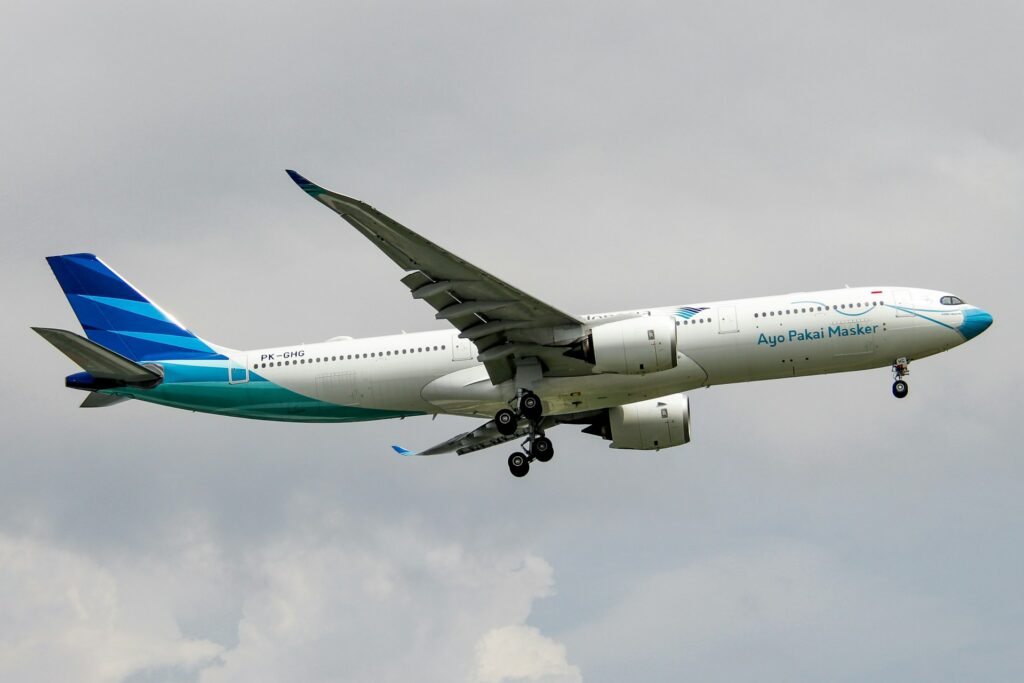
United Airlines runs 787-9s on transatlantic and transpacific routes from Newark, Chicago, and San Francisco. All Nippon Airways and Japan Airlines both operate large 787-9 fleets across their domestic and international networks.
Air New Zealand built its long-haul strategy around the 787-9, connecting Auckland to North America and South America. American Airlines uses the type from Dallas and Los Angeles on premium long-haul services.
Airbus A350-900 Operators
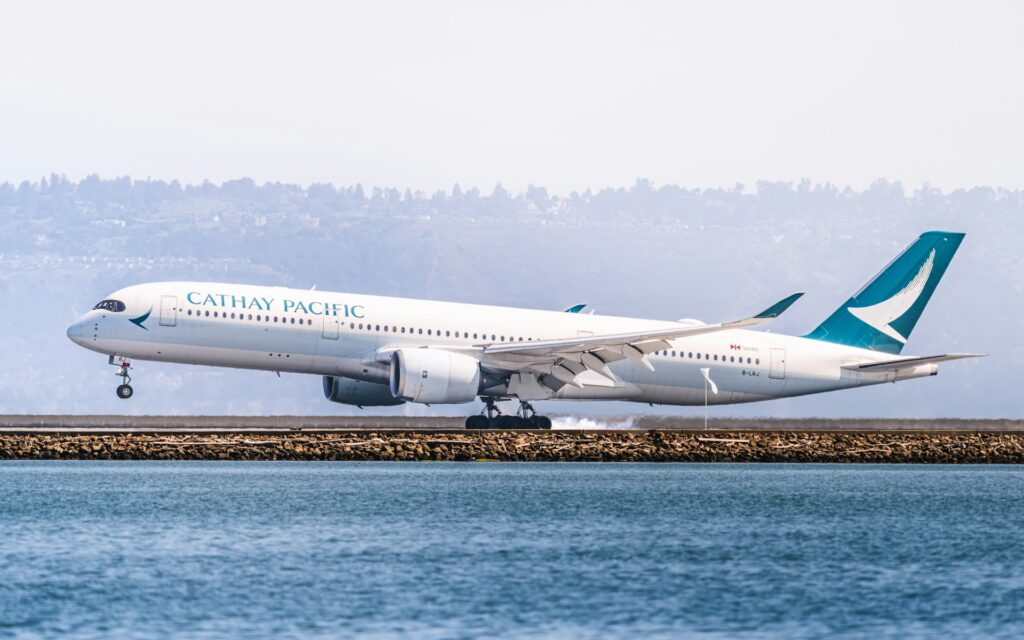
Qatar Airways flies the largest A350-900 fleet globally, deploying it from Doha to every major continent. Singapore Airlines operates the ULR variant on the world’s longest flight.
Delta Air Lines uses A350-900s on premium transatlantic routes. Cathay Pacific and Lufthansa both fly the type on flagship long-haul services from their respective hubs.
Which Aircraft Fits Which Route?
Airlines don’t pick aircraft randomly. Route economics drive every fleet decision. Here’s how these two stack up across different mission types.
| Route Type | Better Choice | Why |
|---|---|---|
| Ultra-Long-Haul (14+ hrs) | A350-900 | Range advantage covers routes the 787-9 can’t serve with full payload |
| High-Demand Transatlantic | A350-900 | Extra 35 seats fill easily on New York-London or Paris-Chicago |
| Standard Transatlantic | Either | Both work. 787-9 wins on trip cost if demand is moderate |
| Secondary City Pairs | 787-9 | Right-sized capacity for thinner routes like Edinburgh to Washington |
| Transpacific (US to Asia) | 787-9 | Easier to fill 290 seats than 325 on most US-Asia routes |
| Hub Consolidation | A350-900 | More seats per flight reduces frequency needs at slot-constrained airports |
Frequently Asked Questions
Which aircraft has longer range, the 787-9 or A350-900?
The A350-900 flies 8,100 nautical miles versus the 787-9’s 7,635 nautical miles. That 465 nm gap lets the A350 cover ultra-long routes like Singapore to New York. The 787-9 handles most other long-haul pairs without issue.
Is the 787-9 more fuel-efficient than the A350-900?
Per flight, yes. The 787-9 burns less fuel because it’s lighter, costing $16,899 per block hour versus $18,370 for the A350-900. Per passenger, the A350-900 wins at $0.121 per seat-mile compared to $0.125. It carries more people on the same fuel.
Which aircraft offers better passenger comfort?
Depends on what you value. The A350-900 is quieter and offers wider seats (18 vs 17 inches in economy). The 787-9 has larger windows, electrochromic dimming, and lower cabin altitude reducing fatigue. Neither dominates across the board.
How many passengers does each aircraft carry?
In standard three-class layouts, the A350-900 seats 325 and the 787-9 seats 290. Maximum density pushes these to 440 and 420 respectively. Airlines on long-haul routes rarely use maximum-density configs.
Which airlines operate the most of each aircraft?
United Airlines, All Nippon Airways, and American Airlines lead 787-9 operations. Qatar Airways runs the biggest A350-900 fleet, followed by Singapore Airlines and Delta Air Lines.
The Bottom Line
No single winner here. The A350-900 wins on range, capacity, and seat-mile economics. It’s the aircraft airlines pick for their most demanding, highest-traffic long-haul routes.
The 787-9 wins on trip cost, operational flexibility, and passenger comfort features like larger windows and lower cabin altitude. Airlines use it to open new city pairs and serve markets where filling 325 seats doesn’t make sense.
Smart airlines don’t choose one over the other. They fly both. Match the aircraft to the route, not the other way around. That’s how Qatar, United, and Singapore Airlines all run profitable long-haul networks today.