Walk through any major airport and you’ll see airlines parking their Airbus A380s permanently. Lufthansa retired theirs. Air France sent them to storage. British Airways cut their fleet. The world’s largest passenger jet became aviation’s biggest mistake.
Then there’s Emirates. The Dubai-based carrier operates 116 A380s. That’s more than every other airline combined. While competitors rushed toward fuel-efficient twin-engine jets like the Boeing 787 and Airbus A350, Emirates kept ordering superjumbos. Their last A380 delivery arrived in 2021, years after Airbus stopped production for everyone else.
The strategy looks insane until you understand how Emirates built their entire business model around one aircraft type and one hub city. This isn’t about nostalgia or stubborn management. It’s calculated economics that works for Emirates in ways it never could for competitors.
Contents
- 1 Why Most Airlines Failed With The A380
- 2 Why The A380 Works For Emirates
- 3 The Dubai Hub-And-Spoke Model Explained
- 4 Emirates A380 Economics: The Numbers That Work
- 5 Emirates A380 Route Network
- 6 The A380 Retrofit Investment Strategy
- 7 Boeing 777X: The Future Alongside A380
- 8 Why Other Airlines Couldn’t Make A380 Work
- 9 Emirates A380 Operations Through 2035 And Beyond
- 10 Frequently Asked Questions
- 10.1 Why does Emirates still use the A380 when other airlines retired it?
- 10.2 Is the A380 profitable for Emirates?
- 10.3 Will Emirates retire the A380 soon?
- 10.4 Why can’t other airlines replicate Emirates’ A380 success?
- 10.5 How many A380s does Emirates operate?
- 10.6 What happens to Emirates A380s after 2035?
- 11 Conclusion
Why Most Airlines Failed With The A380
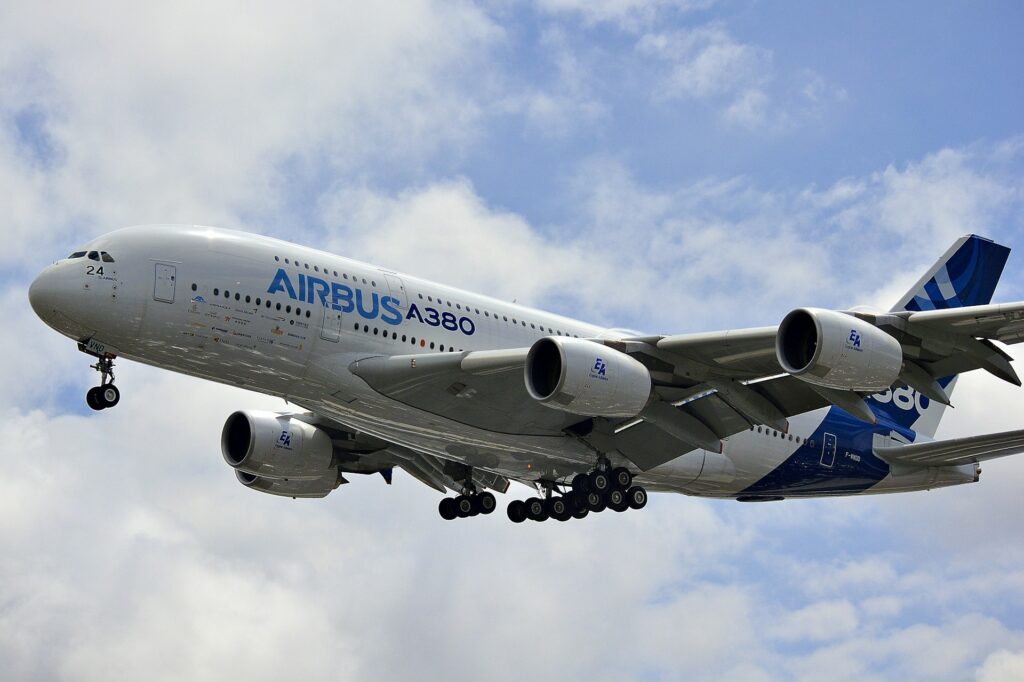
The Airbus A380 promised to fix airport congestion. Pack 500+ passengers into one flight instead of flying two smaller aircraft. Lower costs per seat. Higher profits. The pitch made sense on paper.
Reality destroyed that dream fast. Airlines discovered the A380 needs 450+ passengers to break even economically. Load factors must stay above 85% consistently. Most routes simply don’t carry enough demand to fill a 500-seat aircraft profitably.
Singapore Airlines tried A380s on Singapore to Frankfurt. Couldn’t fill the plane consistently. British Airways deployed them on London to Los Angeles. Same problem. The routes had good demand, just not superjumbo demand.
Worse, the A380 locks airlines into specific routes. You can’t easily shift a 500-seat aircraft to new markets when demand changes. Smaller twin-engine jets offer flexibility the A380 simply can’t match. When COVID-19 hit, most airlines accelerated A380 retirements rather than wait for recovery.
By 2019, Airbus admitted defeat and stopped production after selling just 251 aircraft. The business case collapsed. Airlines didn’t want them. The A380 became aviation’s cautionary tale about building aircraft too big for actual market demand.
Why The A380 Works For Emirates
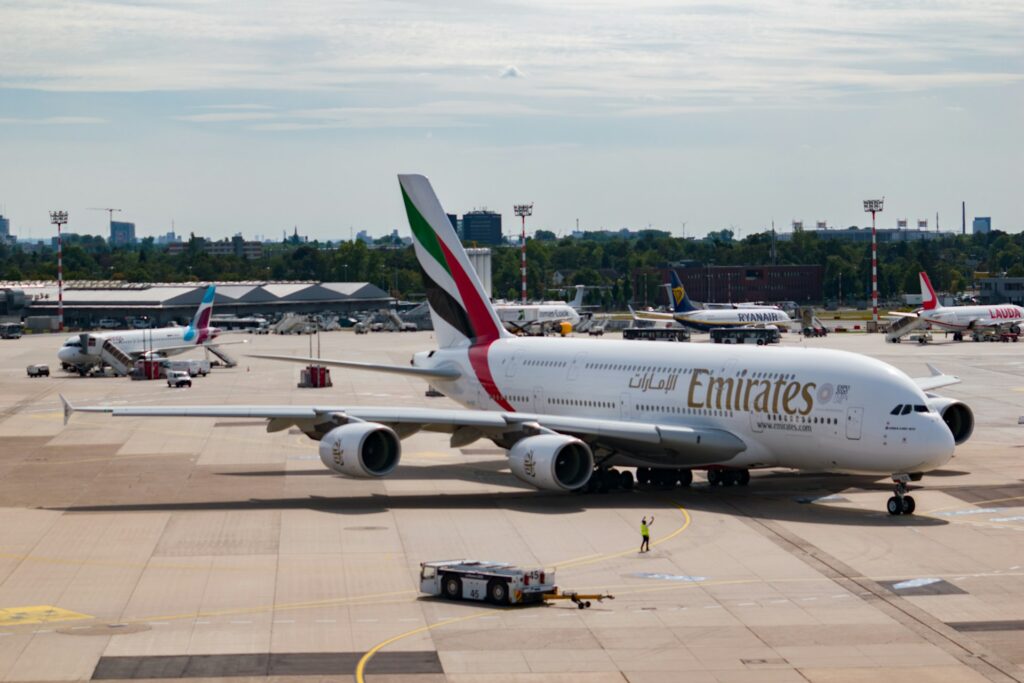
Emirates operates from a single hub: Dubai International Airport. Every single flight connects through Dubai. Zero domestic routes. Zero point-to-point flying outside their hub. Pure hub-and-spoke operations concentrated on one city.
This model changes everything. Here’s exactly why the A380 succeeds for Emirates when it failed for competitors:
Massive traffic concentration: London to Dubai carries business travelers, tourists, AND passengers connecting to India, Southeast Asia, Australia, and East Africa. That single route generates enough demand for multiple daily A380 flights, each carrying 400+ passengers.
Geographic positioning advantage: Dubai sits roughly eight hours flying time from anywhere on Earth. London, Singapore, New York, Sydney, Mumbai, Johannesburg all fall within A380 range. The city naturally connects continents that airlines flying from Europe or North America struggle to serve efficiently.
Slot scarcity drives capacity: Dubai International Airport is maxed out on landing slots. Emirates faces hard limits on flight frequencies. The A380 solves this by maximizing passengers per landing slot. Three Boeing 777 flights carry similar capacity to two A380s but need 50% more slots.
Network concentration eliminates weak routes: Emirates only deploys A380s on mega routes with proven demand. London, Bangkok, Sydney, New York, Singapore all support multiple daily superjumbos. The 777 handles secondary destinations where A380 capacity makes no sense.
Premium traffic density: Middle Eastern hubs attract disproportionate business and first class travel. Long connections favor premium cabins where passengers pay for comfort. Emirates generates outsized revenue from first and business class, something the A380’s spacious cabin enables at scale.
The Dubai Hub-And-Spoke Model Explained
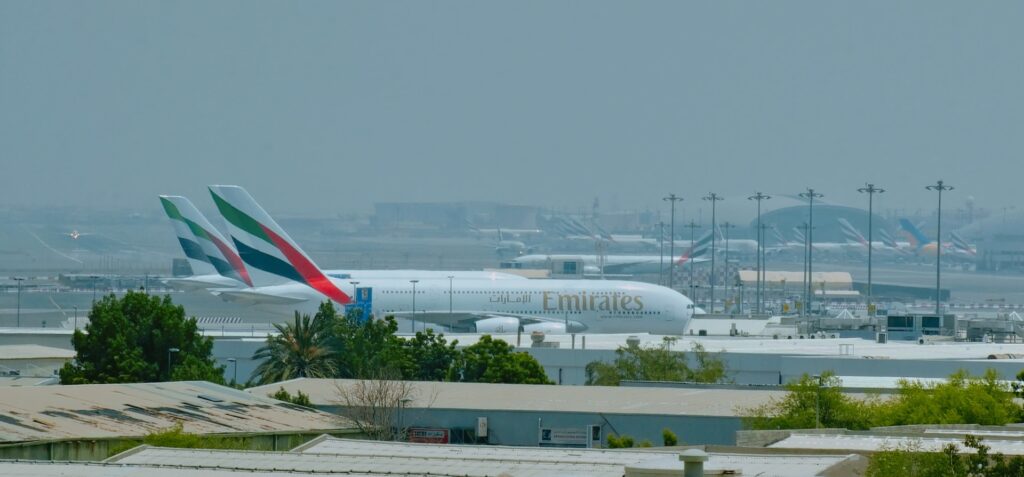
Most people flying Emirates connect through Dubai rather than starting or ending there. The hub-and-spoke model pools passengers from multiple origins onto consolidated flights to high-demand destinations.
Example: A passenger flies Manchester to Dubai on a 777. In Dubai, they connect to an A380 flying Dubai to Bangkok. That A380 also carries passengers who connected from Edinburgh, Newcastle, Birmingham, Frankfurt, Paris, Milan, and Zurich. One A380 flight consolidates traffic from a dozen European cities heading to Thailand.
This pooling effect generates the load factors the A380 requires. A traditional airline flying Manchester to Bangkok direct would struggle to fill 200 seats. Emirates fills 500 seats by consolidating European traffic through their hub.
The model demands geographic positioning. Dubai sits between Europe and Asia perfectly. Passengers flying Europe to Australia almost have to cross the Middle East. Emirates captured this natural traffic flow and built an airline around it.
Competitors can’t replicate this. Lufthansa spreads operations across Frankfurt, Munich, and Zurich. Traffic divides between hubs, making it impossible to fill superjumbos from any single airport. Air France faces similar issues splitting Paris and Lyon operations. Emirates concentrated everything on Dubai, making the A380 viable where geography scattered demand for competitors.
Emirates A380 Economics: The Numbers That Work
Critics say the A380 burns too much fuel and costs too much to maintain. True on both counts. But Emirates makes money flying them because their network supports the economics.
Understanding CASM: Cost Per Available Seat Mile
Airlines measure efficiency using CASM (Cost per Available Seat Mile). This metric divides total operating costs by the number of seats multiplied by miles flown. Lower CASM means better economics.
The A380’s CASM looks terrible compared to twin-engine jets when flying half-empty. But fill 450+ seats consistently and CASM drops below smaller aircraft. Emirates achieves load factors above 80% on flagship A380 routes, making the math work.
A380 vs Boeing 777: The Strategic Choice
Emirates operates both A380s and Boeing 777s strategically. Here’s how the economics compare:
| Metric | Airbus A380 | Boeing 777-300ER |
|---|---|---|
| Typical Capacity (3-class) | 489-615 seats | 354-427 seats |
| Range | 8,000 nm | 7,370 nm |
| Fuel Burn per Flight | Higher (4 engines) | Lower (2 engines) |
| Cost per Seat (at 80%+ load) | Lower | Higher |
| Slots Required | 1 flight | 1.4-1.7 flights for same capacity |
| Best For | Mega routes, slot-constrained airports | Secondary routes, frequency-sensitive markets |
The A380 wins when Emirates needs to maximize passengers per slot on ultra-high-demand routes. The 777 wins where demand doesn’t justify superjumbo capacity or where schedule frequency matters more than aircraft size.
Emirates doesn’t choose randomly. They match aircraft to route economics religiously. A380s fly London, Bangkok, Sydney. The 777 serves Vienna, Prague, Hamburg where demand doesn’t fill 500 seats.
Premium Cabin Revenue Multiplier
Emirates generates massive revenue from first and business class. The A380 allows luxury products impossible on smaller widebody aircraft.
First class shower suites became Emirates’ signature feature. Business class suites offer direct aisle access and lie-flat beds. Premium economy cabins added during retrofits captured passengers willing to pay more than economy but less than business fares.
A first class ticket Dubai to London runs $6,000 to $15,000. Business class fares hit $3,000 to $7,000. With 14 first class suites and 76 business class seats on their A380, premium cabins generate over $500,000 revenue potential per flight before counting economy passengers.
The A380’s size enables this premium strategy. You can’t fit shower suites on a Boeing 787 or A350. The space advantage translates directly to premium positioning and higher yields.
Emirates A380 Route Network
Emirates doesn’t fly A380s everywhere. They deploy superjumbos strategically on routes with proven demand. Here are the top A380 destinations from Dubai:
| Route | Daily Flights | Distance | Why A380 |
|---|---|---|---|
| Dubai – London Heathrow | 6 daily | 3,414 nm | Slot-constrained, ultra-high demand, premium traffic |
| Dubai – Bangkok | 4 daily | 2,607 nm | Tourist hub, Australia connections, high volume |
| Dubai – Sydney | 2 daily | 7,240 nm | Long-haul, connects Europe-Australia traffic |
| Dubai – Melbourne | 1-2 daily | 6,838 nm | Premium leisure, business traffic to Australia |
| Dubai – New York JFK | 2 daily | 6,847 nm | Premium-heavy, business connections, high yields |
| Dubai – Singapore | 3 daily | 3,268 nm | Business hub, connecting Asia-Europe-Middle East |
| Dubai – Paris CDG | 3 daily | 3,243 nm | Major European gateway, high demand |
| Dubai – Frankfurt | 2 daily | 2,994 nm | Business traffic, European connections |
Notice the pattern? Every route either faces slot constraints, carries premium traffic, or consolidates connections from multiple regions. Emirates picked these routes deliberately after years of data proving sustained demand at A380 capacity levels.
The A380 Retrofit Investment Strategy
Emirates isn’t letting their A380 fleet age quietly. The airline launched a $2 billion retrofit program upgrading 67 older A380s to match newer standards.
Premium economy cabins replaced some economy seats. This new cabin targets passengers willing to pay 30-50% more than economy for extra space and service. The retrofit captures revenue from travelers who won’t pay business class prices but want better than economy.
First and business class got refreshed with new seats, upgraded entertainment systems, and better finishes. The competitive pressure comes from airlines flying newer aircraft. Emirates needed to keep their A380 interiors current to justify premium pricing.
The retrofits extend A380 service life another 12 to 15 years minimum. Emirates clearly plans flying superjumbos into the 2035+ timeframe. The investment proves their commitment goes beyond short-term tactics. This is long-term fleet strategy.
Boeing 777X: The Future Alongside A380
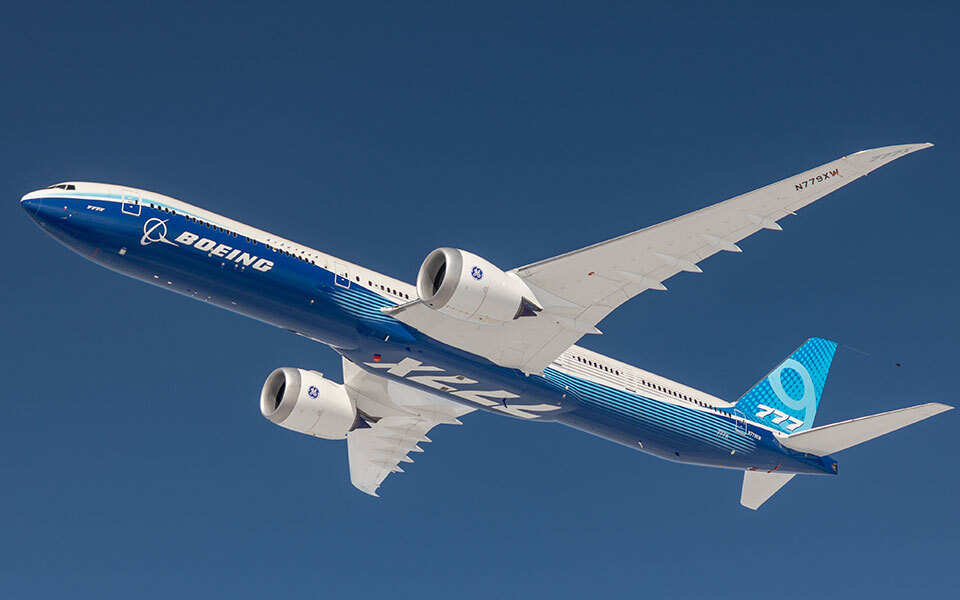
Emirates ordered 205 Boeing 777X aircraft, the largest order for Boeing’s next-generation widebody. These planes will replace older 777s and potentially some A380s on specific routes.
The 777-9 carries up to 426 passengers, smaller than the A380 but larger than current 777s. New engines and modern systems cut fuel burn roughly 20% compared to older 777-300ERs. The economics improve significantly.
Emirates sees the 777X complementing the A380, not replacing it outright. The A380 still makes sense on mega routes where capacity and slot efficiency drive decisions. The 777X handles everything else, offering better flexibility and lower costs on routes where the A380 is too big.
This mirrors their current strategy: match aircraft size to route demand, maximize load factors, dominate their hub. The 777X simply gives them a more efficient tool for routes that don’t need superjumbo capacity.
Why Other Airlines Couldn’t Make A380 Work
Singapore Airlines, Lufthansa, Air France, Qantas, and British Airways all struggled with A380 economics. Their networks worked against them structurally.
Multiple hub operations: Lufthansa splits traffic between Frankfurt, Munich, and Zurich. Demand fragments across hubs, making it nearly impossible to fill 500-seat aircraft from any single airport consistently.
Point-to-point competition: Airlines like British Airways face direct competition on routes like London to New York. Multiple carriers split demand, reducing volumes for individual airlines below A380 thresholds.
Geographic disadvantages: European airlines serve diverse markets with varying distance and demand characteristics. The A380 works on maybe 8 to 10 routes from London or Paris. Other routes can’t support superjumbo capacity, forcing airlines to deploy A380s on marginal routes where economics fail.
Fleet inflexibility: When demand shifts, the A380 can’t adapt. Airlines need flexibility to move aircraft between markets as conditions change. The 500-seat constraint locks airlines into specific routes regardless of whether demand holds.
Emirates avoids all these problems. Single hub concentration. No direct competition on most routes. Geography favoring one-stop connections. Network built specifically around A380 capabilities. The aircraft fits their system perfectly while failing elsewhere.
Emirates A380 Operations Through 2035 And Beyond
Emirates committed publicly to flying A380s through at least 2035. The airline negotiated extended maintenance agreements with Rolls-Royce covering Trent 900 engines beyond standard timelines.
Cabin upgrades will continue. Emirates will likely introduce new seat designs, improved connectivity systems, and possibly updated entertainment as technology advances. Keeping the A380 competitive requires continuous investment.
Route deployment will adjust based on demand patterns. COVID-19 temporarily grounded most of the fleet, but Emirates brought aircraft back as travel recovered. The superjumbo still operates on the same mega routes it always has.
Beyond 2035, decisions get complicated. Will Dubai have enough demand to support 500+ seat aircraft? Will newer, more efficient twins make the A380 obsolete? Will environmental regulations penalize four-engine aircraft?
Emirates believes the A380 has 15+ productive years remaining. Given their success operating the type, betting against them seems foolish. They’ve already proven everyone wrong once.
Frequently Asked Questions
Why does Emirates still use the A380 when other airlines retired it?
Emirates operates a concentrated hub-and-spoke network from Dubai that pools massive passenger volumes onto specific routes. This allows them to consistently fill 450+ seats on flagship routes to London, Sydney, Bangkok, and New York. Other airlines spread operations across multiple hubs and face point-to-point competition, making it nearly impossible to fill superjumbos profitably. Emirates’ geographic positioning and network concentration create the only business model where A380 economics work long-term.
Is the A380 profitable for Emirates?
Yes. Emirates achieves load factors above 80% on A380 routes while generating significant premium cabin revenue from first and business class. The cost per seat economics work when you’re filling 500+ seats consistently on high-yield routes. Slot constraints at airports like London Heathrow and Dubai make the A380’s high capacity valuable, letting Emirates maximize passengers per landing slot. The airline wouldn’t invest $2 billion in retrofits if the aircraft lost money.
Will Emirates retire the A380 soon?
No. Emirates plans flying A380s into the 2035+ timeframe. The airline actively retrofits the fleet with new cabins, extends engine maintenance agreements, and treats the A380 as core to their strategy for another 12 to 15 years minimum. They ordered 205 Boeing 777X aircraft but positioned them as complementary to the A380, not replacements. Emirates sees different roles for each aircraft type in their network.
Why can’t other airlines replicate Emirates’ A380 success?
Most airlines lack the hub geography and network concentration Emirates has. Dubai’s location naturally connects Europe, Asia, Africa, and Australia through a single hub. Other carriers spread traffic across multiple hubs, face direct route competition, and serve more fragmented markets. These structural differences make it impossible to pool enough demand to fill 500-seat aircraft consistently. The A380 requires a specific network model that only Emirates operates at the necessary scale.
How many A380s does Emirates operate?
Emirates operates 116 Airbus A380s as of 2024, more than all other airlines combined. The airline received its last A380 delivery in 2021, years after Airbus stopped production for other customers. Emirates accounts for roughly 45% of all A380s ever built and operates the aircraft on approximately 40 destinations worldwide from their Dubai hub.
What happens to Emirates A380s after 2035?
Emirates will likely continue flying A380s beyond 2035 if economics remain favorable. The airline could extend service life further through additional retrofits, or transition routes to Boeing 777X aircraft as fuel and maintenance costs increase. Environmental regulations might force earlier retirement if carbon policies penalize four-engine aircraft. The decision depends on fuel prices, Dubai hub capacity, and whether demand supports 500-seat aircraft in the 2030s and beyond.
Conclusion
Emirates proved the aviation world wrong about the A380. The aircraft failed commercially for Airbus and most airlines because it was simply too big for their network models and competitive environments.
But Emirates built their entire airline around making the A380 work. Single hub operations concentrate demand. Dubai’s geography connects continents naturally. Slot constraints favor bigger aircraft. Premium cabins generate outsized revenue. The A380 fits Emirates’ business model perfectly while remaining wrong for virtually everyone else.
Other airlines can’t copy this strategy. They lack the hub concentration, geographic positioning, and network structure. The A380 isn’t a bad aircraft. It’s the right aircraft for one airline with a unique business model. That’s why Emirates will keep flying superjumbos decades after competitors moved on to smaller, more flexible twin-engine jets.