Ever wondered why your flight from New York to London takes a straight shot over the Atlantic instead of hugging the coastline? Thank ETOPS.
ETOPS stands for Extended-range Twin-engine Operational Performance Standards. Here’s what that means in plain English: these rules let twin-engine planes fly routes where the nearest airport sits more than an hour away. Before ETOPS? A twin-engine jet flying from Los Angeles to Tokyo had to follow coastlines like a nervous driver sticking to main roads. Flight times were brutal.
ETOPS changed everything. Airlines started flying straight lines over oceans. Your travel time dropped. Ticket prices fell because fuel costs dropped. But don’t worry about safety. The certification process is insanely strict. We’re talking reliability standards that make your engine fail less often than your phone crashes.
Contents
- 1 The Origin of ETOPS
- 2 What ETOPS Actually Means
- 3 Why ETOPS Was Introduced
- 4 How ETOPS Certification Works
- 5 ETOPS Flight Planning Requirements
- 6 ETOPS Maintenance Programs
- 7 ETOPS Regulations by Authority
- 8 Common ETOPS-Certified Aircraft
- 9 What Happens During an Engine Failure
- 10 Why Some Flights Avoid ETOPS Routes
- 11 Frequently Asked Questions
- 11.1 Is ETOPS only for twin-engine aircraft?
- 11.2 Can ETOPS aircraft fly over oceans safely?
- 11.3 What happens if both engines fail on an ETOPS flight?
- 11.4 Do pilots need special training for ETOPS flights?
- 11.5 Why do some airlines still fly four-engine aircraft?
- 11.6 How does ETOPS affect ticket prices?
- 12 Conclusion
The Origin of ETOPS
Back in 1980, flying from New York to Paris on a twin-engine plane meant taking the scenic route. Regulators said you needed to stay within 60 minutes of an airport at all times.
Know what that means?
You’re taking a scenic route up the Canadian coast, over Greenland, then down through Iceland. Every airline did this. The concern made sense at the time. If one engine quits, you need somewhere to land fast.
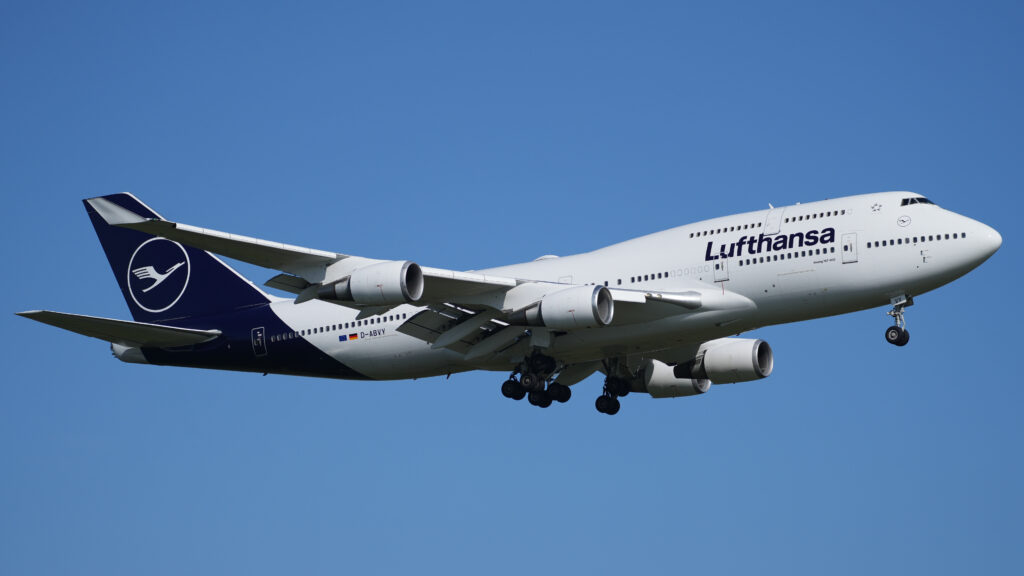
Meanwhile, four-engine monsters like the Boeing 747 and Douglas DC-10 flew straight lines across oceans. Lose one engine on a four-engine jet? No problem. Three still work. Twin-engine planes sat on the sidelines watching.
Then something changed. Engine makers like General Electric, Pratt & Whitney, and Rolls-Royce started building turbofans that basically refused to quit. The Boeing 767 and Airbus A300 proved twin-engine jets were rock solid on longer routes.
In 1985, the FAA said “fine, you win” and introduced the first ETOPS rules. Aircraft could fly 120 minutes from an airport if they met strict standards. The floodgates opened slowly. Airlines proved their reliability. ETOPS limits crept up: 180 minutes, then 240, eventually 330 minutes for the most reliable aircraft.
What ETOPS Actually Means
The full term is Extended-range Twin-engine Operational Performance Standards. Yeah, it’s a mouthful. Aviation loves acronyms.
Here’s what matters: diversion time. This tells you how long a plane takes to reach an alternate airport if an engine dies. ETOPS-180 means your aircraft never flies more than 180 minutes (three hours) from a suitable backup airport.
Quick side note: you might hear pilots and dispatchers say EDTO (Extended Diversion Time Operations) instead of ETOPS. Same concept, newer terminology. EDTO technically applies to all aircraft, not just twin-engine types. Most people still say ETOPS because old habits die hard.
The FAA maintains detailed ETOPS guidance that operators follow when certifying their fleets and routes.
ETOPS Time Limits Explained
Different certifications allow different maximum diversion times. Think of these like speed limits, except for how far you stray from airports:
ETOPS-120: Stay within 120 minutes of an alternate. Standard for transatlantic flights. Pretty much every twin-engine plane crossing the Atlantic qualifies for this.
ETOPS-180: Allows 180-minute diversions. Covers most Pacific routes and long-haul operations. Your typical westbound flight from San Francisco to Tokyo uses this.
ETOPS-240: Permits 240-minute diversions. Gets used over the South Pacific and Southern Ocean where airports are scarce. Flight from Sydney to Santiago? ETOPS-240.
ETOPS-330: The heavyweight champion at 330 minutes (5.5 hours). Reserved for ultra-reliable aircraft like the Airbus A350 flying Singapore to New York. We’re talking 19 hours in the air.
One important detail: these time limits assume you’re flying at single-engine cruise speed, not normal speed. If an engine quits, the plane slows down and descends to a more fuel-efficient altitude. So a 330-minute ETOPS rating doesn’t mean the plane cruises 330 minutes from land. It means if something breaks, you’re no more than 330 minutes of limping along from help.
Why ETOPS Was Introduced
Regulators faced a puzzle. Four-engine planes were safe, sure. But they guzzled fuel like a teenager at an all-you-can-eat buffet. Maintenance costs? Astronomical. You’re maintaining four engines instead of two.
Twin-engine aircraft offered a better deal all around. The Boeing 767, 777, and Airbus A330 flew long routes burning way less fuel than older four-engine types. Airlines loved the economics. Passengers loved cheaper tickets. But regulators needed proof these planes were safe over vast stretches of ocean and remote terrain.
ETOPS became that proof. Aircraft makers, engine builders, and airlines demonstrated their systems were reliable enough for extended operations. The data told the story. Modern turbofan engines fail so rarely that ETOPS flights have better safety records than many short-haul routes.
Airlines saved billions. Passengers saved hours. The planet saved fuel. Everyone won.
How ETOPS Certification Works
Getting ETOPS approval isn’t like renewing your driver’s license. Three separate entities need sign-off: the aircraft maker, the engine maker, and the airline. Miss one? No ETOPS for you.
Aircraft and Engine Certification
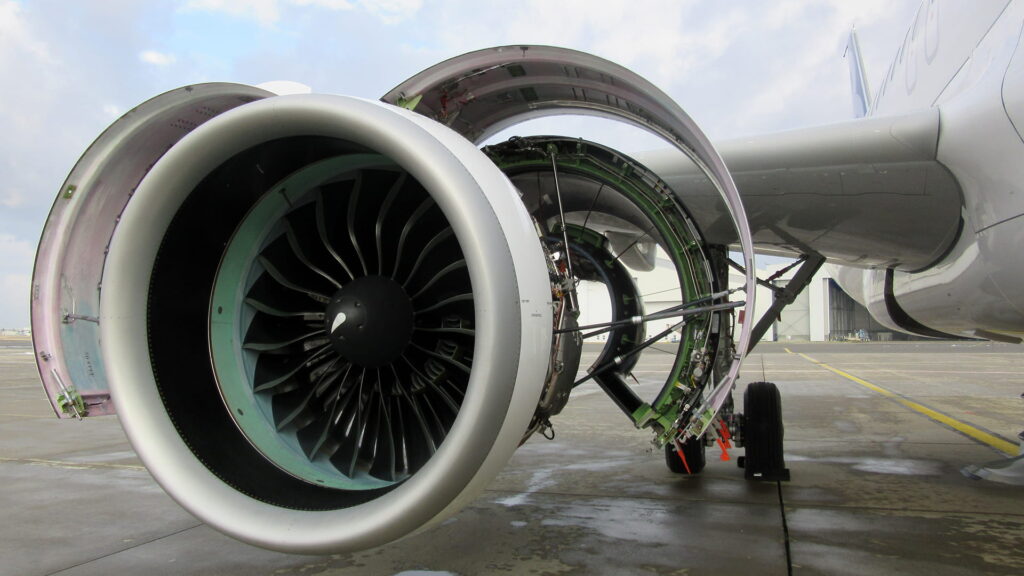
The plane and its engines must prove they’re basically bulletproof. We’re talking backup systems for everything. Electrical power? Backup. Hydraulics? Backup. Fire suppression? You guessed it.
Engines go through brutal testing. Engineers run them at full power for thousands of hours. They simulate failures, push limits, and document everything. The goal: prove the engine won’t quit when you’re three hours from the nearest runway.
Boeing and Airbus design their long-haul jets with ETOPS baked in from day one. The Boeing 787 and Airbus A350 earned ETOPS-330 certification because every system, every wire, every backup met the toughest standards.
Operator Approval
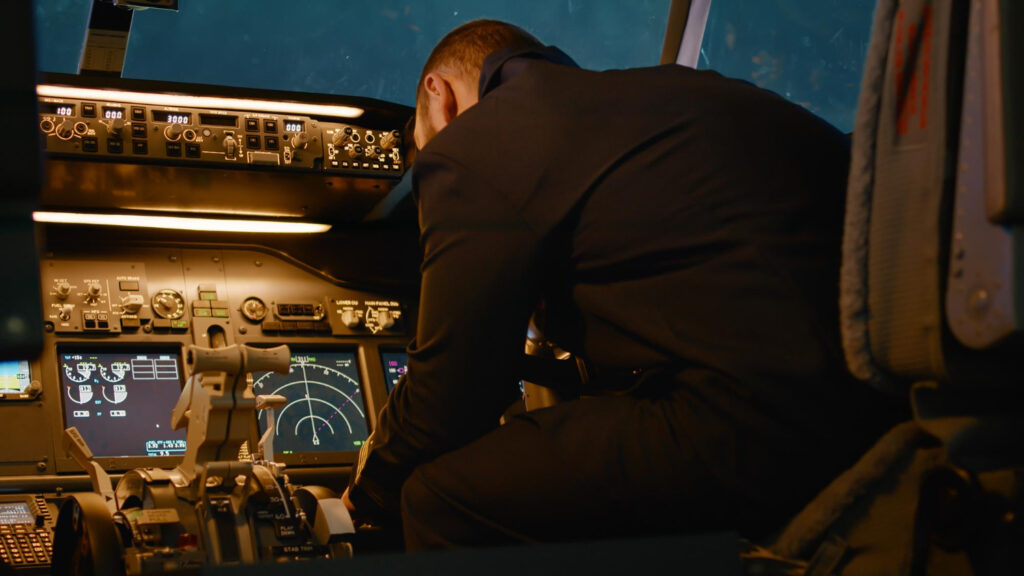
Airlines face an equally tough road. Want to fly ETOPS routes? Better prove you’re serious. The process includes:
Maintenance program approval: Your mechanics follow stricter schedules for ETOPS planes. Specific checks happen before each ETOPS flight. Skipping steps? Lose your authorization.
Operational procedures: Pilots train extensively for single-engine operations. They practice fuel planning, weather calls, and emergency procedures until they’re second nature.
Dispatch reliability: The airline demonstrates consistent performance over time. Usually six months of proving flights where regulators watch every move.
Pass all that? You get ETOPS authorization for specific aircraft types and time limits. United might have ETOPS-180 on its Boeing 777s but need separate approval for ETOPS-240. Different plane, different certification.
ETOPS Flight Planning Requirements
Every ETOPS flight requires detailed planning that goes beyond standard route selection.
Alternate Airports
The route must have suitable diversion airports within the ETOPS time limit. These alternates must meet specific criteria:
Adequate facilities: The airport needs runways long enough for the aircraft, adequate fire and rescue services, and maintenance capability.
Weather minima: Forecasted weather at the alternate must meet or exceed required minimums. If weather deteriorates below limits, the flight might not depart or needs rerouting.
Fuel requirements: The aircraft carries enough fuel to reach the alternate, hold for a specified time, and fly to another airport if needed.
Weather Monitoring
Dispatchers monitor weather at all ETOPS alternates before and during flight. If an alternate airport closes or weather drops below minimums, the crew might divert early or adjust the route.
Critical Fuel Scenario
ETOPS fuel planning accounts for flying to the farthest alternate on one engine, at lower altitude, against headwinds, with required reserves. This scenario demands significantly more fuel than normal operations.
ETOPS Maintenance Programs
Aircraft flying ETOPS routes follow enhanced maintenance procedures beyond standard requirements.
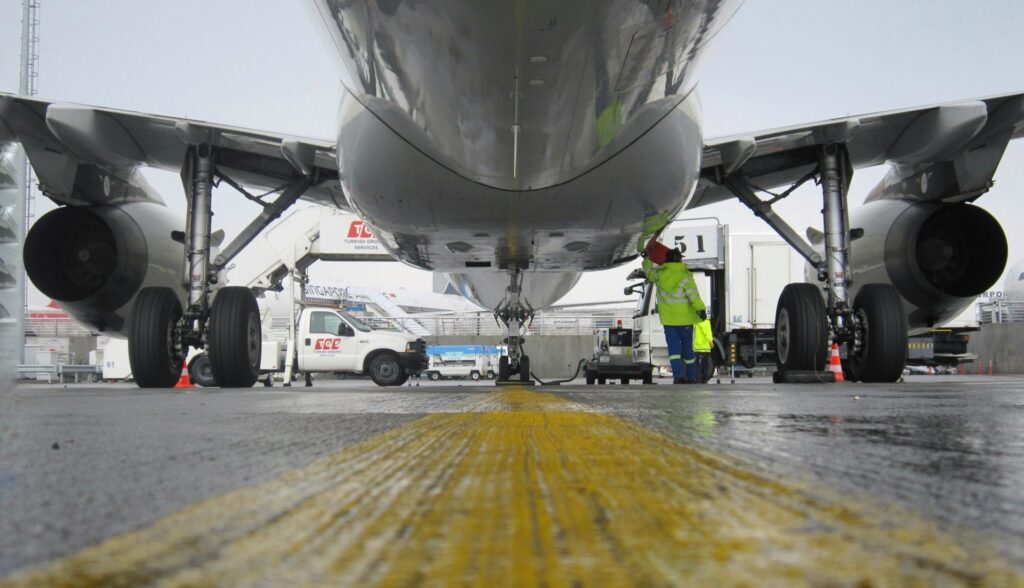
ETOPS Maintenance Program
Airlines track reliability data for critical systems: engines, APU (auxiliary power unit), electrical systems, and hydraulics. Any component with reliability issues triggers corrective action.
Engine oil consumption, vibration levels, and performance parameters get monitored more closely. Deviations from normal patterns flag potential problems before they become failures.
Pre-Departure Service Check
Before each ETOPS flight, maintenance performs a specific inspection covering:
Engine condition (oil levels, no leaks, no abnormal indications)
APU functionality (critical for backup electrical power)
System status checks (hydraulics, pneumatics, electrical)
No deferred maintenance items affecting ETOPS-critical systems
This check happens within 2 hours of departure. If issues arise, they get fixed before the flight leaves, or ETOPS authorization gets removed for that flight.
ETOPS Regulations by Authority
Three big players write the ETOPS rulebook worldwide. Think of them as aviation’s version of referees. Different jerseys, same game.
ICAO Standards
The International Civil Aviation Organization (ICAO) sets the baseline rules that everyone follows. Their standards live in Annex 6, and basically every aviation authority on Earth uses these as the starting point.
ICAO defines ETOPS as operations beyond 60 minutes from an adequate airport. Their standards cover aircraft certification, maintenance requirements, flight planning, and crew training. Think of ICAO as setting the minimum bar. Individual countries then add their own requirements on top.
FAA Requirements
The Federal Aviation Administration (FAA) runs the show for U.S. operators and American-registered aircraft. Their rules appear in 14 CFR Part 121 for airlines and Part 135 for charter operators.
The FAA actually pioneered ETOPS back in 1985. They wrote the original playbook. Any U.S. airline flying Boeing or other American-built aircraft follows FAA rules, even on international flights. That United 787 flying from Houston to Sydney? FAA ETOPS rules apply the entire way.
EASA Rules
The European Union Aviation Safety Agency (EASA) handles ETOPS for European carriers and Airbus aircraft. Their regulations track closely with ICAO standards but include Europe-specific requirements.
Airlines based in EU countries need EASA blessing for ETOPS operations. Lufthansa, Air France, British Airways flying their Airbus A350 and Boeing 787 fleets? All operating under EASA ETOPS rules.
Common ETOPS-Certified Aircraft
Most modern twin-engine widebody aircraft hold ETOPS certification. Some of the most common types include:
Boeing 767: The first aircraft to receive ETOPS-120 certification in 1985. Still flying transatlantic routes for cargo and passenger airlines.
Boeing 777: Holds ETOPS-180 and ETOPS-240 certifications. Dominates long-haul routes across the Pacific and Atlantic.
Boeing 787: Certified for ETOPS-330. Flies ultra-long routes like Perth to London and San Francisco to Singapore.
Airbus A330: ETOPS-180 and ETOPS-240 certified. Widely used on transatlantic and Asian routes.
Airbus A350: ETOPS-330 certified. Operates the world’s longest flight, Singapore to New York, covering 8,285 nautical miles.
Narrowbody aircraft like the Boeing 737 MAX and Airbus A321LR also hold ETOPS certifications, allowing them to fly transatlantic routes that were previously limited to widebody aircraft.
What Happens During an Engine Failure
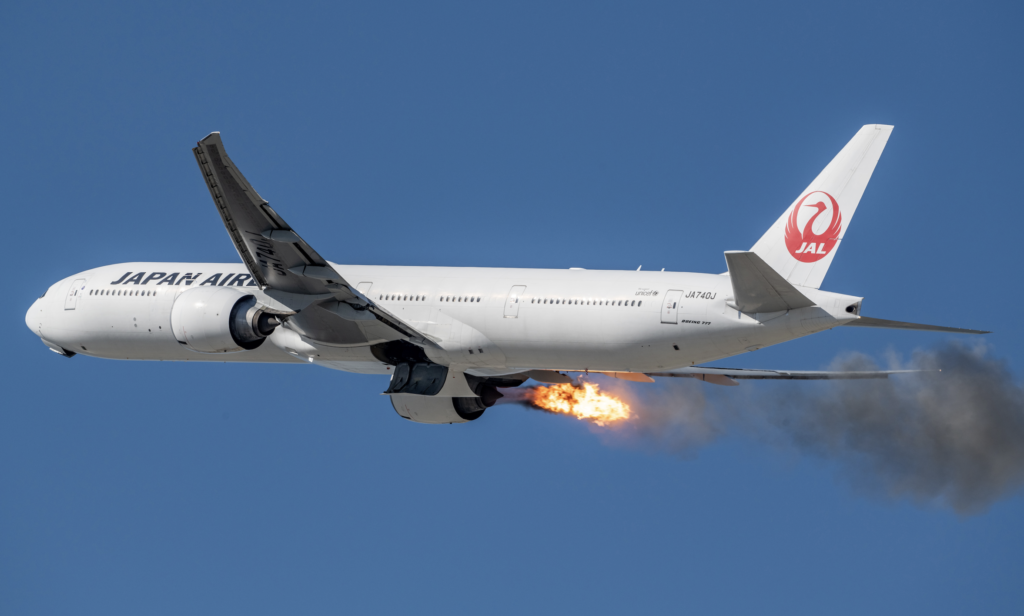
First, breathe. Engine failures on modern jets are stupidly rare. We’re talking once-in-a-million-flight-hours rare. Your phone dies more often than a turbofan engine quits.
When one does fail on an ETOPS flight, the response is calm and systematic. Pilots train for this scenario endlessly. They shut down the dead engine using checklists they could recite in their sleep.
The plane keeps flying on the remaining engine, which delivers full power. No drama, no shaking, no plummeting. Modern twin-engine jets fly perfectly fine on one engine. Boeing’s technical data shows aircraft like the 777 and 787 maintain stable flight on single-engine power for hours.
Speed drops from normal cruise (around Mach 0.85) to single-engine cruise (around Mach 0.78). The aircraft descends gradually to a lower altitude, usually 25,000 to 30,000 feet, where the working engine operates more efficiently.
The crew tells air traffic control what’s happening and requests priority handling. They pull up the nearest suitable alternate airport and crunch fuel numbers to confirm they’ll make it with plenty of reserve.
Here’s the thing: most passengers wouldn’t notice right away. The cabin stays pressurized and comfortable. The descent and speed reduction happen smoothly over several minutes. You might wonder why the flight attendants suddenly look more alert, but otherwise? Business as usual until landing.
The crew diverts to the alternate airport. After landing, mechanics inspect the aircraft before it flies again. Depending on what broke, the plane might ferry to a maintenance base on one engine or wait for parts and technicians to arrive.
Why Some Flights Avoid ETOPS Routes
Not all long-haul flights use ETOPS rules, even when available. Several reasons explain this:
Airline choice: Some carriers prefer routing over land or near coastlines for passenger comfort and operational flexibility.
Traffic and airspace: Oceanic routes sometimes face congestion. Flying over land provides more routing options and easier coordination with air traffic control.
Weather patterns: Certain routes benefit from favorable winds when flying over land. The fuel savings outweigh the longer distance.
Passenger preference: Some travelers prefer flights that stay near land. Airlines market these routes as comfort options, especially for nervous flyers.
Frequently Asked Questions
Is ETOPS only for twin-engine aircraft?
Originally yes, but modern regulations use EDTO (Extended Diversion Time Operations) to cover all aircraft types. The principles apply whether an aircraft has two, three, or four engines. Twin-engine aircraft remain the primary focus because they have no backup if one engine fails.
Can ETOPS aircraft fly over oceans safely?
Yes. ETOPS-certified aircraft and operators have excellent safety records on oceanic routes. Engine reliability on modern turbofans exceeds 99.99%. In-flight shutdowns happen roughly once per million flight hours. The redundant systems on ETOPS aircraft handle single-engine operations safely.
What happens if both engines fail on an ETOPS flight?
Dual engine failure is extraordinarily rare. Aircraft carry enough fuel to glide significant distances. Pilots train for this scenario. The APU provides electrical power and hydraulics. Modern aircraft glide at approximately 2 nautical miles per 1,000 feet of altitude. At cruise altitude (40,000 feet), that’s roughly 80 nautical miles of gliding distance.
Do pilots need special training for ETOPS flights?
Yes. Flight crews complete ETOPS-specific training covering single-engine operations, fuel planning, weather decision-making, and emergency procedures. Training includes simulator sessions practicing engine failures at critical points during oceanic crossings.
Why do some airlines still fly four-engine aircraft?
Very few airlines still operate four-engine passenger aircraft. The Airbus A380 continues flying for Emirates, but production ended. Airlines prefer twin-engine aircraft for better fuel efficiency and lower maintenance costs. Cargo operators keep four-engine Boeing 747 freighters in service for their payload capacity.
How does ETOPS affect ticket prices?
ETOPS makes flights cheaper. Direct oceanic routes save flight time and fuel compared to routing along coastlines. Airlines pass some savings to passengers through lower fares. Without ETOPS, many long-haul routes would be uneconomical.
Conclusion
ETOPS flipped commercial aviation on its head. What started as a cautious experiment in 1985 became the standard for how we fly across oceans. Twin-engine jets now dominate routes that four-engine aircraft owned for decades.
The Boeing 787 and Airbus A350 fly nonstop from Singapore to New York, Perth to London, and Auckland to Doha. These routes weren’t even realistic 20 years ago. As engines get more reliable and aircraft systems improve, ETOPS limits will keep expanding. We might see ETOPS-370 or ETOPS-400 certifications enabling city pairs that sound crazy today.
Your next long-haul flight? Thank ETOPS for the direct route, lower ticket price, and fewer hours in the air.