
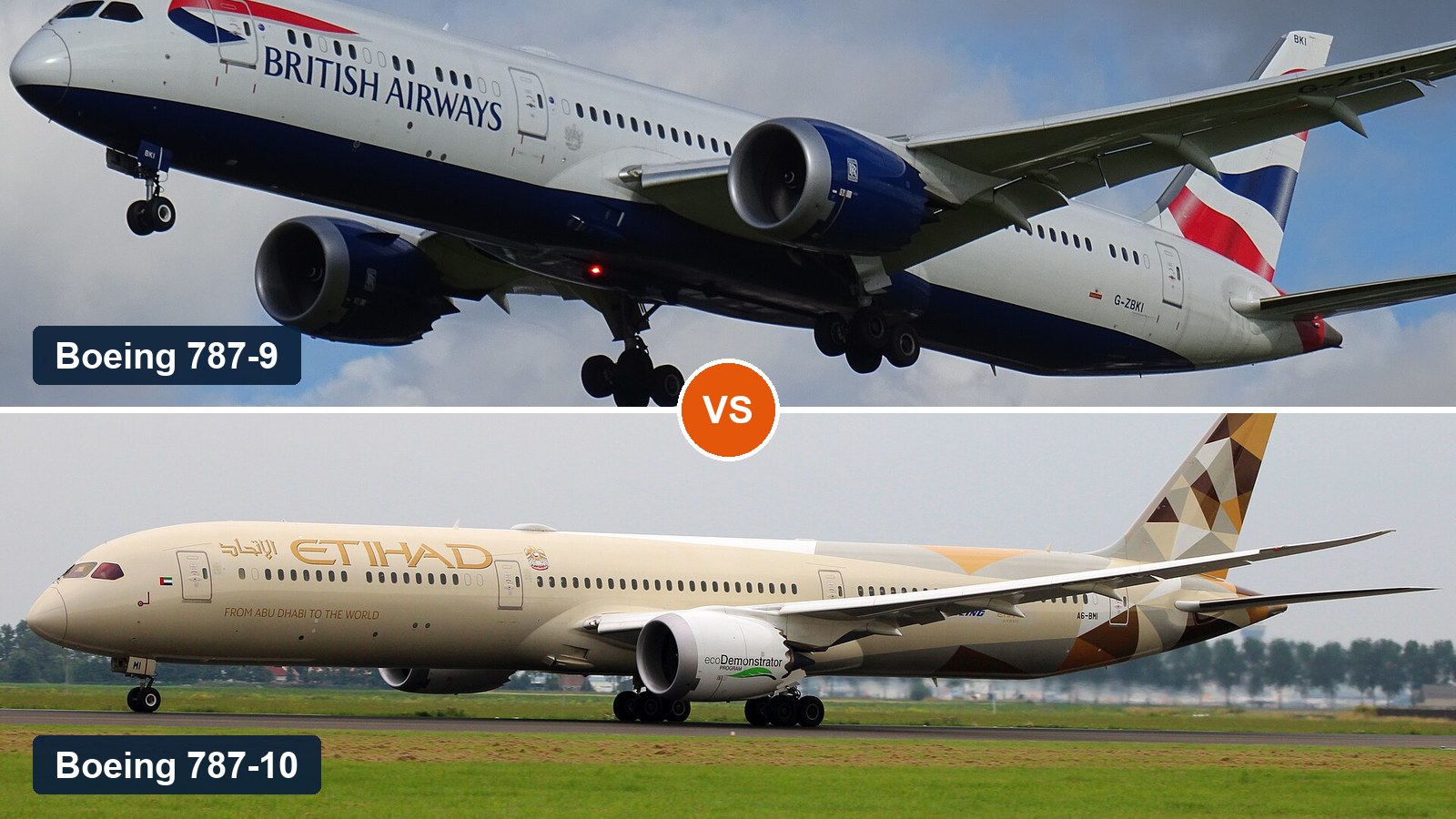
The Boeing 787-9 and 787-10 are two versions of the same aircraft, the 787 Dreamliner. They share a wing, a flight deck, a choice of two engines and even the same fuel capacity. The difference is length: the 787-10 is a 787-9 stretched by 5.5 metres to fit more seats.
That one change sets up the whole comparison. The 787-10 carries about 40 more passengers and more cargo. The 787-9 flies about 800 nautical miles farther. This guide covers size, seats, range, cargo, engines and the 2026 weight increase that gave both aircraft more range, using figures published by Boeing.
787-9 vs 787-10 at a Glance
| Specification | Boeing 787-9 | Boeing 787-10 |
|---|---|---|
| Length | 62.8 m (206 ft 1 in) | 68.3 m (224 ft 1 in) |
| Wingspan | 60.1 m (197 ft 3 in) | 60.1 m (197 ft 3 in) |
| Height | 17.0 m (55 ft 10 in) | 17.0 m (55 ft 10 in) |
| Seats, two-class (range) | 250 to 325 | 300 to 375 |
| Seats, Boeing example two-class layout | 290 | 330 |
| Maximum seats (exit limit) | 420 | 440 |
| Range | Up to 8,300 nm (15,370 km) | Up to 7,500 nm (13,890 km) |
| Maximum take-off weight | 259,220 kg (571,500 lb) | 260,360 kg (574,000 lb) |
| Fuel capacity | 126,429 litres | 126,429 litres |
| Lower-deck cargo | 172.4 m³ (36 LD3 containers) | 190.3 m³ (40 LD3 containers) |
| Engines | GEnx-1B or Trent 1000 | GEnx-1B or Trent 1000 |
| First delivery | Air New Zealand, July 2014 | Singapore Airlines, March 2018 |
Sources: Boeing 787 product page (checked October 2026) and Boeing’s 787 airport planning document (December 2024) for example seating, exit limits, fuel and cargo.
Size: How Much Bigger Is the 787-10?
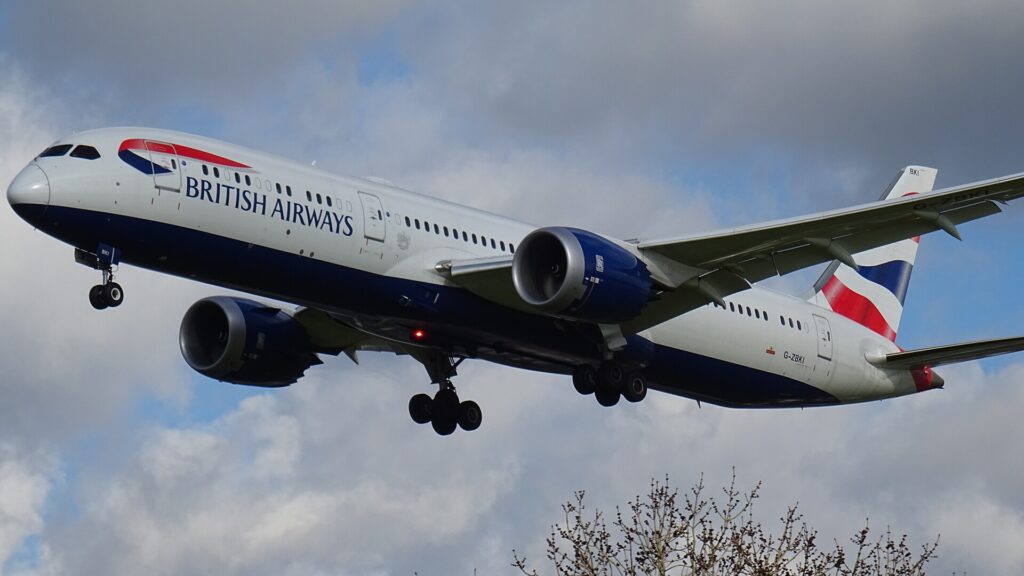
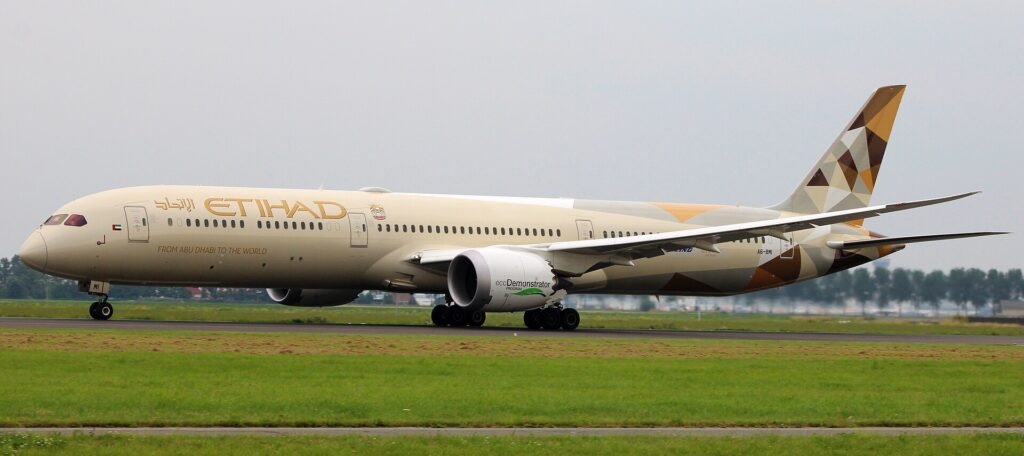
The 787-10 is 68.3 m long, which is 5.5 metres longer than the 787-9. Everything else about the outside is the same: both have a 60.1 m wingspan and stand 17.0 m tall. From the ground the two are hard to tell apart unless they are parked side by side.
The extra length is all cabin and cargo hold. The wing, tail and engines are unchanged.
Seats and Capacity
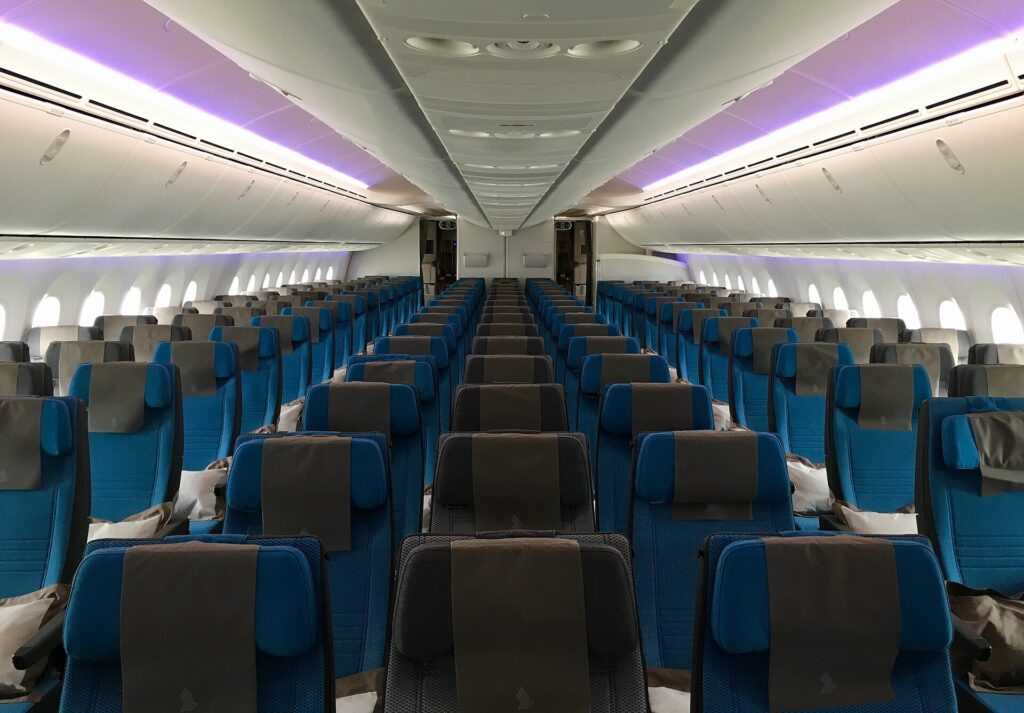
Boeing lists the 787-9 at 250 to 325 seats in two classes and the 787-10 at 300 to 375. In the example layouts in its 787 airport planning document, the 787-9 has 290 seats (28 business and 262 economy) and the 787-10 has 330 (32 business and 298 economy).
So the stretch is worth about 40 seats in a like-for-like cabin. When Boeing delivered the first 787-10 in March 2018, it described the aircraft in the same terms: about 40 more passengers, or 330 seats in a standard two-class configuration.
The certified maximums are 420 for the 787-9 and 440 for the 787-10. Those are evacuation limits, and airlines fit far fewer seats in practice.
Range: Why the 787-9 Flies Farther
Boeing lists the 787-9 at up to 8,300 nautical miles (15,370 km) and the 787-10 at up to 7,500 nautical miles (13,890 km). The 787-9 is the longest-range member of the 787 family.
The reason is simple. Both aircraft hold the same amount of fuel, 126,429 litres, and both have nearly the same maximum take-off weight. The 787-10 has a longer fuselage and carries more passengers and cargo, so with a full cabin less of its take-off weight is left for fuel. More load on the same fuel means a shorter range.
In airline use, that makes the 787-9 the aircraft for the longest routes and the 787-10 the aircraft for busy routes of medium to long length. Long over-water sectors on either type are flown under ETOPS rules, as with every twin-engine jet.
The 2026 Weight Increase
Boeing announced in March 2026 that the US Federal Aviation Administration had cleared a higher maximum take-off weight for both aircraft. The increase is roughly 10,000 lb (4,540 kg) for the 787-9 and roughly 14,000 lb (6,350 kg) for the 787-10.
Airlines can use the extra weight in two ways:
- More range: more than 300 nautical miles (560 km) for the 787-9 and more than 400 nautical miles (740 km) for the 787-10.
- More payload: about 3 tonnes for the 787-9 and about 5 tonnes for the 787-10.
Boeing says all 787-9 and 787-10 aircraft assembled as of December 2025 are structurally capable of the higher weight, and that airlines can activate it at delivery or later. Air New Zealand, which took delivery of the first 787-9 in July 2014, is among the first operators expected to use it.
The take-off weights in the table above are the new, higher figures. Boeing’s December 2024 planning document shows the earlier limits: 254,692 kg for the 787-9 and 254,011 kg for the 787-10.
Cargo
The longer fuselage also means a longer cargo hold. The 787-10 has 190.3 cubic metres of lower-deck cargo volume and can take 40 LD3 containers. The 787-9 has 172.4 cubic metres and takes 36. On busy routes that extra freight capacity can matter as much to an airline as the extra seats.
Engines and Flight Deck
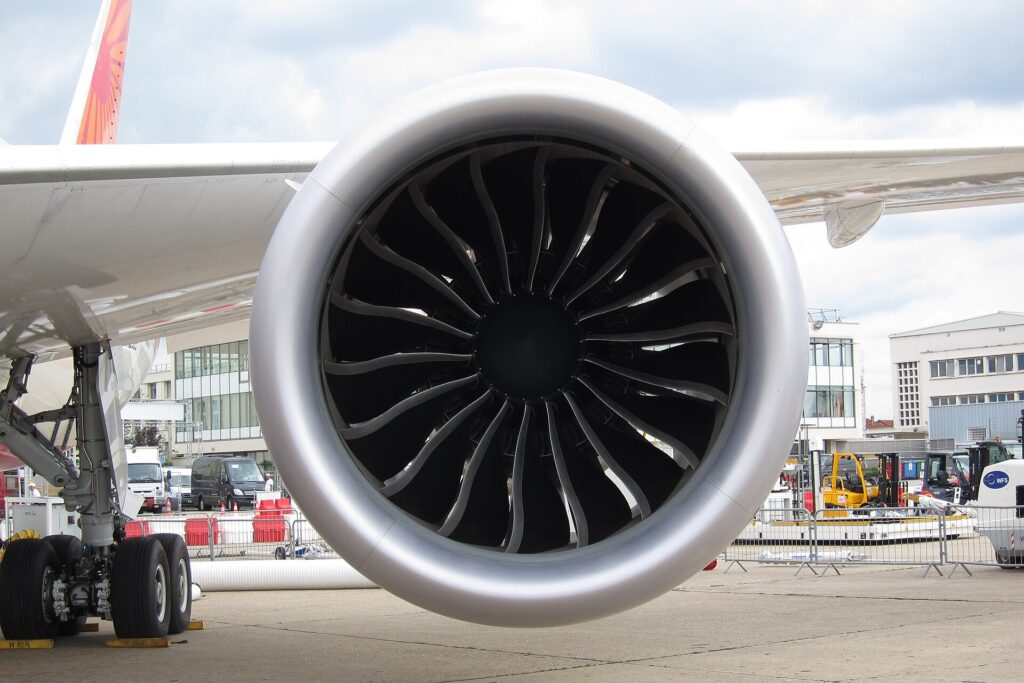
There is nothing to choose between the two here. Both are offered with the same two engines, the GE Aerospace GEnx-1B and the Rolls-Royce Trent 1000, and an airline typically picks one engine type for its 787 fleet.
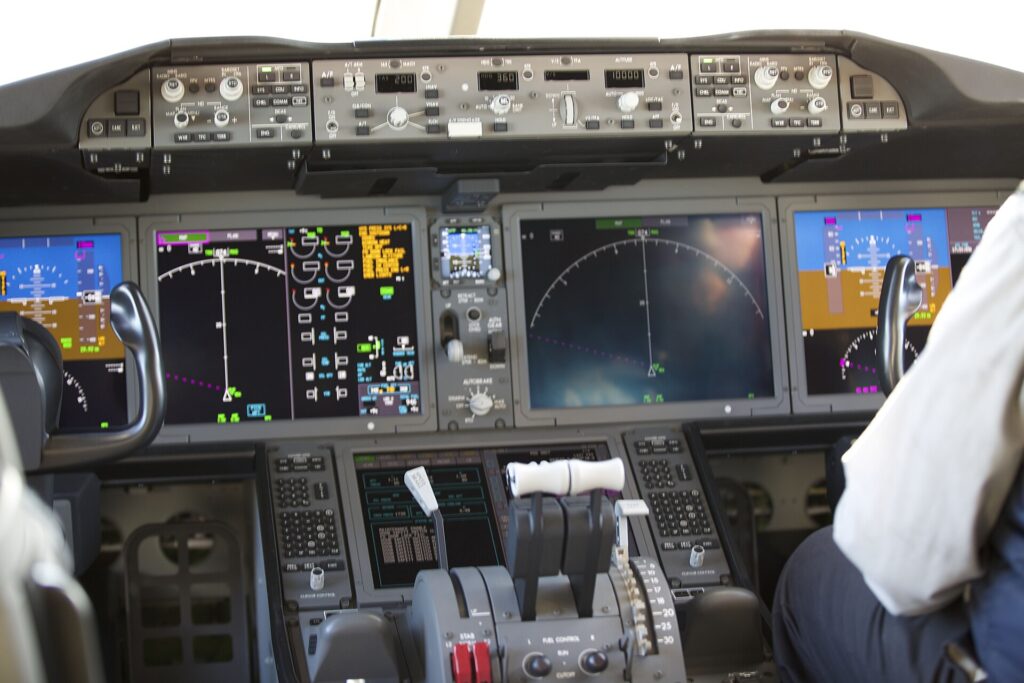
The flight deck is also the same, which lets an airline schedule the same pilots on the 787-8, 787-9 and 787-10.
Business Class, Seat Maps and Passenger Comfort
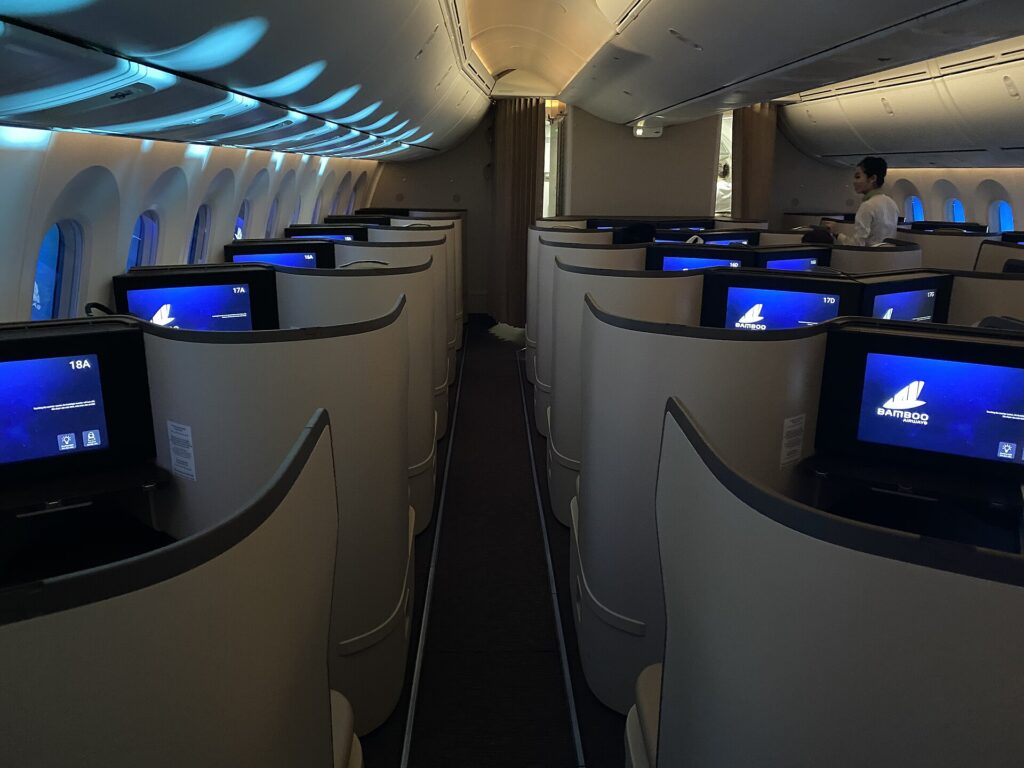
For passengers the two aircraft feel the same. The cabin cross-section, the windows and the cabin systems are identical, so the 787-10 is not wider or roomier than the 787-9. It is only longer.
What differs is how each airline fits it out. Because the 787-10 has more floor space, airlines often give it a larger economy cabin, and the business class seat may differ from the one on the same airline’s 787-9s. Two examples of airlines that fly both types are United Airlines and Etihad Airways.
If you are choosing between a 787-9 and a 787-10 flight, the aircraft type will not tell you much. Look up the airline’s own seat map for that flight instead: it shows the actual business class layout and the seat pitch in economy.
787-8 vs 787-9 vs 787-10
The 787 family has three members. The 787-8 is the original and shortest, the 787-9 is the mid-size model with the longest range, and the 787-10 is the largest.
| Specification | 787-8 | 787-9 | 787-10 |
|---|---|---|---|
| Length | 56.7 m | 62.8 m | 68.3 m |
| Seats (two-class) | 200 to 275 | 250 to 325 | 300 to 375 |
| Range | Up to 8,000 nm | Up to 8,300 nm | Up to 7,500 nm |
| Maximum take-off weight | 227,930 kg | 259,220 kg | 260,360 kg |
| Wingspan | 60.1 m | 60.1 m | 60.1 m |
Source: Boeing 787 product page, checked October 2026.
Boeing launched the 787-10 in June 2013, with Singapore Airlines among the launch customers. Across all three models, Boeing counts more than 2,450 orders from 90 customers, and says the 787 has opened more than 550 new non-stop routes.
Which Is Better?
The two aircraft are designed to work together, so the better one depends on the route.
- The 787-9 suits the longest routes and routes with fewer passengers, where range matters more than seat count.
- The 787-10 suits busy routes within its range, where about 40 extra seats and more cargo lower the cost of each seat.
- Many airlines fly both, using the same pilots, engines and spare parts across the two.
For how the 787 compares with its Airbus rival, see Boeing 787-9 vs Airbus A350-900. For the larger twin-engine jets above it, see Airbus A350-1000 vs Boeing 777-9, and for the basics of twin-aisle aircraft, our guide to widebody aircraft.
Frequently Asked Questions
What is the difference between the 787-9 and the 787-10?
The 787-10 is a stretched 787-9. It is 5.5 m longer and seats about 40 more passengers, but it has the same wing and the same fuel capacity, so it has less range: up to 7,500 nautical miles against up to 8,300 for the 787-9.
Which is bigger, the 787-9 or the 787-10?
The 787-10 is bigger. It is 68.3 m long against 62.8 m for the 787-9, and Boeing’s example two-class layout has 330 seats against 290. The wingspan and height are the same.
Which has more range, the 787-9 or the 787-10?
The 787-9. Boeing lists it at up to 8,300 nautical miles (15,370 km), against up to 7,500 nautical miles (13,890 km) for the 787-10.
Did the 787-10 get a range increase?
Yes. In March 2026 Boeing announced that the FAA had cleared a higher maximum take-off weight for the 787-9 and 787-10. Boeing says it adds more than 400 nautical miles of range to the 787-10 and more than 300 to the 787-9.
Is the 787-9 or the 787-10 better for passengers?
Neither is better by design. The cabin width, windows and cabin systems are the same on both. Seat comfort, legroom and business class layout are chosen by the airline, so the same airline can offer different seats on each type.
Do the 787-9 and 787-10 use the same engines?
Yes. Both are offered with either the GE Aerospace GEnx-1B or the Rolls-Royce Trent 1000.
What is the difference between the 787-8, 787-9 and 787-10?
They are three lengths of the same aircraft. The 787-8 is 56.7 m long, the 787-9 is 62.8 m and the 787-10 is 68.3 m. Each step up adds seats, and the 787-9 has the longest range of the three.
Featured image: FlyingFuel composite of photos by BWard 1997 (CC BY 4.0) and jounigripen (CC BY 2.0), via Wikimedia Commons.