
Planes fly at around 35,000 feet because it is the best balance between thin air, which cuts drag and saves fuel, and enough air for the wings to lift the aircraft and the engines to breathe. At that height they are also above most clouds and weather.
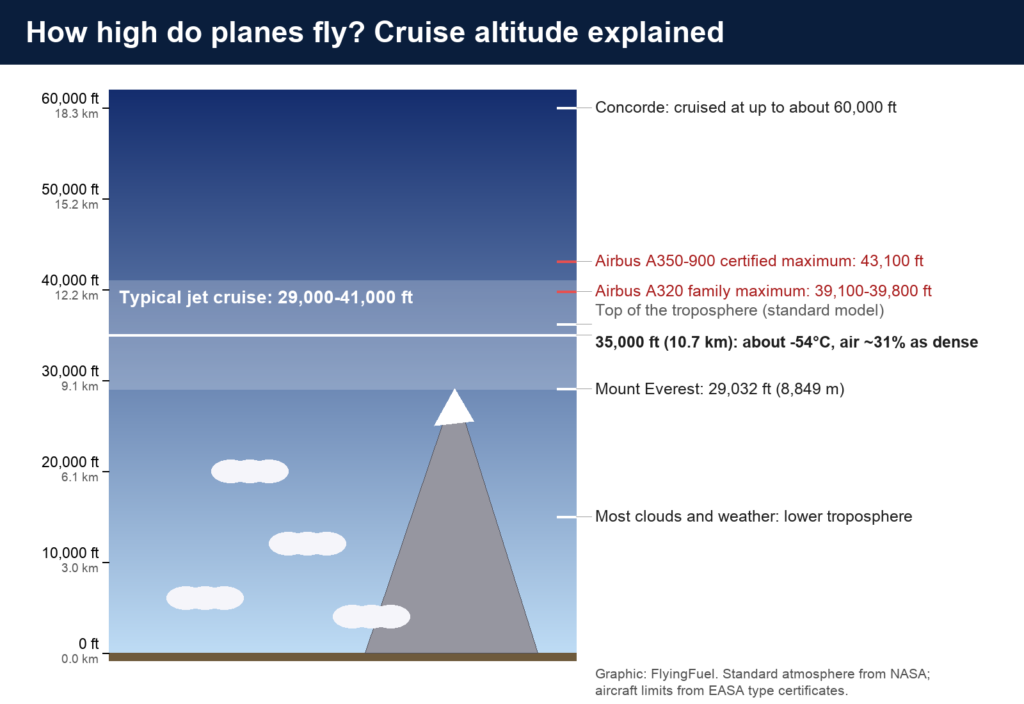
35,000 feet is a typical number, not a fixed rule. Most jet airliners cruise somewhere between about 30,000 and 41,000 feet, or 9 to 12.5 km. This guide explains why they fly so high, why they don’t fly higher or lower, who decides the altitude, and how high domestic flights in India fly.
How High Do Planes Fly?
A jet airliner’s cruising altitude is usually between about 30,000 and 41,000 feet. Here is what the common figures mean in other units:
| Altitude | Metres | Kilometres | Miles |
|---|---|---|---|
| 30,000 ft | 9,144 m | 9.1 km | 5.7 miles |
| 35,000 ft | 10,668 m | 10.7 km | 6.6 miles |
| 39,000 ft | 11,887 m | 11.9 km | 7.4 miles |
| 41,000 ft | 12,497 m | 12.5 km | 7.8 miles |
For comparison, Mount Everest is 29,032 feet (8,849 m) high, so a typical cruising jet is more than a kilometre above its summit. Concorde, which flew much faster, cruised at up to about 60,000 feet.
Why Do Planes Fly So High?
1. Thinner air means less drag and less fuel
Air gets thinner as you climb. Using NASA’s standard atmosphere model, the air at 35,000 feet is only about 31% as dense as at sea level. Thinner air pushes back less on the aircraft, so it can fly much faster through the air for the same fuel. The FAA’s Pilot’s Handbook of Aeronautical Knowledge explains how air density affects aircraft and engine performance.
For an airline, that is the main reason. Fuel is one of its biggest costs, and every minute at the right altitude saves fuel on every flight.
2. Jet engines work well in cold, thin air
Jet engines are designed to be most efficient at high altitude, where the air is very cold. In NASA’s model the temperature at 35,000 feet is about -54°C. Cold air is denser than warm air at the same pressure, which helps the engines.
3. Above most of the weather
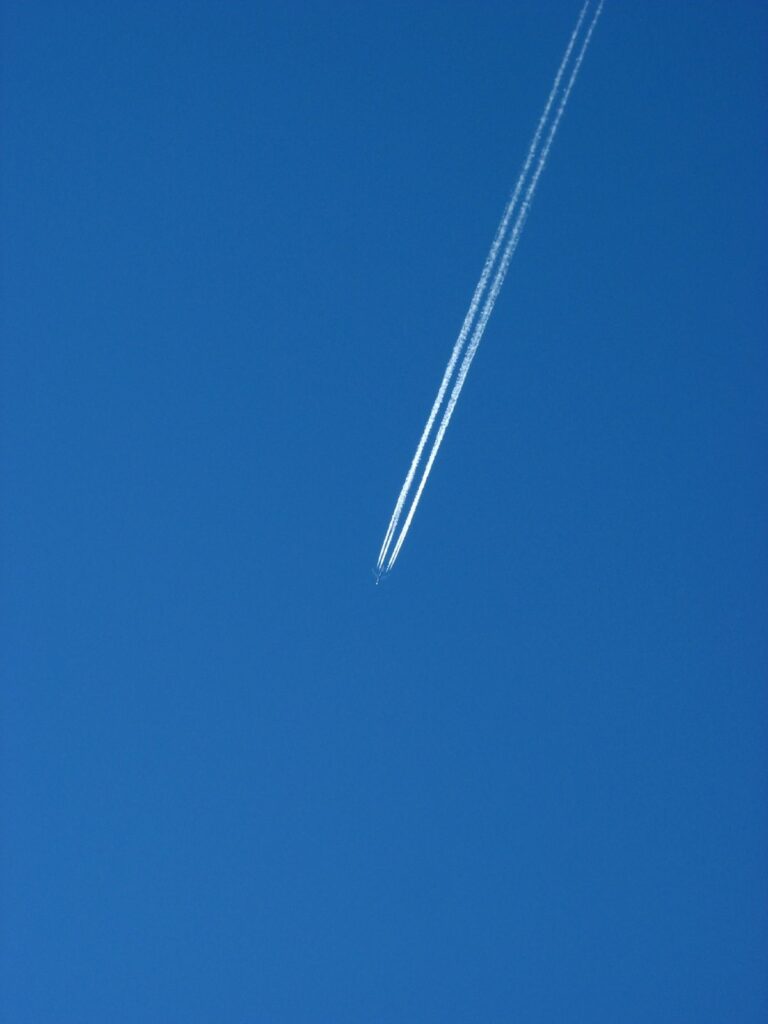
Most clouds, storms and rain form in the troposphere, the lowest layer of the atmosphere. In NASA’s standard model the troposphere ends at about 36,000 feet; in reality it is higher near the equator and lower near the poles. Cruising near the top of it, or above it, keeps flights out of most weather. Pilots still fly around tall thunderstorm clouds, which can reach above cruise level.
4. More room in an emergency
Height gives time. If an engine fails, a twin-engine jet can keep flying on the other one while it slowly descends to a lower level and heads for an airport. That is part of the planning behind ETOPS rules for flights far from land.
Why Don’t Planes Fly Higher?
If thin air saves fuel, why not fly at 50,000 feet? Because the advantages run out.
- The wings need air. In very thin air, a wing must fly faster to make enough lift, while the aircraft’s maximum speed stays limited. High up, the gap between too slow and too fast becomes small, especially when the aircraft is heavy.
- The engines need air too. Jet engines produce less thrust as the air gets thinner. At some point they cannot push the aircraft any higher.
- Every airliner has a certified ceiling. EASA’s A350 type certificate sets a maximum operating altitude of 43,100 feet for the A350-900 and 41,450 feet for the A350-1000. Its A320 family type certificate sets 39,100 feet for the A320 family, or 39,800 feet with a common modification.
- The cabin must stay pressurised. Under the FAA’s US certification rules, an airliner cabin must normally be kept at a pressure altitude of no more than 8,000 feet. The higher the aircraft flies, the bigger the pressure difference the fuselage has to hold.
Heavy planes start lower
Weight matters a lot. A plane full of fuel at the start of a long flight cannot climb as high as the same plane near the end, when it has burned tonnes of fuel. Boeing’s performance summary for the 737-800 shows this clearly: in its example, the aircraft can start cruising at 38,300 feet at its basic take-off weight, but only at 35,900 feet at its heaviest weight.
That is why long-haul flights often “step climb”, moving up to higher levels in steps as they burn fuel and get lighter.
Why Don’t Planes Fly Lower?
Lower down, the air is thicker. The aircraft has to push through more air, so it burns more fuel and flies more slowly over the ground. It would also spend more time in clouds, rain and bumpy air, and share the sky with smaller aircraft, helicopters and birds.
There is one exception. On short flights, climbing to 35,000 feet may not be worth it. The climb takes time and fuel, and the aircraft would soon have to come down again, so short routes often cruise at lower levels.
Who Decides How High a Plane Flies?
The airline’s flight plan chooses an efficient cruise altitude for each flight, based on the aircraft’s weight, the distance, the winds and the weather. Air traffic control then gives the final clearance, fitting each flight into the traffic around it.
At cruise, altitudes are given as flight levels. FL350 means 35,000 feet measured with a standard pressure setting, so that every aircraft’s altimeter is set the same way. Under ICAO’s standard table of cruising levels, aircraft heading roughly east usually use odd levels such as FL350 or FL370, and aircraft heading roughly west use even levels such as FL340 or FL360. This keeps opposite-direction traffic apart.
Between 29,000 and 41,000 feet, most of the world uses Reduced Vertical Separation Minima (RVSM). In this band, approved aircraft can be separated by just 1,000 feet vertically instead of the old 2,000 feet, which roughly doubled the number of levels available at the most efficient heights.
How High Do Domestic Flights Fly in India?
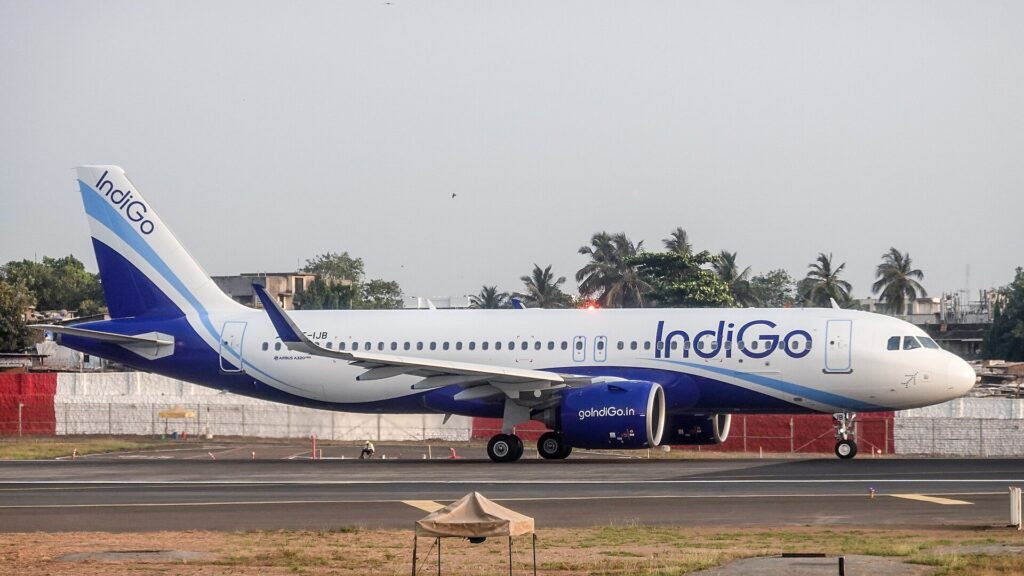
Domestic flights in India follow the same rules and the same physics. Most are flown by narrowbody jets such as the Airbus A320neo family, which IndiGo and Air India use, and the Boeing 737 MAX, which Akasa Air, Air India Express and SpiceJet fly. Read how those two compare in our A320neo vs 737 MAX 8 guide.
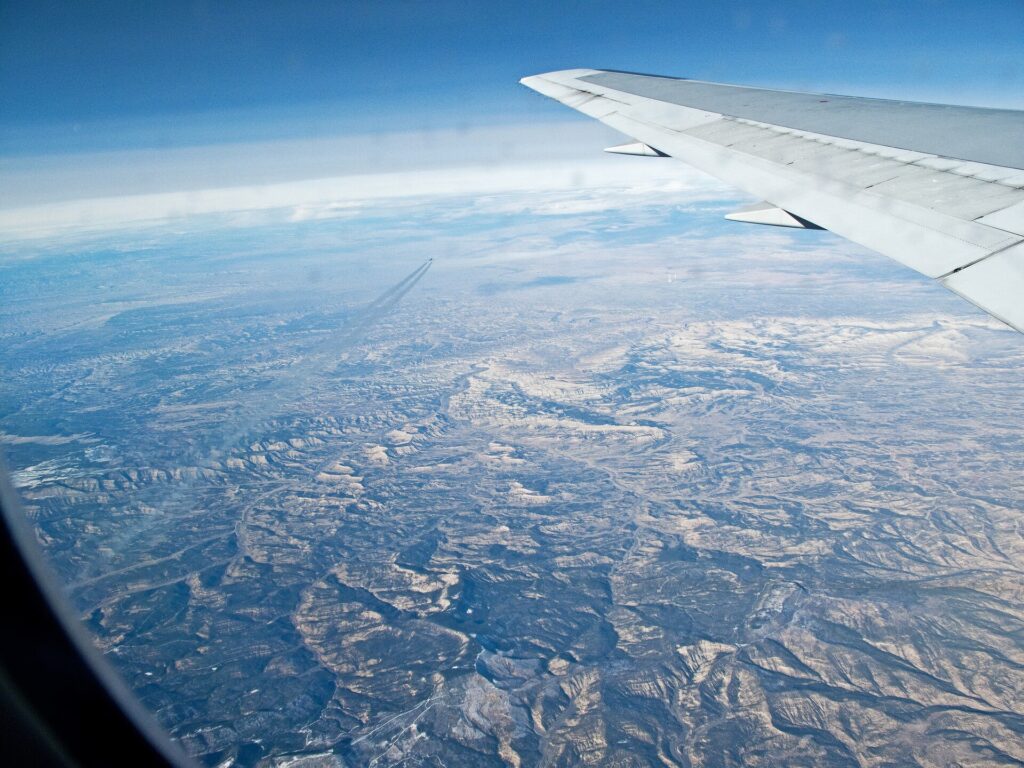
On longer domestic jet flights, the cruise level is usually somewhere above 30,000 feet. Short hops and turboprop flights, such as those flown by the ATR 72, cruise much lower. The exact level on any day depends on the aircraft’s weight, the winds and air traffic control.
What Is It Like Outside at 35,000 Feet?
- Temperature: about -54°C in the standard atmosphere.
- Air density: about 31% of sea level.
- Air pressure: about a quarter of sea level, far too low to breathe without help.
Inside, the cabin is pressurised so it feels like being at no more than about 8,000 feet. Newer widebody jets with carbon-fibre fuselages, such as the Boeing 787 and Airbus A350, keep the cabin at about 6,000 feet; see our Boeing 787-9 vs Airbus A350-900 comparison. If the cabin ever loses pressure, oxygen masks drop and the pilots descend quickly to a level where the air is breathable.
Frequently Asked Questions
Why do planes fly at 35,000 feet?
Because the air there is thin enough to cut drag and save fuel, but still dense enough for the wings to lift the aircraft and the engines to work well. It is also above most weather. 35,000 feet is a typical figure, not a fixed rule: most jets cruise somewhere between about 30,000 and 41,000 feet.
How high do planes fly in km?
Most jet airliners cruise at about 9 to 12.5 km above sea level. 35,000 feet is about 10.7 km, or 10,668 metres, which is roughly 6.6 miles.
Why don’t planes fly higher than 40,000 feet?
Most airliners are certified to fly no higher than about 39,000 to 43,000 feet. Higher up, the air is too thin for the wings and engines to work efficiently, especially when the aircraft is heavy, and the cabin must hold a larger pressure difference.
What is the maximum altitude of an A320?
EASA certifies the Airbus A320 family, including the A320neo used by IndiGo and Air India, for a maximum operating altitude of 39,100 feet, or 39,800 feet with a common modification.
How high do domestic flights in India fly?
Jet flights in India follow the same principles as anywhere else. Longer domestic jet flights usually cruise somewhere above 30,000 feet, while short flights and turboprops such as the ATR 72 fly lower. The exact level depends on distance, weight, weather and air traffic control.
What does FL350 mean?
FL350 means flight level 350, which is 35,000 feet measured with a standard pressure setting on the altimeter. Above a set height, all aircraft use the same setting so their altitudes are directly comparable.
Is it cold at 35,000 feet?
Yes. In NASA’s standard atmosphere model the outside air at 35,000 feet is about -54°C. Inside, the cabin is heated and pressurised, so passengers do not feel it.
Why do short flights fly lower?
Climbing takes time and fuel. On a short flight the aircraft would only stay at a high level for a few minutes before it had to start descending, so a lower cruise level is often more efficient.
Featured image: Harry Knight harryknight, CC0, via Wikimedia Commons.