
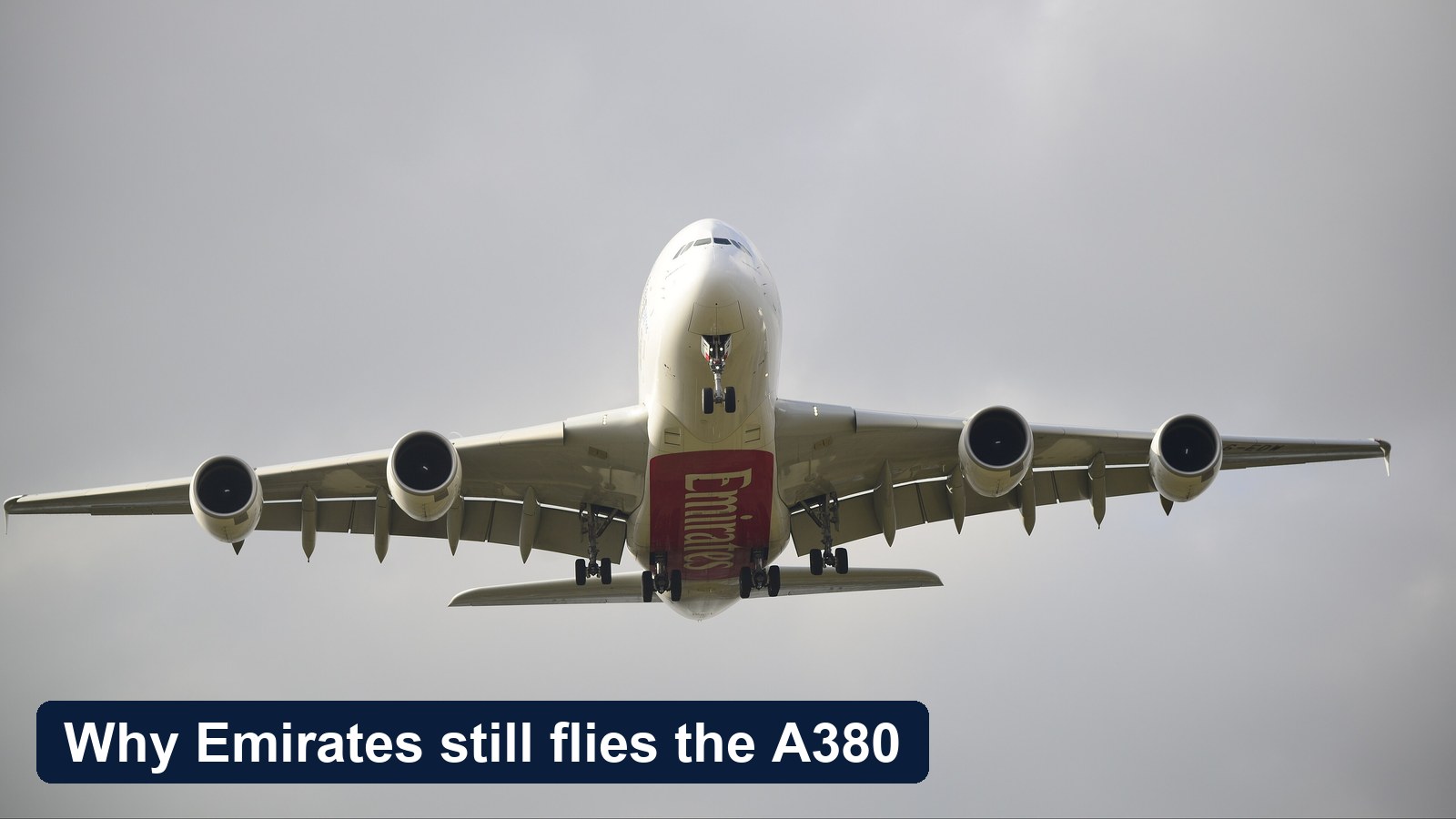
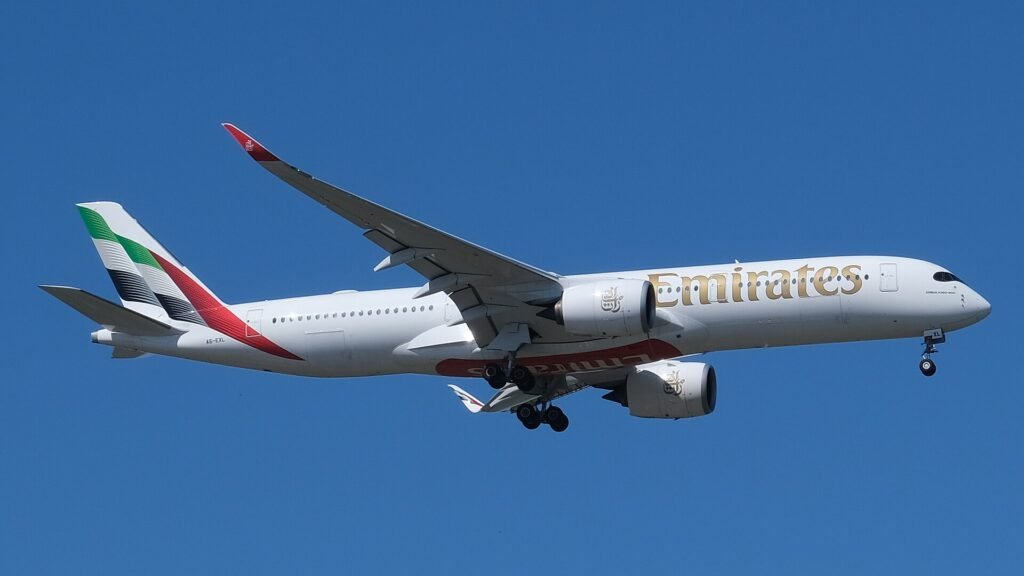
Emirates is the world’s biggest operator of the Airbus A380 by a wide margin. In November 2025 it listed 116 A380s in its fleet, while many other airlines have retired the superjumbo or kept only a few.
The short answer to why: Emirates sends almost all of its passengers through one hub, Dubai, which lets it fill very large aircraft on its busiest routes. This article explains how the A380 fits Emirates’ network, why other airlines gave up on it, what is changing inside the cabin, where Emirates flies the A380 in India, and how long it will keep flying.
How Many A380s Does Emirates Have?
Emirates listed 116 A380s in its fleet in the fleet and order table it published in November 2025. It was also the largest customer when the aircraft was being built: Emirates took delivery of 123 A380s, about half of the 251 Airbus produced, including the very last one in December 2021.
Not every aircraft flies every day. Like any airline, Emirates rotates aircraft through heavy maintenance, and it is also running a large cabin retrofit programme.
Emirates Widebody Fleet and Orders
| Aircraft | In fleet | On order |
|---|---|---|
| Airbus A380 | 116 | 0 |
| Boeing 777-300ER | 119 | 0 |
| Boeing 777-200LR | 10 | 0 |
| Boeing 777 freighters | 11 | 10 |
| Airbus A350-900 | 13 | 52 |
| Boeing 777-9 | 0 | 270 |
| Boeing 787 | 0 | 35 |
Source: Emirates fleet and order table, 17 November 2025. Emirates flies only widebody aircraft.
Why the A380 Works for Emirates
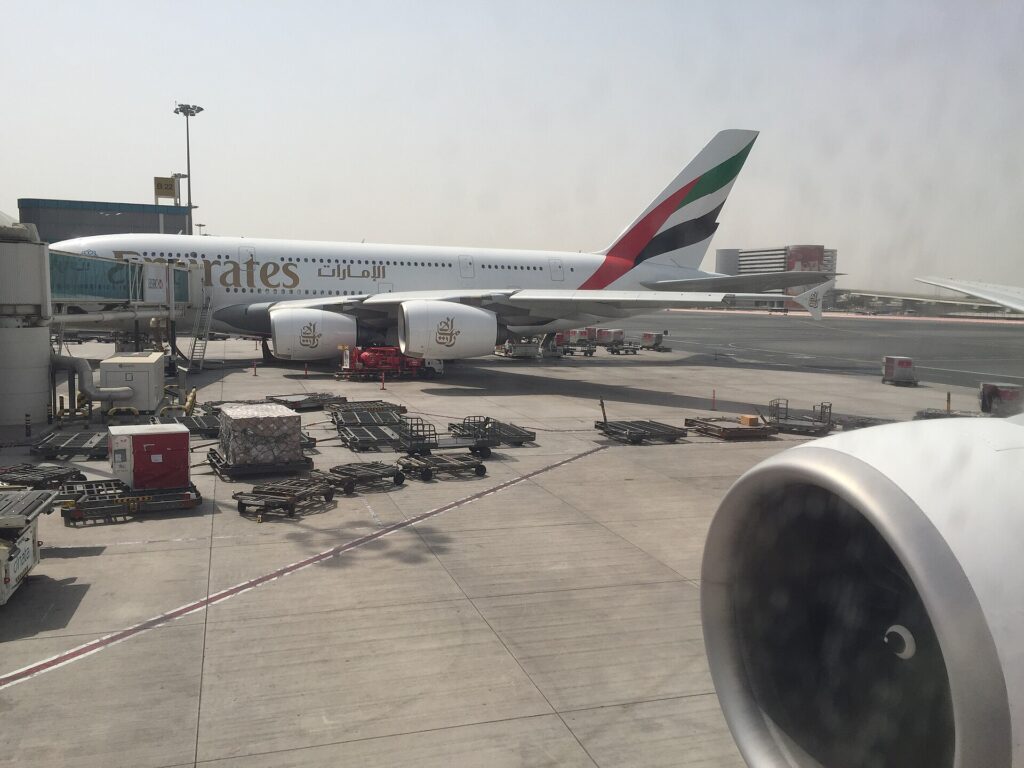
Most airlines that bought the A380 struggled to fill it. Emirates’ network is built in a way that suits a very large aircraft.
- One hub. Emirates has no domestic network. Nearly every flight starts or ends in Dubai, so a single flight to London or Sydney carries people from dozens of cities who connect in Dubai.
- Location. Dubai sits between Europe, Asia and Africa. A one-stop journey via Dubai is a natural route between many cities on those continents and Australia.
- Slots at busy airports. At crowded airports such as London Heathrow, the number of take-off and landing slots is limited. A bigger aircraft carries more people per slot.
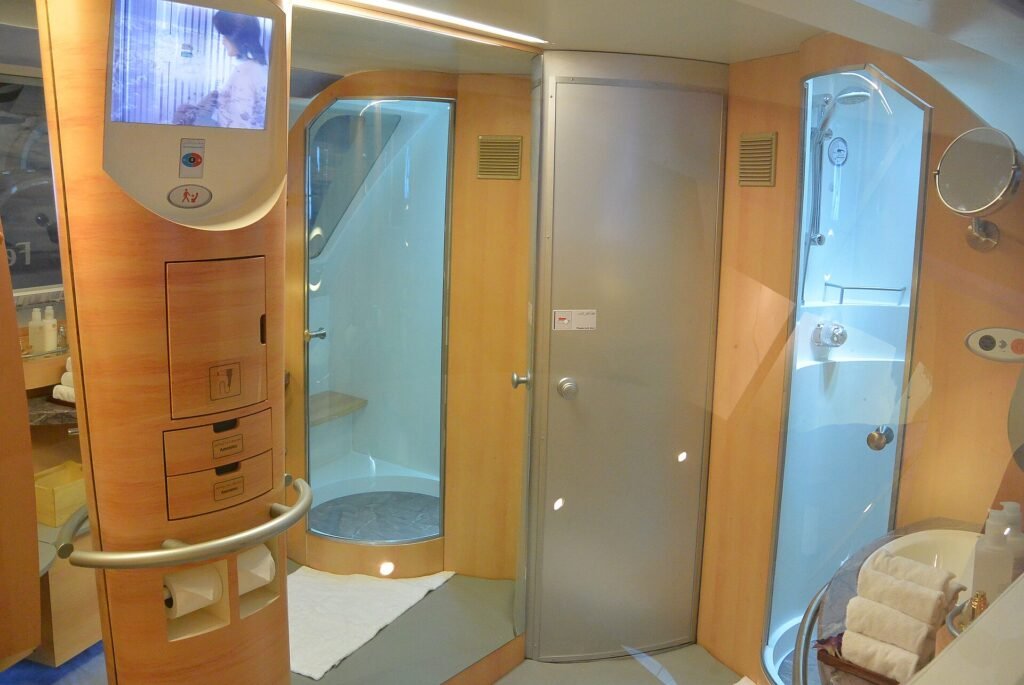
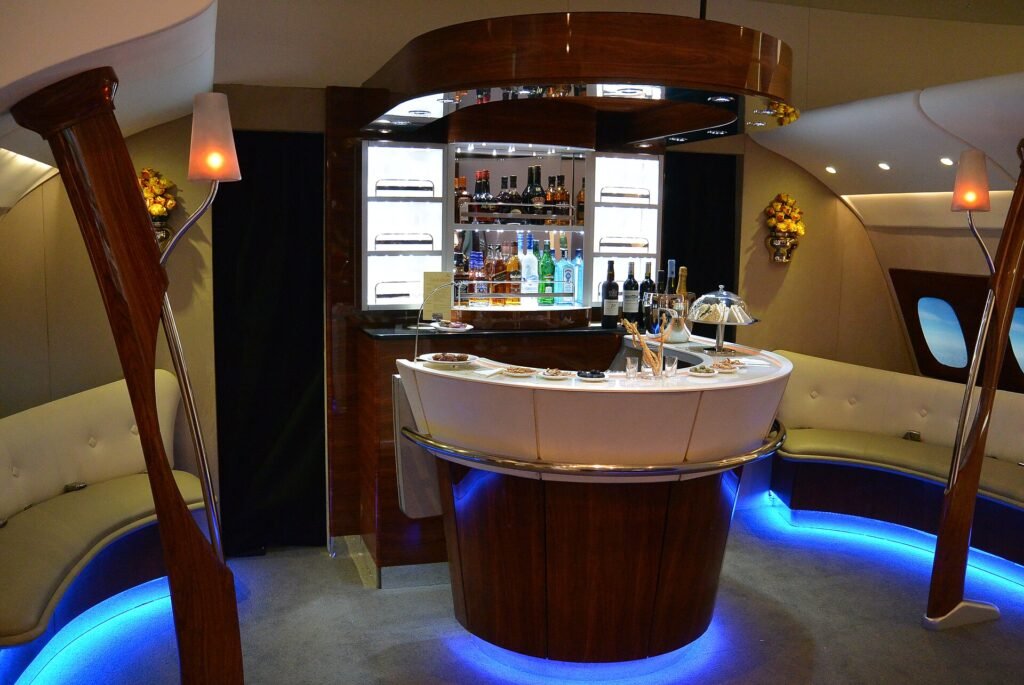
- Premium cabins. The A380’s two decks leave room for First Class suites, a shower and an onboard bar, features that help Emirates sell expensive tickets.
Why Other Airlines Retired the A380
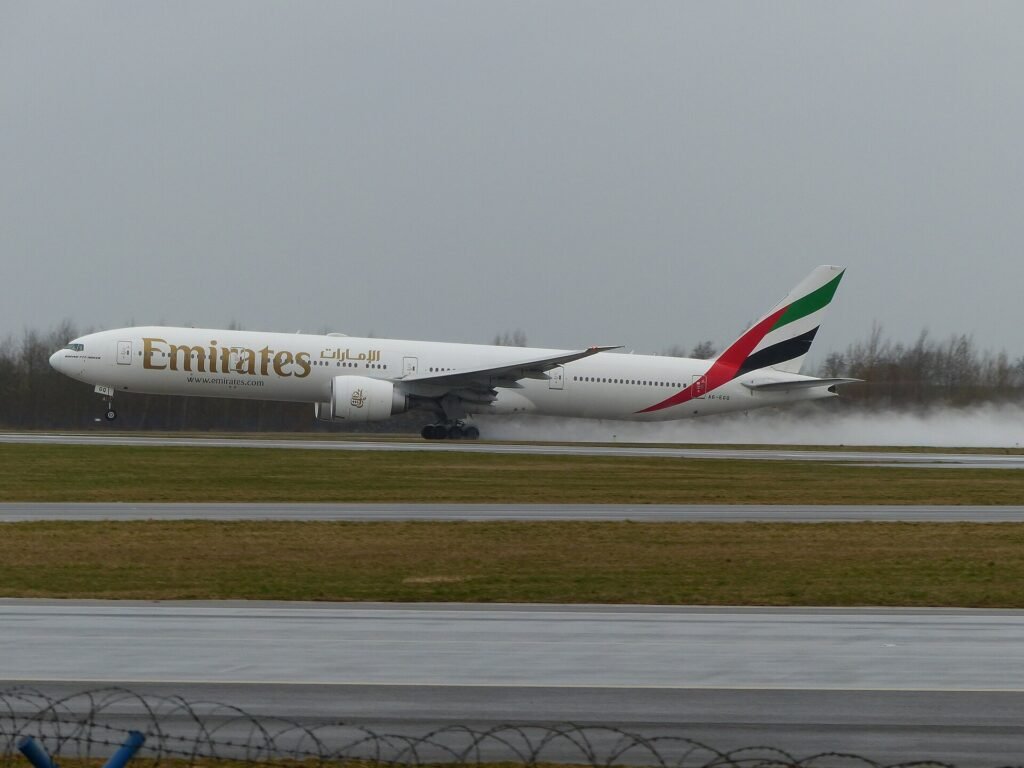
The A380 was designed to carry the most passengers on the busiest routes. In practice, most airlines found it hard to fill more than 500 seats day after day, and its four engines burn more fuel than modern twin-engine jets such as the Boeing 787 and Airbus A350.
Orders never reached what Airbus hoped for. In February 2019, after Emirates reduced its order from 162 to 123 aircraft, Airbus said it would end A380 production, and the last aircraft was delivered in 2021.
During the pandemic, several airlines retired their A380s early. Air France retired its fleet for good. Others, such as British Airways, Lufthansa, Qantas and Singapore Airlines, parked theirs and later brought some back on their busiest routes. Fuel cost is the main reason most airlines now prefer smaller twin-engine jets.
Inside the Emirates A380
The A380 is where Emirates offers its best-known features. They are not on every A380 or every route:
- First Class Private Suites and Shower Spa. First Class passengers can book a shower during the flight.
- Onboard Lounge. A bar and seating area at the back of the upper deck for Business and First Class passengers.
- Premium Economy. Added during the retrofit programme, between Business and Economy.
- Wi-Fi throughout the cabin.
The Emirates A380 Retrofit Programme
Instead of replacing the A380, Emirates is refurbishing it. In May 2026 the airline said its in-house programme had so far completed work on 95 aircraft, including 42 A380s and 53 Boeing 777s, with new seats and interiors in every cabin.
The same month it finished the first retrofit of a two-class A380, registration A6-EUX. It now has 569 seats in three cabins: 76 Business, 56 Premium Economy and 437 Economy, with Premium Economy on the upper deck for the first time. Emirates plans to refurbish 15 two-class A380s in this way.
Emirates A380 Flights to India
Emirates flies the A380 to Mumbai and Bengaluru. Emirates announced in July 2026 that Delhi would become its third A380 destination in India from 25 October 2026, on flights EK512/513 in a four-class layout.
In the same announcement, Emirates said Premium Economy would be available from six Indian cities by the end of October 2026: Delhi, Mumbai, Ahmedabad, Bengaluru, Kolkata and Kochi. If you want to fly the A380, check the aircraft type when you book, because Emirates uses the 777 and the A350 on its other flights to India.
What Comes After the A380?
Emirates president Sir Tim Clark said in June 2025 that the airline plans to keep the A380 flying until around 2040, later than the mid-2030s date it gave before.
Its replacement on most routes will be the Boeing 777-9. Emirates has ordered 270 of them, making it the largest 777X customer. The 777-9 is still being certified, and Boeing expects the first delivery in 2027. Read how it compares in our Airbus A350-1000 vs Boeing 777-9 guide.
Emirates is also adding smaller twin-engine jets. It had 13 Airbus A350-900s in its fleet and 52 more on order in November 2025, plus 35 Boeing 787s on order. For how those types compare, see our 787-9 vs A350-900 comparison.
Frequently Asked Questions
How many A380s does Emirates have?
Emirates listed 116 Airbus A380s in its fleet in November 2025, by far the most of any airline. It took delivery of 123 A380s in total, about half of the 251 that Airbus built.
Why does Emirates fly so many A380s?
Emirates runs its whole network through one hub, Dubai, so it can fill very large aircraft with passengers connecting between Europe, Asia, Africa and Australia. The A380 also carries the most people per take-off and landing slot at busy airports such as London Heathrow.
Does Emirates fly the A380 to India?
Yes. Emirates flies the A380 to Mumbai and Bengaluru, and it announced that Delhi would become its third A380 destination in India from 25 October 2026, on flights EK512/513.
When will Emirates retire the A380?
Emirates president Sir Tim Clark said in June 2025 that the airline plans to keep flying the A380 until around 2040. The Boeing 777-9 is expected to take over its routes over time.
How many seats does the Emirates A380 have?
It depends on the version. The first two-class A380 that Emirates retrofitted in 2026 has 569 seats: 76 Business, 56 Premium Economy and 437 Economy. Other Emirates A380s have First Class suites and fewer seats.
Does the Emirates A380 have a shower?
Yes. Emirates A380s with First Class have a Shower Spa for First Class passengers, and many have an Onboard Lounge for premium passengers. Both depend on the aircraft and route.
Is Airbus still making the A380?
No. Airbus announced in February 2019 that it would end A380 production after Emirates reduced its order. The last A380 was delivered to Emirates in December 2021.
Featured image: Aleem Yousaf, CC BY-SA 2.0, via Wikimedia Commons.
 Aircraft ComparisonsBoeing 737 MAX 8 vs 737-800: What Changed and Which Is Better? (2026)
 NewsMalaysia Airlines to Buy 10 Boeing 787-10 Dreamliners to Replace Its Airbus A350s From 2032
 AirportsAirports in Odisha: Bhubaneswar, Jharsuguda, Jeypore and More Ranked (2026 Data)
 NewsNew Visakhapatnam Airport at Bhogapuram to Charge Rs 890 Per Departing Domestic Passenger From 1 December
 AirportsAirports in Karnataka: Bengaluru, Mangaluru, Hubballi, Belagavi and More Ranked (2026 Data)
 Aircraft ComparisonsAirbus A350-900 vs Boeing 777-300ER: Which Long-Haul Jet Is Better? (2026)