
If you fly between smaller cities in India, Europe, Canada or Australia, there is a good chance your plane has propellers, and it is probably one of two aircraft: the ATR 72-600 or the De Havilland Canada Dash 8-400, still widely called the Q400. Both are twin turboprops with four seats per row, but they are built for different jobs. Here is how they compare on seats, speed, range, runways, engines, cabin and safety.
Quick answer: the Dash 8-400 is the bigger, faster turboprop: up to 90 seats, 300-360 kt and about 1,100 nm of range. The ATR 72-600 seats up to 78, cruises at 270 kt and flies 683 nm with a full cabin, but it is lighter, needs less runway and is still in production. In India, IndiGo flies 44 ATRs; SpiceJet launched the 90-seat Dash 8-400.
ATR 72-600 vs Dash 8-400: Specs Side by Side
| Item | ATR 72-600 | Dash 8-400 |
|---|---|---|
| Maker | ATR (Airbus and Leonardo), Toulouse | De Havilland Canada (Bombardier until 2019) |
| Seats | Up to 78 | Up to 90; typical 82 |
| Cruise speed | 270 KTAS maximum cruise | 300-360 kt high-speed cruise |
| Range | 683 nm (1,265 km), maximum passengers | 1,100 nm (2,040 km) |
| Take-off / landing distance | 1,304 m / 915 m | 1,425 m / 1,289 m |
| Maximum take-off weight | 23,000 kg | 30,481 kg |
| Engines | 2 x Pratt & Whitney Canada PW127XT | 2 x Pratt & Whitney Canada PW150 (5,071 hp each) |
| Length / wingspan / height | 27.17 m / 27.05 m / 7.65 m | 32.8 m / 28.4 m / 8.4 m |
| Ceiling | – | 27,000 ft |
| Entered service | -600 prototype flew 24 July 2009 | 2000 (as the Q400) |
| Status | In production | Production paused since 2022 |
Sources: ATR 72-600 brochure; Wikipedia: ATR 72; De Havilland Canada: Dash 8-400; Wikipedia: Dash 8 (specification table). Range figures use different load assumptions.
Size and Seats
The Dash 8-400 is the bigger aircraft: 32.8 m long against 27.17 m, with a maximum take-off weight about a third higher (30,481 kg against 23,000 kg). That extra length buys seats. De Havilland Canada says it carries up to 90 passengers, the highest capacity of any turboprop on the market; Wikipedia gives a typical 82 at 30-inch pitch. The 90-seat layout was certified in August 2018 for SpiceJet.
The ATR 72-600 carries up to 78, after EASA approved a high-density layout in December 2015 (74 was the earlier maximum). On a route where an airline sells 60 to 70 seats, the smaller ATR is often the better fit; where it can fill 80 or more, the Dash 8-400 earns more per flight.
Speed and Range

This is the Dash 8-400’s big advantage. Wikipedia gives it a high-speed cruise of 300-360 kt, close to jet speeds on short sectors, and a range of about 1,100 nm. De Havilland Canada says it flies 40% further and 30% faster than conventional turboprops. The ATR 72-600’s maximum cruise is 270 KTAS at 20,000 ft and its range with a full cabin is 683 nm. On a 90-minute flight the Dash 8-400 can save several minutes, and it can fly routes the ATR cannot reach with a full load.
Runways and Small Airports
Short, small runways favour the ATR. It needs 1,304 m to take off and 915 m to land at maximum weight, against 1,425 m and 1,289 m for the Dash 8-400. That suits India’s UDAN regional routes and hill airports such as Shillong, whose 6,000 ft runway takes ATR 72s but not A320s; see our guide to airports in Northeast India. De Havilland Canada says the Dash 8-400 can use unpaved runways and hot, high airports.
Fuel and Running Costs
ATR quotes fuel burn of 650 kg an hour for the 72-600 and says it uses about 45% less fuel per trip than a similar-size regional jet on a 300 nm route. New aircraft have the PW127XT engine, which ATR says cuts maintenance costs by 20% and fuel use by 3% against the earlier PW127M. The heavier, more powerful Dash 8-400 (two PW150s of 5,071 hp each) trades some of that economy for speed. Our turbofan vs turboprop guide explains why both beat jets on short routes.
Cabin and Noise
Both cabins have a single aisle with two seats on each side, so there is no middle seat. The Dash 8-400’s cabin is 18.80 m long and 2.52 m wide, according to Wikipedia. ATR describes a full-standing aisle and large overhead bins in the 72-600.

Noise was the reason for the Q400 name. Every Dash 8-400 has an active noise and vibration suppression system, which Wikipedia says brings cabin noise close to that of jet airliners; Bombardier added the “Q” for quiet. On both types, seats near the propellers are louder than those at the back.

Cockpit
The ATR 72-600 has five wide LCD screens and a multi-purpose computer to reduce pilot workload, and its cockpit is common with the smaller ATR 42-600, so pilots can fly both. Read more in our ATR 72-600 review. Both aircraft are flown by two pilots with traditional control columns.
Safety Record
Both aircraft fly with large airlines around the world. Wikipedia lists 66 accidents and incidents for the ATR 72 family since 1989, including 40 hull losses and 13 fatal accidents as of August 2024, five of them in icing. For the Dash 8 it lists 80 accidents and incidents across all series, including 31 hull losses; the deadliest involving a Dash 8-400 was US-Bangla Airlines Flight 211 at Kathmandu in 2018, which Wikipedia attributes to pilot error. These totals cover decades and several generations of each aircraft, so they say more about specific operators and conditions than about the current models.
Production and Orders
The ATR 72-600 is still assembled in Toulouse. The Dash 8-400 is not being built at the moment: Wikipedia says De Havilland Canada paused production for lack of orders and has not built new aircraft since 2022, while it develops a new factory, De Havilland Field in Wheatland County, Alberta, which broke ground in May 2026. It announced orders for seven Dash 8-400s at Farnborough in July 2024, and says more than 620 have been delivered to over 70 operators. See our De Havilland Canada guide.
Which Airlines Fly Them in India?
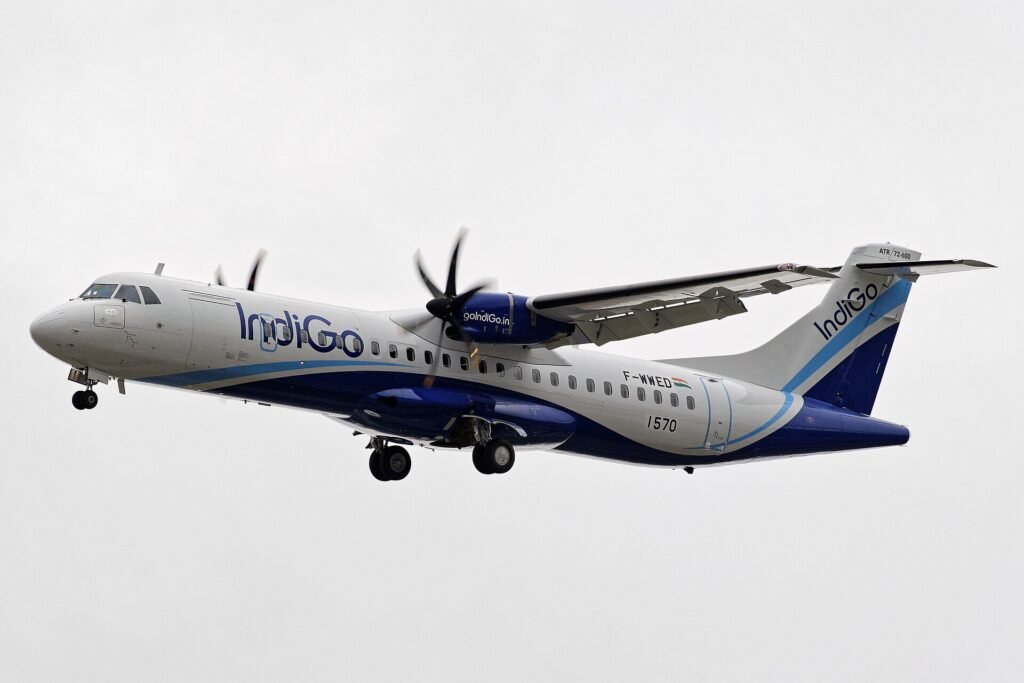
IndiGo had 44 ATR turboprops on 30 September 2026, according to its Q2 FY27 results, and uses them to link smaller cities. SpiceJet was the launch customer for the 90-seat Dash 8-400, delivered in September 2018. Other ATR operators are covered in our regional airlines in India guide.
Pros and Cons
ATR 72-600
- Pros: lowest fuel burn (650 kg/h); short runways (1,304 m / 915 m); still in production; common cockpit with the ATR 42-600
- Cons: slow (270 kt); 683 nm range with a full cabin; up to 78 seats
Dash 8-400
- Pros: up to 90 seats; 300-360 kt cruise; about 1,100 nm range; noise and vibration suppression
- Cons: production paused since 2022; heavier and needs more runway; higher fuel burn than the ATR
Our Verdict
Choose the ATR 72-600 for short, thin regional routes from small runways, where low fuel burn decides whether a route makes money; IndiGo flies 44 of them. Choose the Dash 8-400 for longer or busier turboprop routes, where its extra 12 seats and near-jet speed matter. For passengers, the Dash 8-400 is usually the quicker ride; the ATR is the one you are more likely to board on a regional flight in India.
Frequently Asked Questions
Which is better, the ATR 72-600 or the Dash 8-400?
It depends on the route. The Dash 8-400 is bigger (up to 90 seats against 78), faster (300-360 kt against 270 kt) and flies further (about 1,100 nm against 683 nm). The ATR 72-600 is lighter, needs less runway and ATR says it burns about 45% less fuel per trip than a similar-size regional jet on a 300 nm route. The ATR suits short, thin routes; the Dash 8-400 suits routes where speed and seats matter more.
Is the Q400 the same as the Dash 8-400?
Yes. Bombardier called it the Q400 (Q for quiet, after its noise and vibration suppression system). Since De Havilland Canada took over the programme in 2019 it is sold as the Dash 8-400.
Which is faster, the ATR 72 or the Q400?
The Dash 8-400. Wikipedia gives a high-speed cruise of 300 to 360 knots, against a maximum cruise of 270 knots for the ATR 72-600 in ATR’s brochure.
How many seats does the ATR 72-600 have compared with the Q400?
The ATR 72-600 seats up to 78, usually four per row. The Dash 8-400 seats up to 90 at 28-inch pitch, or a typical 82 at 30 inches, also four per row.
Which Indian airlines fly the ATR 72-600 and the Dash 8-400?
IndiGo had 44 ATR turboprops on 30 September 2026, according to its Q2 FY27 results. SpiceJet was the launch customer for the 90-seat Dash 8-400, delivered in 2018, according to Wikipedia.
Is the Dash 8-400 still in production?
Not at the moment. Wikipedia says production has been suspended since 2022 while De Havilland Canada builds a new factory in Wheatland County, Alberta, which broke ground in May 2026. The ATR 72-600 is still built in Toulouse.
Which turboprop needs a shorter runway?
The ATR 72-600: 1,304 m to take off and 915 m to land at maximum weight, according to ATR. Wikipedia gives 1,425 m and 1,289 m for the heavier Dash 8-400.
Which is safer, the ATR 72 or the Dash 8?
Both fly with major airlines. Wikipedia lists 66 accidents and incidents for the ATR 72 family since 1989, including 40 hull losses, and 80 accidents and incidents across all Dash 8 series, including 31 hull losses. These totals span several generations and say more about operators and conditions than about the current models.
What engines do the ATR 72-600 and Dash 8-400 use?
Both use Pratt & Whitney Canada turboprops. New ATR 72-600s have the PW127XT with six-bladed propellers; the Dash 8-400 uses the PW150, rated at 5,071 hp each, according to Wikipedia.
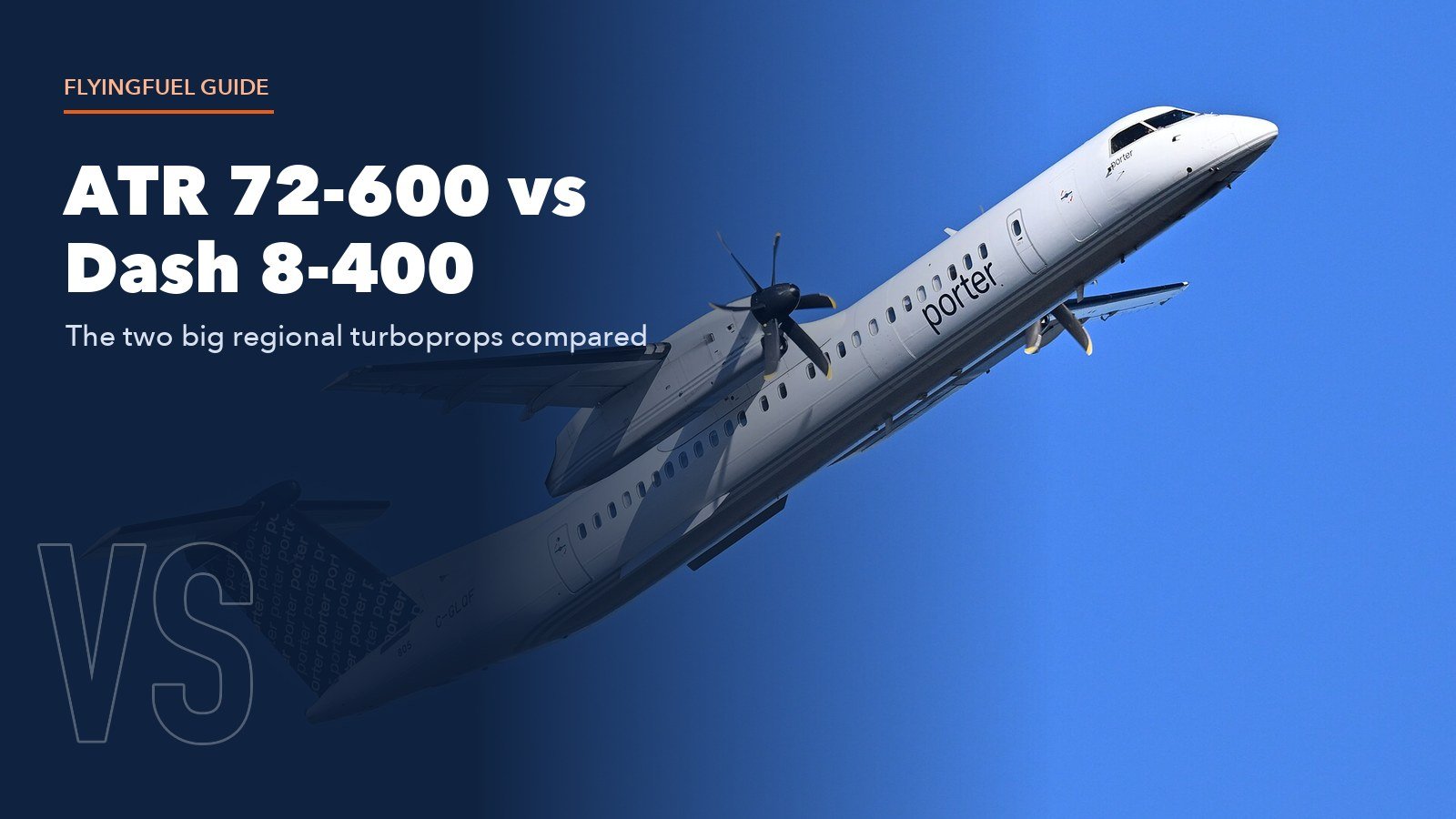
Featured image: FlyingFuel graphic using a photo of a Porter Airlines Dash 8-400 departing Boston by 4300streetcar, CC BY 4.0, via Wikimedia Commons.
 Aircraft ComparisonsBoeing 737 MAX 8 vs 737-800: What Changed and Which Is Better? (2026)
 NewsMalaysia Airlines to Buy 10 Boeing 787-10 Dreamliners to Replace Its Airbus A350s From 2032
 AirportsAirports in Odisha: Bhubaneswar, Jharsuguda, Jeypore and More Ranked (2026 Data)
 NewsNew Visakhapatnam Airport at Bhogapuram to Charge Rs 890 Per Departing Domestic Passenger From 1 December
 AirportsAirports in Karnataka: Bengaluru, Mangaluru, Hubballi, Belagavi and More Ranked (2026 Data)
 Aircraft ComparisonsAirbus A350-900 vs Boeing 777-300ER: Which Long-Haul Jet Is Better? (2026)