
A wet lease is when an airline rents an aircraft together with its crew, and usually its maintenance and insurance, from another airline or a specialist company. The airline that rents it sells the tickets under its own name and flight numbers, while the other company provides a complete, ready-to-fly aircraft.
Wet leases are common in India and around the world. IndiGo, for example, flew Boeing 777s from Turkish Airlines and started its long-haul flights with Boeing 787-9s from Norse Atlantic Airways, both on wet or damp leases. This guide explains what a wet lease is, how it differs from a dry or damp lease, why airlines use them and what it means for passengers.
What Is a Wet Lease?
The US Federal Aviation Regulations define a wet lease as any leasing arrangement in which a person agrees to provide an entire aircraft and at least one crew member. The same definition notes that a wet lease does not include a code-sharing arrangement.
In practice, the company providing the aircraft is called the lessor, and the airline renting it is the lessee. In most wet leases the lessor also keeps responsibility for maintaining and insuring the aircraft, and its pilots fly it. The lessee decides the schedule, sells the tickets and usually pays for fuel, airport charges and ground handling.
Wet lease, ACMI lease: the same thing
Wet leases are often called ACMI leases, after the four things the lessor provides: Aircraft, Crew, Maintenance and Insurance. The lessee typically pays a rate for each block hour the aircraft flies.
There is no official explanation for the word “wet”. It is industry slang: a wet aircraft comes complete and ready to go, while a “dry” one is just the aircraft.
Wet Lease vs Damp Lease vs Dry Lease
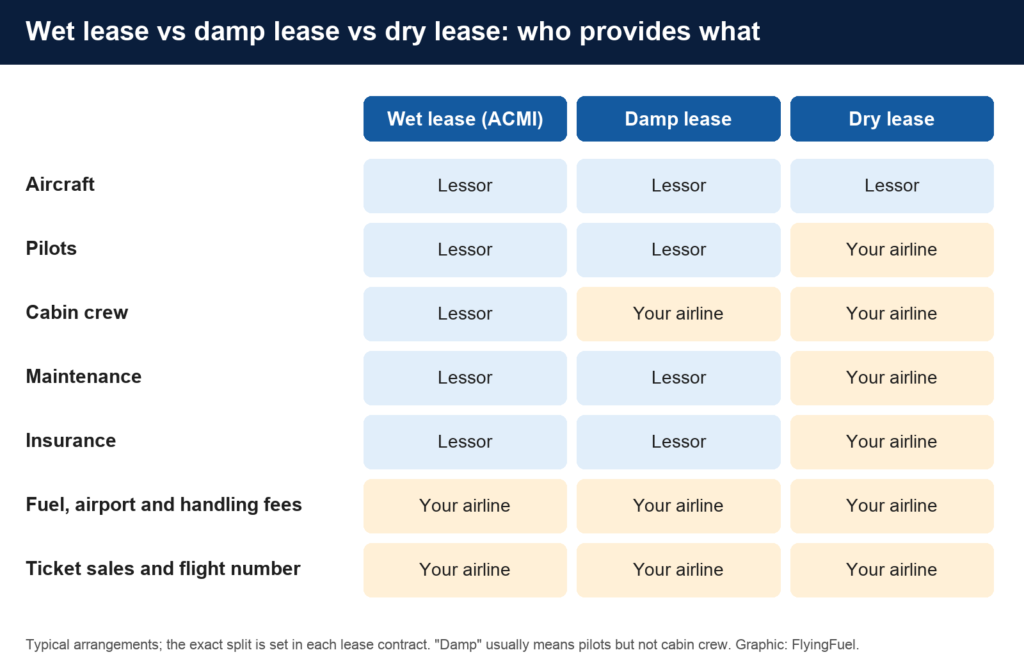
- Wet lease (ACMI): aircraft, pilots, cabin crew, maintenance and insurance all come from the lessor. Usually short term, from a few weeks to a few months.
- Damp lease: like a wet lease, but the airline renting the aircraft provides its own cabin crew. This lets it offer its own service on board.
- Dry lease: the aircraft only. The airline provides everything else, flies it under its own safety approval and usually registers it in its own country. Dry leases often run for many years, and many airlines lease most of their fleet this way.
The terms are not always used precisely. News reports and even airlines sometimes call the same deal a wet lease in one place and a damp lease in another, so the lease contract is what really defines it.
Why Do Airlines Wet Lease Aircraft?
- Peak seasons: extra aircraft for summer holidays or the Hajj, without buying aircraft that would sit idle the rest of the year.
- Grounded or delayed aircraft: engine problems, maintenance delays or late deliveries can leave an airline short of aircraft. A wet lease fills the gap quickly.
- Starting new routes fast: an airline can launch a route, especially with widebody aircraft it does not yet own, before its own aircraft and trained crews are ready.
- Testing a market: a short wet lease lets an airline see whether a route works before committing its own fleet.
The trade-off is cost and control. Wet leasing is usually more expensive per hour than flying your own aircraft, and the airline has less control over the cabin, crew and reliability.
Wet Leasing in India
Indian airlines need approval from the DGCA to wet or damp lease a foreign aircraft, and the approval is time-limited. The DGCA tightened its rules in 2024: the lease period was raised from three months (extendable by three) to six months (extendable by six), and aircraft can only be leased from countries that score at least 80% on average in ICAO’s safety oversight audit. The rules have been revised again since, so the current DGCA requirements are the final word.
IndiGo and Turkish Airlines
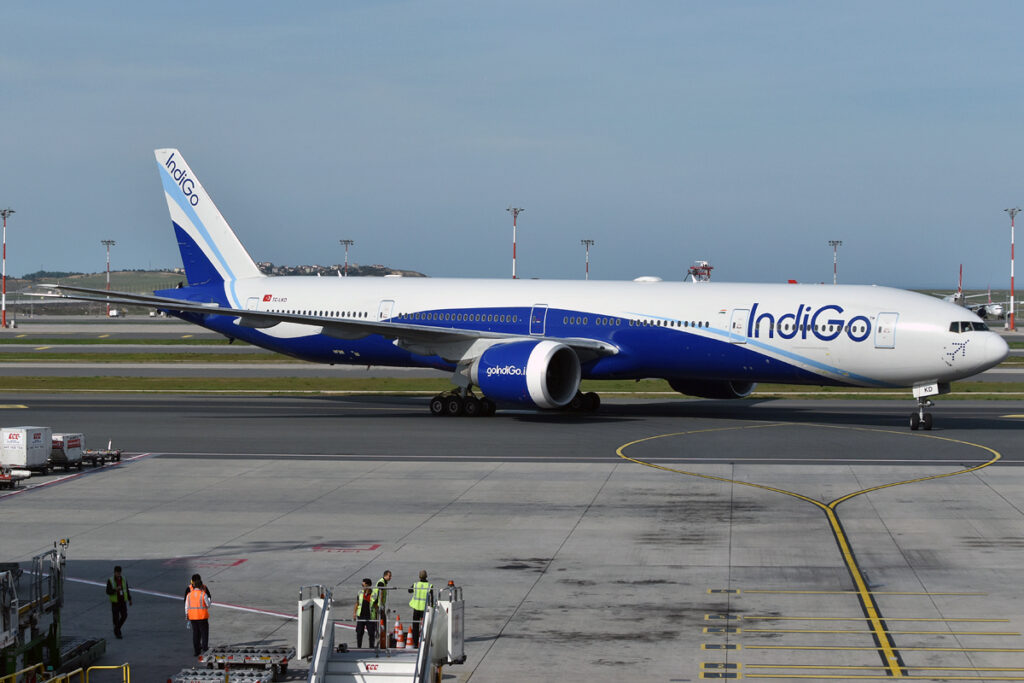
IndiGo flew two Turkish Airlines Boeing 777-300ERs, TC-LKD and TC-LKE, on its Delhi and Mumbai to Istanbul routes. The aircraft wore IndiGo colours but kept their Turkish registrations, and the DGCA extended the arrangement several times, finally until 28 February 2026.
As that deadline approached, IndiGo moved its Istanbul flights to its own narrowbody Airbus jets with a fuel stop, as reported by ch-aviation, until it could use the longer-range A321XLR.
IndiGo and Norse Atlantic
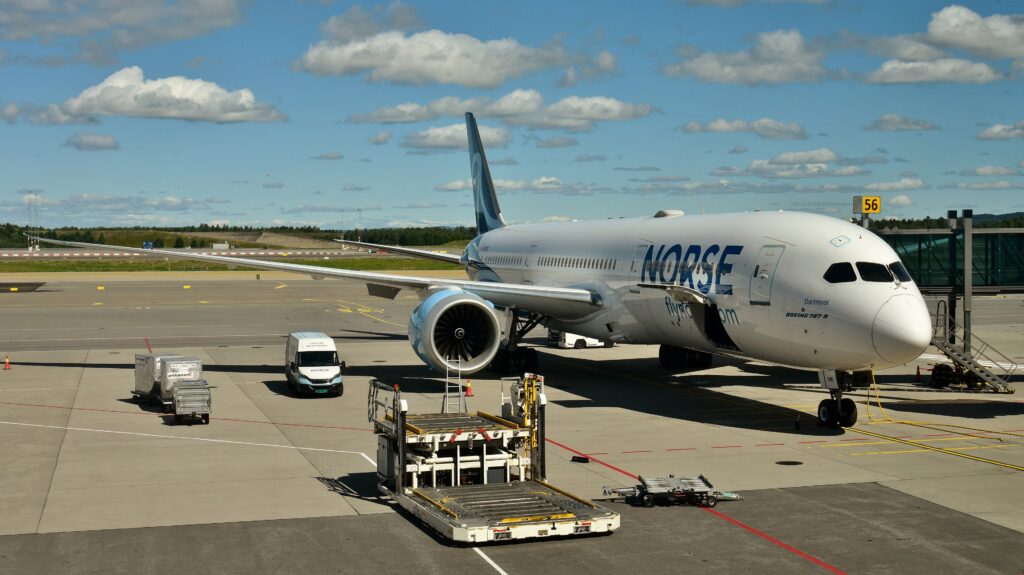
IndiGo’s first long-haul flights also used leased aircraft. For its Mumbai to Manchester route in 2025, IndiGo said it had damp-leased a Boeing 787 Dreamliner from Norse Atlantic Airways, with a cabin of 56 IndiGoStretch seats and 282 economy seats.
Wet Leasing in Other Countries
Most countries regulate wet leases, especially when the aircraft comes from abroad. In the US, FAA rules require airlines to give the FAA a copy of a wet lease and limit wet leasing from foreign carriers. Under EU rules, EU airlines can wet lease aircraft from outside the EU only in limited, time-bound cases, unless an international agreement allows more.
In Europe, wet leasing is a regular part of summer: many airlines hire extra aircraft and crews from specialist ACMI operators to handle the holiday peak.
What a Wet Lease Means for Passengers
- You book with your airline as normal. The ticket, flight number and customer service come from the airline you booked with.
- The aircraft and crew may look different. You may see another airline’s registration, cabin, seats or uniforms, and announcements may come from the other airline’s pilots.
- Service can differ. Meals, entertainment and seats depend on the leased aircraft, so they may not match your airline’s usual product.
- Your rights follow your booking. For changes, refunds and complaints, contact the airline that sold you the ticket.
A wet lease is different from a codeshare flight. In a codeshare, airlines sell seats on each other’s scheduled flights; in a wet lease, one airline borrows another’s aircraft and crew to fly its own flight.
Frequently Asked Questions
What is a wet lease?
A wet lease is when one airline rents an aircraft from another company together with at least one crew member, and usually with maintenance and insurance too. The airline that rents it sells the tickets under its own flight numbers, while the other company provides the aircraft and the people to fly it.
What is the meaning of wet lease in aviation?
In aviation, a wet lease means hiring an aircraft “ready to fly”, with crew. The US regulations define it as any leasing arrangement in which a person agrees to provide an entire aircraft and at least one crew member.
What is the difference between a wet lease and a dry lease?
A wet lease includes the aircraft plus crew, and usually maintenance and insurance. A dry lease is the aircraft only: the airline that leases it provides its own pilots, cabin crew and maintenance, and usually registers it in its own country.
What is a damp lease?
A damp lease sits between the two. The lessor usually provides the aircraft, pilots, maintenance and insurance, while the airline renting it provides its own cabin crew. The exact split depends on the contract, and the terms wet and damp are sometimes used loosely.
What does ACMI stand for?
ACMI stands for Aircraft, Crew, Maintenance and Insurance, the four things the lessor provides in a typical wet lease. The airline renting the aircraft normally pays separately for fuel, airport charges and handling.
Why do airlines wet lease aircraft?
Mostly for speed and flexibility: to cover a busy season, replace aircraft that are grounded or delayed, or start a new route before their own aircraft or crews are ready.
Is it safe to fly on a wet-leased aircraft?
Yes. The aircraft is operated by a certified airline under its own safety approval, and regulators set conditions on wet leases. India’s DGCA, for example, checks the safety oversight of the lessor’s country before approving one.
No. In a codeshare, airlines sell seats on each other’s flights. In a wet lease, one airline rents another’s aircraft and crew to fly a route under its own flight number. US regulations say a wet lease does not include a code-sharing arrangement.
Featured image: Anna Zvereva, CC BY-SA 2.0, via Wikimedia Commons.