
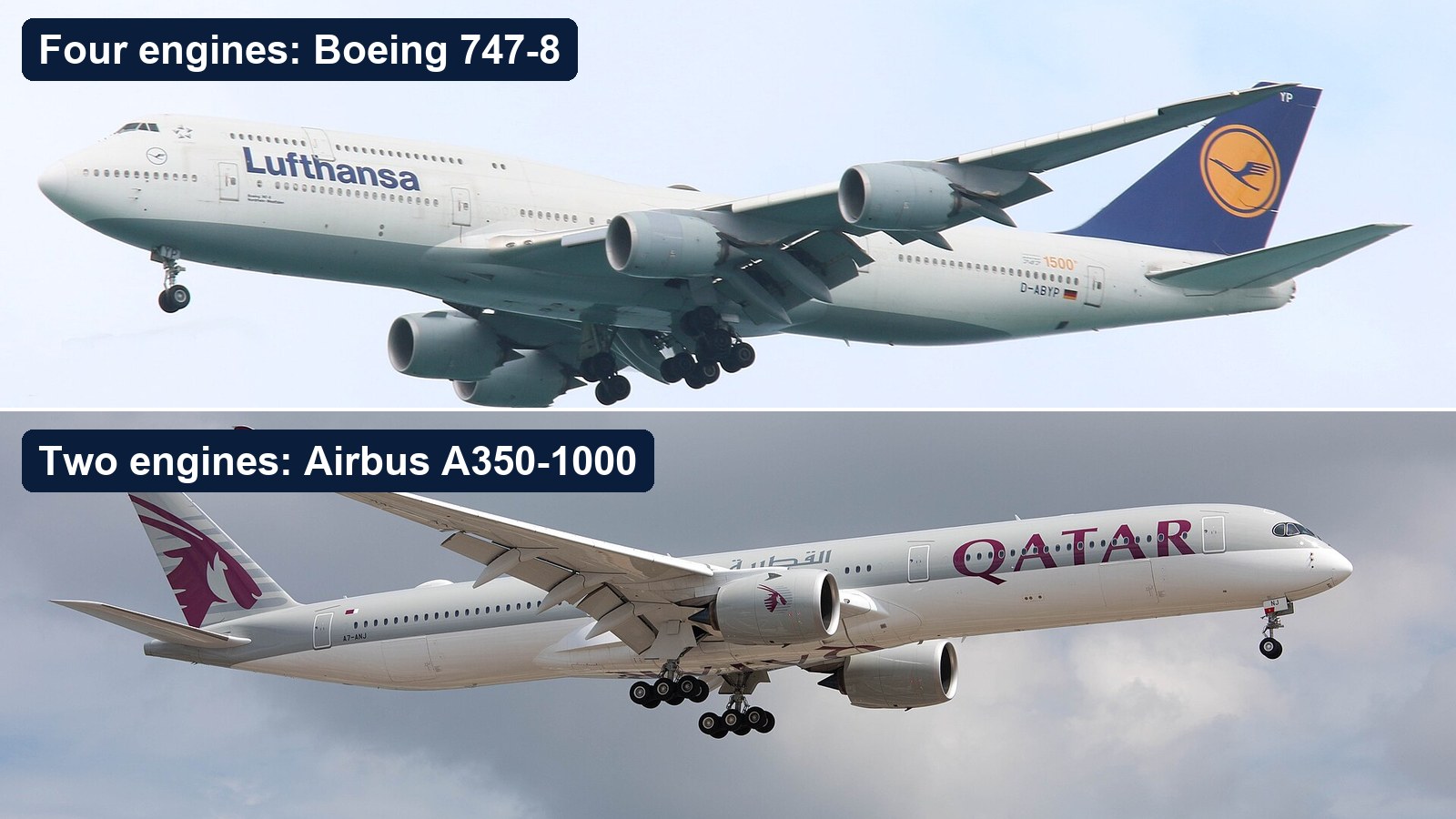
Twin-engine jets took over long-haul flying for three reasons: engines became reliable enough that a second spare engine was no longer needed, ETOPS rules allowed two-engine aircraft to fly far from land, and two engines cost far less to fuel and maintain than four.
The result is clear in the order books. The four-engine Boeing 747, Airbus A340 and Airbus A380 are all out of production, while twin-engine jets such as the Boeing 777 and 787 and the Airbus A330 and A350 now fly almost every long-haul route. This analysis explains how that happened.
Why Long-Haul Jets Used to Have Three or Four Engines
In the early jet age, engines failed far more often than they do today. If an engine stopped over the middle of an ocean, an aircraft with three or four engines could carry on with the others. A twin-engine jet would be left with just one.
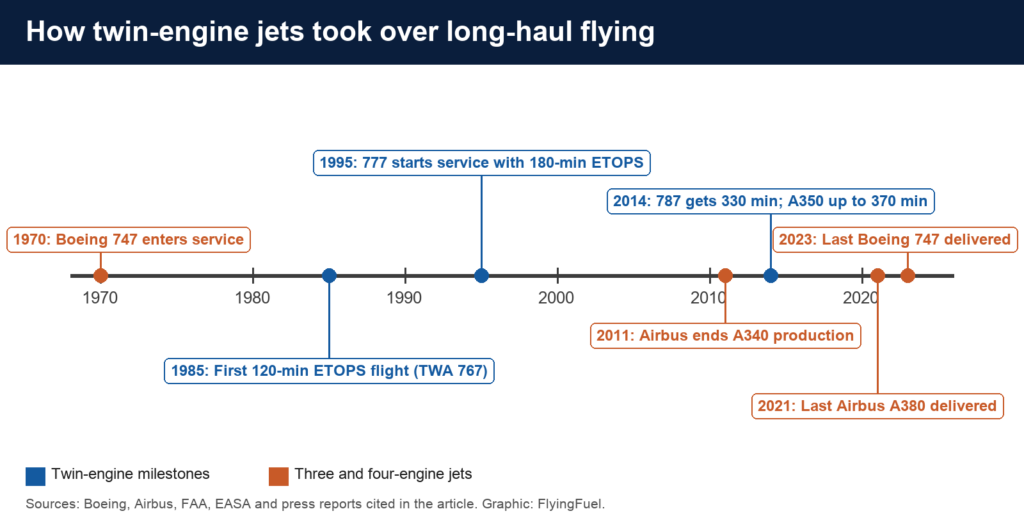
So the rules kept twins close to land. Today’s US rules still say a two-engine airliner may not fly more than 60 minutes from a suitable airport, flying on one engine, unless it has special approval. That is why the first jumbo jets, such as the Boeing 747 from 1970, and trijets such as the DC-10 and L-1011, all had more than two engines.
What Changed: Reliable Engines and ETOPS
From the 1980s, big turbofan engines became far more reliable. Regulators created ETOPS, a set of rules that lets twin-engine jets fly farther from airports if the aircraft, its engines and the airline all meet strict standards.
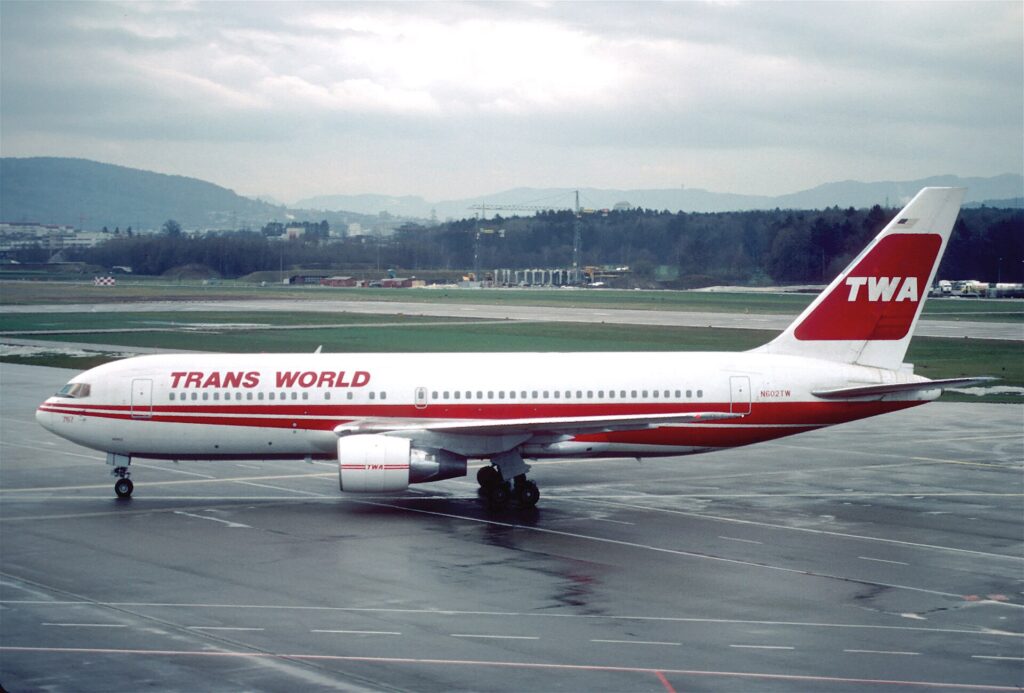
- 1985: TWA flew the first 120-minute ETOPS flight with a Boeing 767, between Boston and Paris.
- 1995: the Boeing 777 entered service with 180-minute ETOPS approval from day one, on the Pratt & Whitney-powered version, something earlier twins had to earn over years of service.
- 2014: the FAA approved the Boeing 787 for 330 minutes, and EASA approved the Airbus A350 for up to 370 minutes, depending on the options each airline chooses.
With approvals that long, a twin-engine jet can fly almost any route on Earth, including over the South Pacific and the poles.
Why Two Engines Are Cheaper Than Four
Once two engines were allowed on long routes, the economics did the rest.
- Fuel: a modern twin with two very large, efficient engines usually burns less fuel per seat than an older four-engine jet of similar size.
- Maintenance: every engine needs inspections, spare parts and overhauls. Two engines mean roughly half the engine maintenance work of four.
- Purchase and leasing: engines are among the most expensive parts of an aircraft, so fewer of them lower the price.
- Flexibility: twins come in more sizes, from about 250 to more than 400 seats, so airlines can match the aircraft to each route instead of filling a huge four-engine jet.
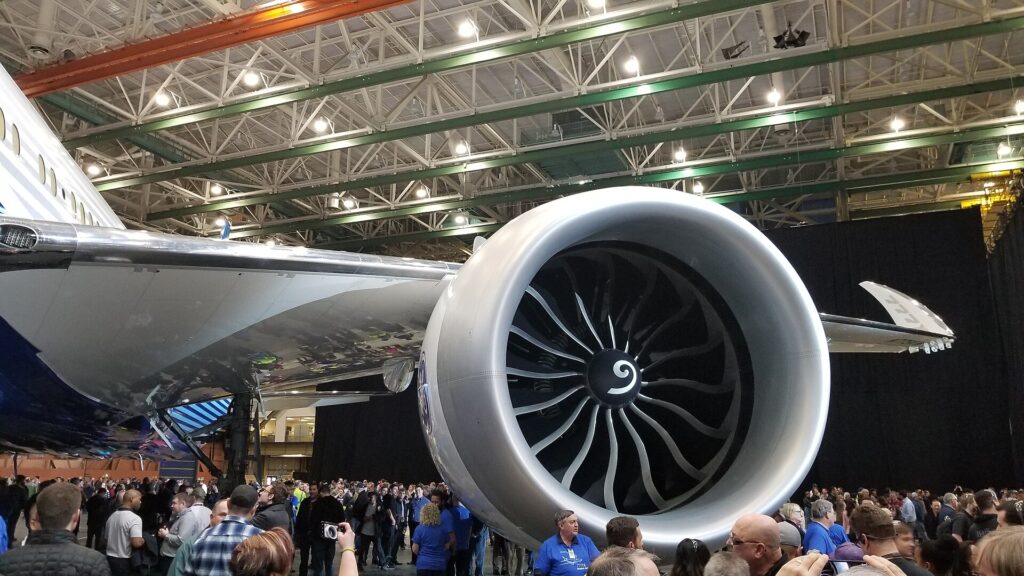
Engines also got bigger. The GE9X on the Boeing 777-9 is rated at 105,000 lbf of thrust, according to GE Aerospace, enough for two engines to lift an aircraft with more than 400 seats.
The End of the Four-Engine Jets
The production numbers show how decisively airlines chose twins:
| Aircraft | Engines | Built or ordered | Status |
|---|---|---|---|
| Boeing 747 | 4 | 1,574 built | Production ended; last delivered January 2023 |
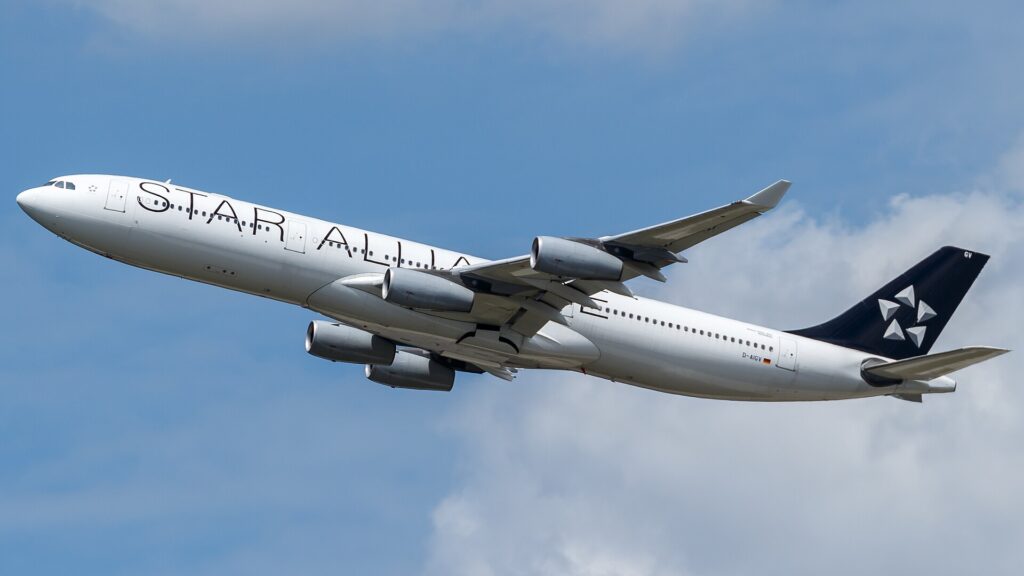
| Airbus A340 | 4 | 377 delivered | Production ended 2011 |
| Airbus A380 | 4 | 251 built | Production ended; last delivered December 2021 |
| Airbus A330 family | 2 | 1,954 ordered | In production (A330neo) |
| Airbus A350 | 2 | 718 delivered, 877 more on order | In production |
Sources: Boeing (747), AIN (A340), press reports of Airbus’s 2019 announcement (A380), Airbus A330 facts and figures (orders to end of January 2026) and Airbus A350 facts and figures (to end of March 2026).
- Boeing 747: Boeing delivered its last 747, a freighter for Atlas Air, in January 2023.
- Airbus A340: its end was confirmed in November 2011, after Airbus had stopped selling it to airlines that preferred the twin-engine A330 and Boeing 777.
- Airbus A380: Airbus announced the end of production in February 2019, after Emirates reduced its order.
Where Four Engines Still Fly
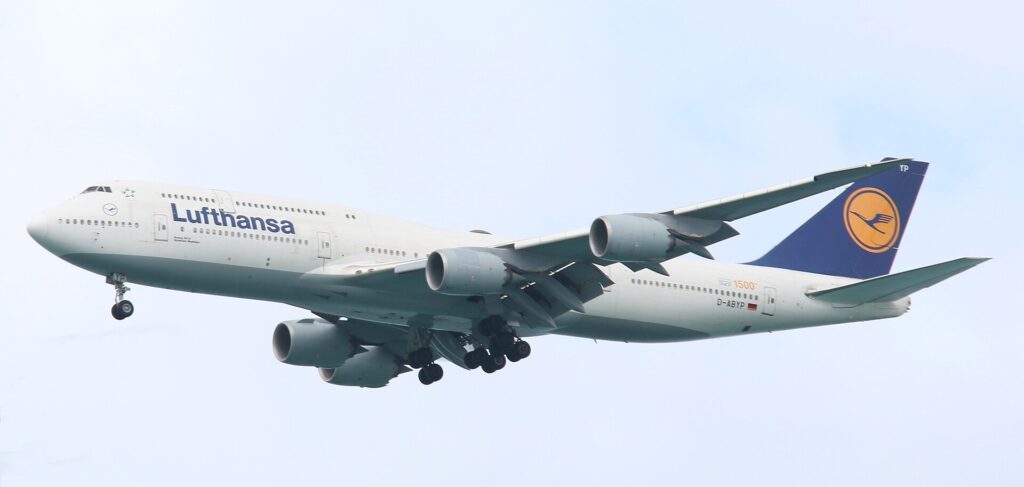
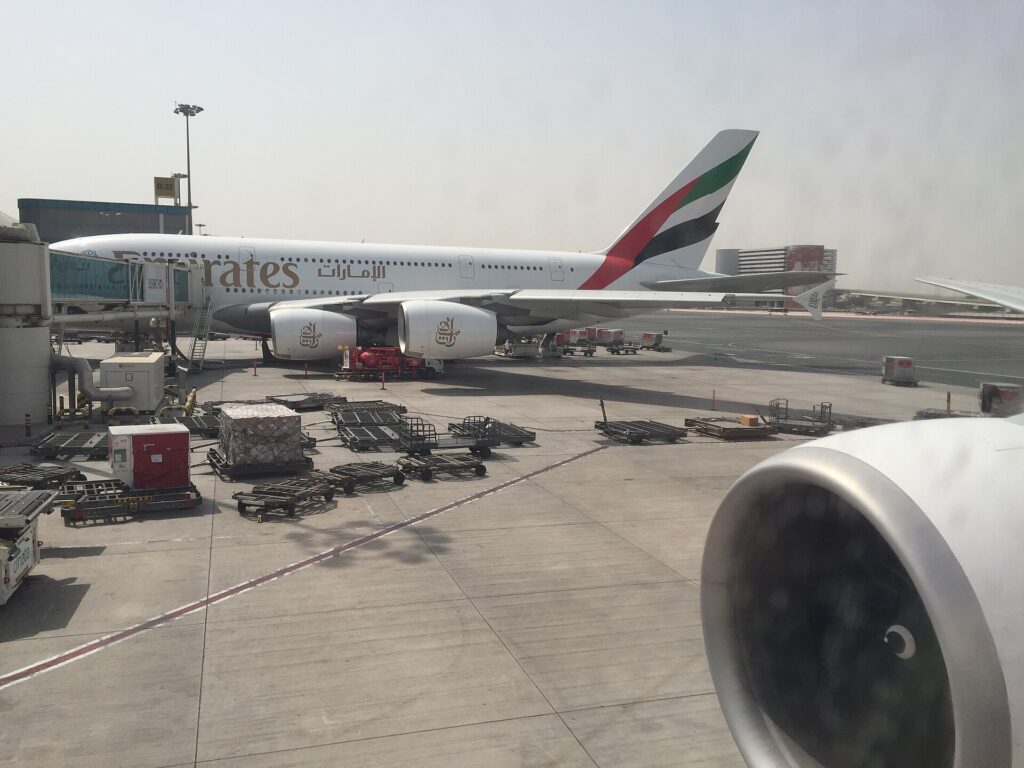
Four-engine passenger jets have not disappeared yet. Emirates had 116 A380s in its fleet in November 2025, according to its fleet and order table, and it plans to keep flying them for years; read why Emirates still flies the A380. A few airlines, including Lufthansa, still fly the 747-8 with passengers.
But even Emirates is ordering only twins for the future: its order book in November 2025 included 270 Boeing 777-9s, 52 Airbus A350-900s and 35 Boeing 787s, and no four-engine aircraft.
Is Flying on a Twin-Engine Jet Safe?
Yes. Every airliner can keep flying and land safely after losing an engine, whether it has two or four. On long routes over water, ETOPS adds extra layers: stricter engine maintenance, pre-departure checks, planned diversion airports and fuel for the worst case. Twin-engine jets have flown long-haul routes safely since the 1980s, and they now fly the longest flights in the world.
What Comes Next
The next generation of long-haul aircraft is entirely twin-engine. The Boeing 777-9 and the Airbus A350-1000 are the largest new widebody aircraft on order; see our A350-1000 vs 777-9 and 787-9 vs A350-900 comparisons. No manufacturer is developing a new four-engine passenger jet.
Frequently Asked Questions
Why do most planes have only two engines?
Because two modern engines are reliable and powerful enough to do the job, and two engines cost less to buy, fuel and maintain than four. ETOPS rules let twin-engine jets fly long routes over oceans, so airlines no longer need four engines for long-haul flights.
Is a four-engine plane safer than a twin-engine plane?
Not in practice. Modern engines rarely fail, every airliner can fly safely on one engine less than it has, and twin-engine jets on long routes must meet ETOPS standards for reliability, maintenance and diversion airports. Twin-engine jets have flown long-haul routes safely for decades.
Why did the Boeing 747 stop production?
Demand fell as airlines switched to more fuel-efficient twin-engine widebodies such as the Boeing 777 and 787. Boeing delivered the last 747, a freighter, to Atlas Air in January 2023, after building 1,574.
Why did Airbus stop making the A380 and A340?
Both four-engine aircraft lost out to twin-engine jets. Airbus ended A340 production in 2011 after sales dried up, and announced the end of the A380 in 2019 after Emirates reduced its order. The last A380 was delivered in December 2021.
Can a twin-engine plane fly with one engine?
Yes. Every twin-engine airliner is certified to keep flying and land safely on one engine. On long over-water routes, ETOPS rules make sure a suitable airport is always within the approved flying time on one engine.
What is the largest twin-engine plane?
The Boeing 777-9 will be the largest twin-engine airliner when it enters service; Boeing expects the first delivery in 2027. Its GE9X engines are each rated at 105,000 lbf of thrust.
Do any airlines still fly four-engine passenger jets?
Yes, but fewer each year. Emirates is the biggest operator, with 116 Airbus A380s in its fleet in November 2025, and a few airlines such as Lufthansa still fly the Boeing 747-8 with passengers.
Featured image: FlyingFuel composite of photos by kitmasterbloke (CC BY 2.0) and km30192002 (CC BY 2.0), via Wikimedia Commons.