

Summary
- The FAA has ordered repeated built-in tests of the flight control system on certain Boeing 737-600, -700, -700C, -800 and -900 jets
- It says missing or wrong spoiler sensor data could stop an autothrottle safety monitor from working, which in the worst case could lead to an uncommanded roll and loss of control
- The directive covers about 300 US-registered aircraft, takes effect on 7 December 2026 and does not cover the 737 MAX
WASHINGTON, D.C., 20 November 2026 – The US Federal Aviation Administration (FAA) has issued an airworthiness directive requiring airlines to run repeated tests on certain Boeing 737 Next Generation (737NG) jets, after a review found that a safety monitor in the autothrottle system could fail without anyone knowing. The rule, AD 2026-23-04, was published in the Federal Register on Friday and takes effect on 7 December 2026.
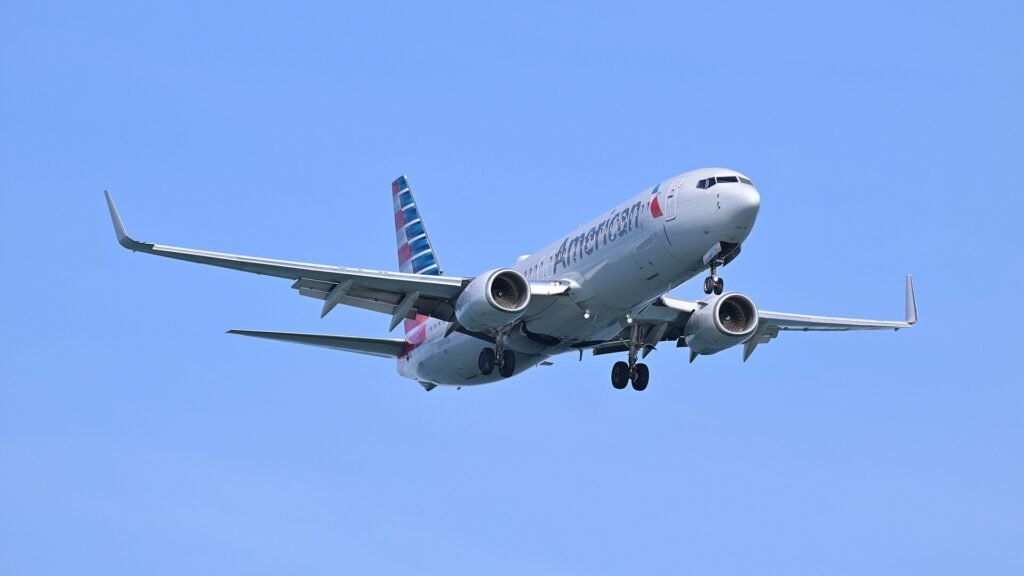
It applies to certain 737-600, -700, -700C, -800 and -900 aircraft listed in a Boeing Alert Safety Advisory dated 30 October 2026. The FAA estimates that about 300 US-registered jets are affected. AeroTime reported the directive on 19 November, the day before it was published.
What the FAA found
According to the directive, the FAA received a report on a review of the autothrottle’s cruise thrust split monitor on these models. The review found that spoiler position data used by the monitor could be lost or wrong without the fault being noticed.
The FAA says that if this is not fixed, the monitor may not activate. A large split between the two throttles could then build up, producing uneven thrust, and the autothrottle might not disengage. That could cause an uncommanded roll which, if the pilots do not notice and correct it in time, could lead to loss of control. The directive does not mention any accident or in-service event on a 737NG linked to the problem.
What airlines must do
Operators must carry out repeated aileron built-in test equipment (BITE) tests of the digital flight control system, following the steps in Boeing’s advisory. If a test fails, they must fix the fault and repeat the test until it passes. The compliance times are set out in Boeing’s advisory, with the clock starting on the directive’s effective date.
The FAA estimates each test cycle takes two work-hours, or $170 per aircraft at $85 an hour, which comes to $51,000 per cycle for the US fleet. It has no data to estimate the cost of any repairs. The directive adds a recurring maintenance task; it does not order the jets out of service.
Why there was no comment period first
FAA directives usually start as a proposal open for public comment. This one was issued as a final rule straight away. The agency says the risk to the flying public justified skipping the advance comment period, and that the compliance time in the rule is shorter than the time a comment period and a final rule would take. It is still accepting comments for 45 days after publication and may amend the rule as a result.
The FAA has acted on this monitor before
The same monitor has been the subject of two earlier FAA orders on the older 737 Classic. In October 2022, a directive covering 21 US-registered 737-300, -400 and -500 jets made a BITE test repeatable, after the FAA found that a failed spoiler sensor could go undetected and that a test already in the maintenance manual was not required at regular intervals. In December 2024, a second directive covering 110 US 737-300 and -400 aircraft required wiring and part changes, because rigging tolerances could stop spoiler deflection from reaching the level needed to engage the monitor.

The 737NG is the generation before the 737 MAX, which our Boeing 737 MAX 8 review explains. Our earlier report covers a separate FAA proposal for fan blade checks on 737NG engines. Our Boeing 737-800 review covers one of the affected models in detail.
Read more
- Boeing vs Airbus: how to tell the difference
- FAA proposes fan blade checks on every CFM56-7B engine
- FAA orders fuel tank sealant inspections on 60 US Boeing 787s
- Boeing 737 MAX 8 review
Sources: FAA AD 2026-23-04, Federal Register, 20 November 2026 (public inspection copy); AeroTime, 19 November 2026; FAA directives of October 2022 and December 2024, Federal Register.
Featured image: FlyingFuel graphic using a photo of Southwest Airlines Boeing 737-800 N8641B climbing after take-off from Boston by 4300streetcar, CC BY 4.0, via Wikimedia Commons.
 Aircraft ComparisonsBoeing 737 MAX 8 vs 737-800: What Changed and Which Is Better? (2026)
 NewsMalaysia Airlines to Buy 10 Boeing 787-10 Dreamliners to Replace Its Airbus A350s From 2032
 AirportsAirports in Odisha: Bhubaneswar, Jharsuguda, Jeypore and More Ranked (2026 Data)
 NewsNew Visakhapatnam Airport at Bhogapuram to Charge Rs 890 Per Departing Domestic Passenger From 1 December
 AirportsAirports in Karnataka: Bengaluru, Mangaluru, Hubballi, Belagavi and More Ranked (2026 Data)
 Aircraft ComparisonsAirbus A350-900 vs Boeing 777-300ER: Which Long-Haul Jet Is Better? (2026)