
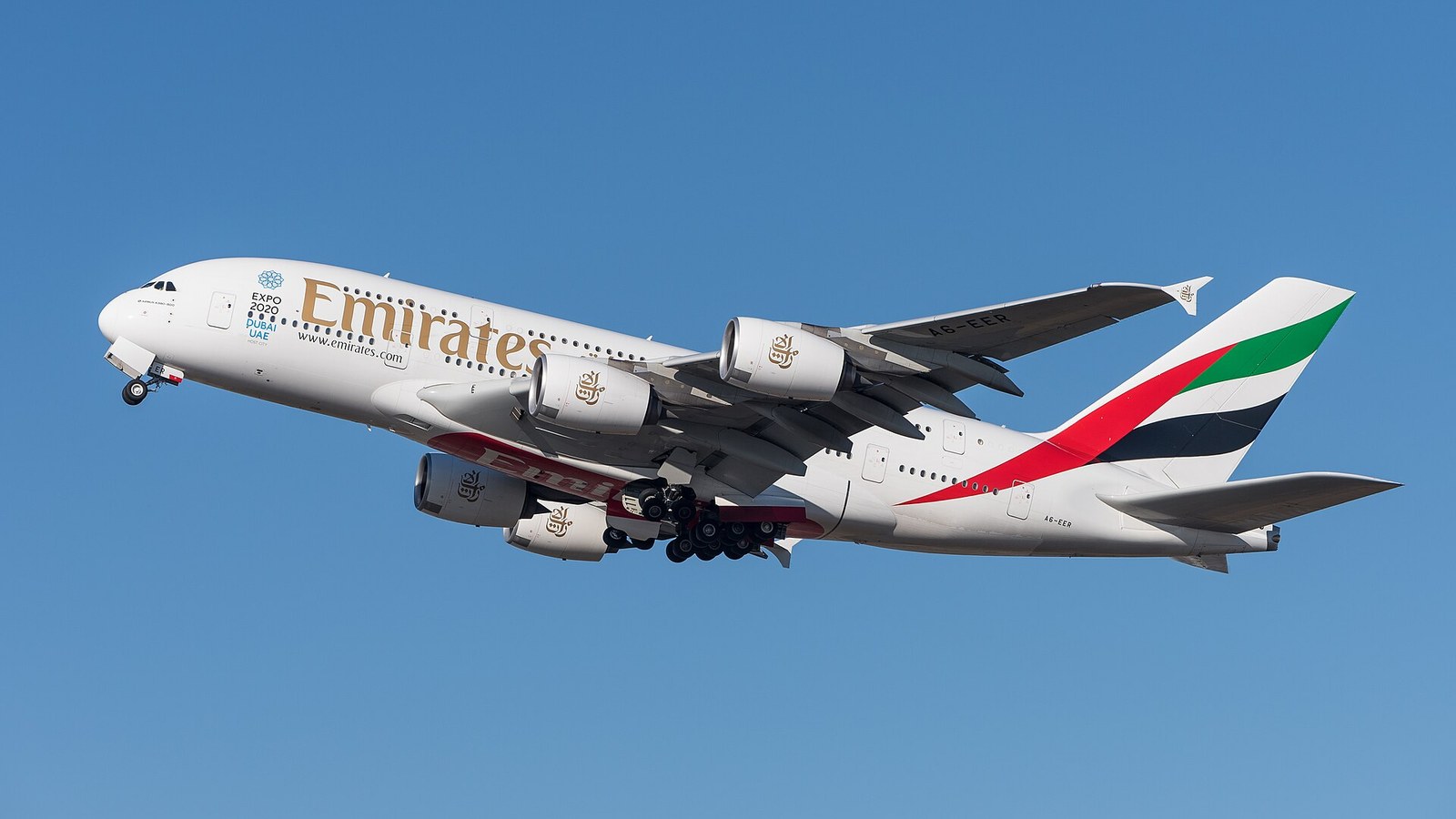
A widebody aircraft is an airliner with two aisles in the passenger cabin. Its fuselage is wide enough for seven to ten seats in each row of economy class. Widebodies such as the Boeing 787, Boeing 777, Airbus A350 and Airbus A380 fly most of the world’s long-haul routes.
This guide explains what a widebody aircraft is, how it differs from a narrowbody, which models are being built today, and which widebodies fly in India. Specifications come from the documents Airbus and Boeing publish.
What Is a Widebody Aircraft?
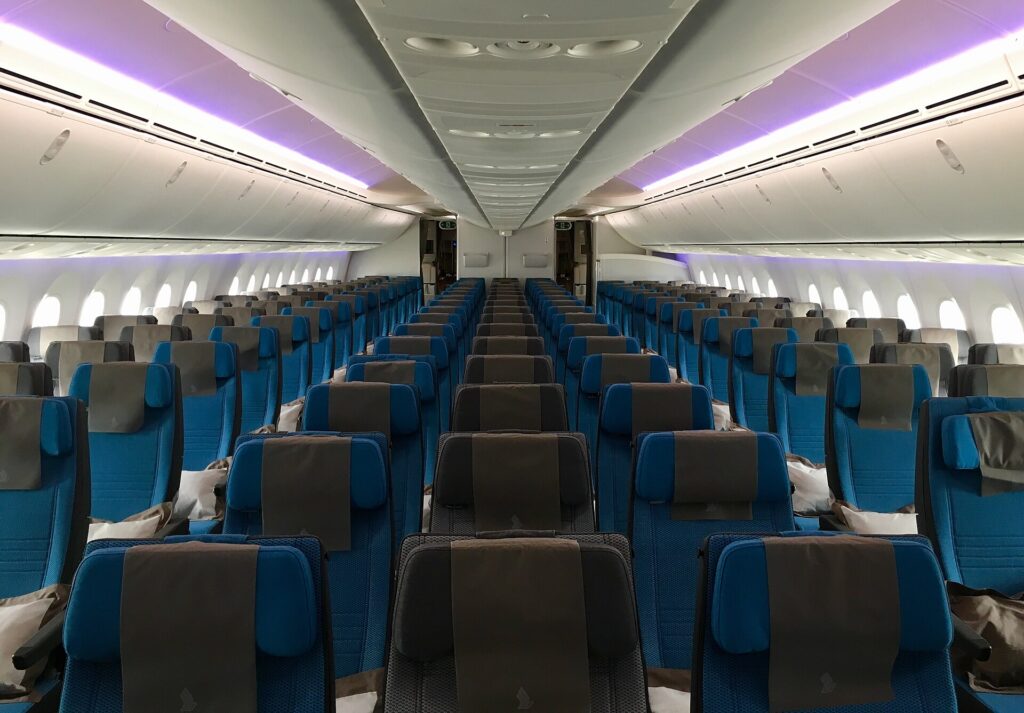
A widebody aircraft, also written wide-body or called a twin-aisle aircraft, is a passenger plane whose cabin has two aisles. Passengers sit in three blocks of seats: one by each window and one in the middle. Common economy layouts are 2-4-2, 3-3-3 and 3-4-3.
The name describes the fuselage, the main tube of the aircraft. The Airbus A350 fuselage is 5.96 m (19 ft 7 in) wide, according to the A350 facts and figures. A single-aisle Airbus A320 fuselage is 3.95 m wide, according to Airbus. That extra two metres is what makes room for the second aisle.
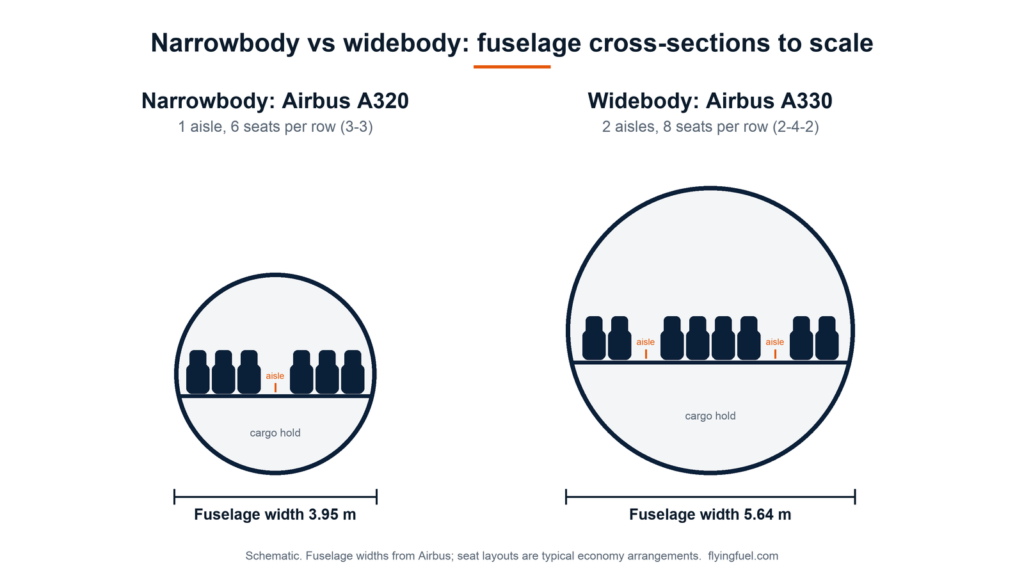
A wide fuselage gives more than extra seats. It leaves space under the floor for cargo containers, room in the wings for more fuel, and space in the cabin for lie-flat business class seats. That is why airlines use widebodies for long flights.
Widebody vs Narrowbody Aircraft
The difference between widebody and narrowbody aircraft starts with the number of aisles, and most other differences follow from it. For the single-aisle side of the story, see our guide to narrowbody aircraft.
| Feature | Widebody | Narrowbody |
|---|---|---|
| Aisles | 2 | 1 |
| Seats per row (economy) | 7 to 10 | 4 to 6 |
| Fuselage width (example) | 5.96 m on an Airbus A350 | 3.95 m on an Airbus A320 |
| Typical seats | About 250 to 400+ | About 100 to 244 |
| Typical range | About 7,000 to 8,500 nm | About 3,000 to 4,700 nm |
| Typical routes | Long-haul and very busy routes | Short and medium-haul |
| Examples | Boeing 787, Boeing 777, Airbus A350, Airbus A330 | Airbus A320, Boeing 737, Airbus A220 |
Seat and range figures are for current models, from Airbus and Boeing specifications. 1 nautical mile (nm) = 1.852 km.
The line between the two is not as sharp as it used to be. Long-range narrowbodies such as the Airbus A321XLR can now fly some routes that once needed a widebody. To see how the two best-selling narrowbodies compare, read our Airbus A320neo vs Boeing 737 MAX 8 comparison.
How Many Seats Does a Widebody Aircraft Have?
Most widebody aircraft have about 250 to 400 seats in a normal airline layout. The exact number depends on the model and on how the airline fits out the cabin. Business class seats take far more floor space than economy seats, so an airline with a large business cabin fits fewer seats in total.
Manufacturers publish two kinds of seat numbers. The typical figure is an example layout with business and economy class. The maximum is the most passengers the aircraft is certified to carry, based on how fast it can be evacuated. For example, Boeing’s 787 airport planning document lists the 787-9 at 290 seats in two classes and a maximum of 420.
Widebody Aircraft List: Models in Production
Only two companies build large widebody airliners today: Airbus in Europe and Boeing in the United States. These are the passenger models they offer.
| Aircraft | Typical seats | Range (up to) | In service since |
|---|---|---|---|
| Airbus A330-800 | 257 to 271 (3-class) | 8,100 nm | 2020 |
| Airbus A330-900 | 287 to 303 (3-class) | 7,150 nm | 2018 |
| Airbus A350-900 | 332 to 352 (3-class) | 8,500 nm | 2015 |
| Airbus A350-1000 | 375 to 400 (3-class) | 8,100 nm | 2018 |
| Boeing 787-8 | 200 to 275 (2-class) | 8,000 nm | 2011 |
| Boeing 787-9 | 250 to 325 (2-class) | 8,300 nm | 2014 |
| Boeing 787-10 | 300 to 375 (2-class) | 7,500 nm | 2018 |
| Boeing 777-9 | 426 (2-class) | 8,000 nm | First delivery expected 2027 |
Sources: Airbus A330 facts and figures and A350 facts and figures; Boeing and 777X airport planning document. Airbus quotes three-class layouts and Boeing two-class layouts, so the seat numbers are not directly comparable. Ranges are the highest the manufacturer lists for each model.
Airbus Widebodies
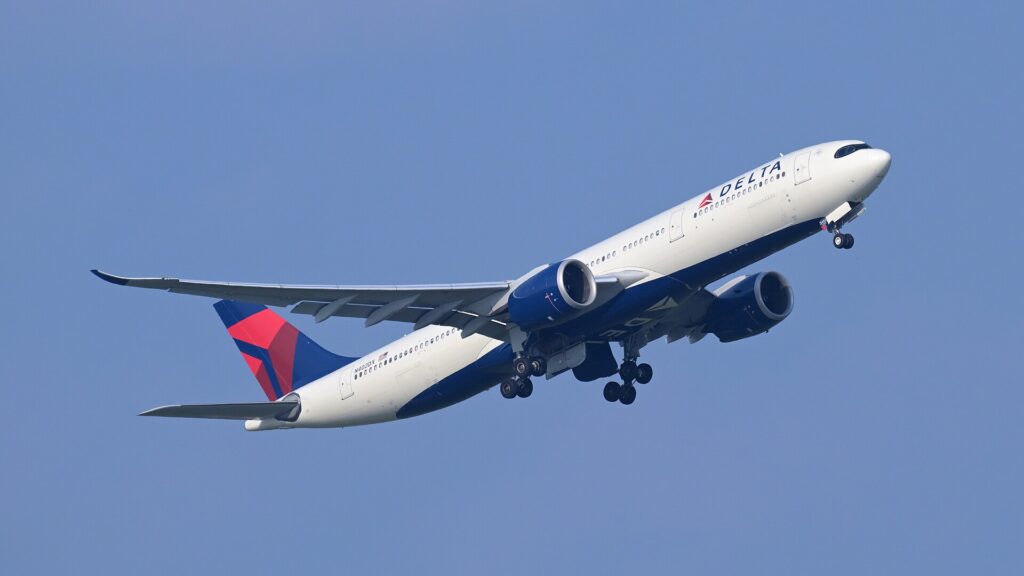
The A330neo is the newest version of the A330, which first flew in the early 1990s. It comes in two sizes, the A330-800 and the larger A330-900. The A350 is Airbus’s newest widebody, built largely from carbon-fibre composites, in the A350-900 and the larger A350-1000. A special A350-900ULR can fly 9,700 nm, and Singapore Airlines uses it for nonstop flights to New York. See how the A330neo stacks up against Boeing in our A330neo vs 787-9 comparison.
Boeing Widebodies
The 787 Dreamliner comes in three lengths: the 787-8, 787-9 and 787-10. Our Boeing 787-9 vs 787-10 comparison explains how the two larger versions differ. The 777X is the newest version of the 777. Its first model, the 777-9, has folding wingtips. In its first-quarter 2026 results, Boeing said it expects to deliver the first one in 2027.
For head-to-head comparisons, see Boeing 787-9 vs Airbus A350-900 and Airbus A350-1000 vs Boeing 777-9.
Widebodies Still Flying but No Longer Built
Many widebodies you can still fly on are no longer in production.
- Boeing 777-300ER and 777-200LR. The earlier 777 models, with the 777-300ER the most common. Many airlines, including Air India and Emirates, still fly them in large numbers.
- Airbus A380. The largest passenger aircraft ever built, with two full decks. Airbus delivered the last one to Emirates in December 2021. Read why Emirates still flies the A380.
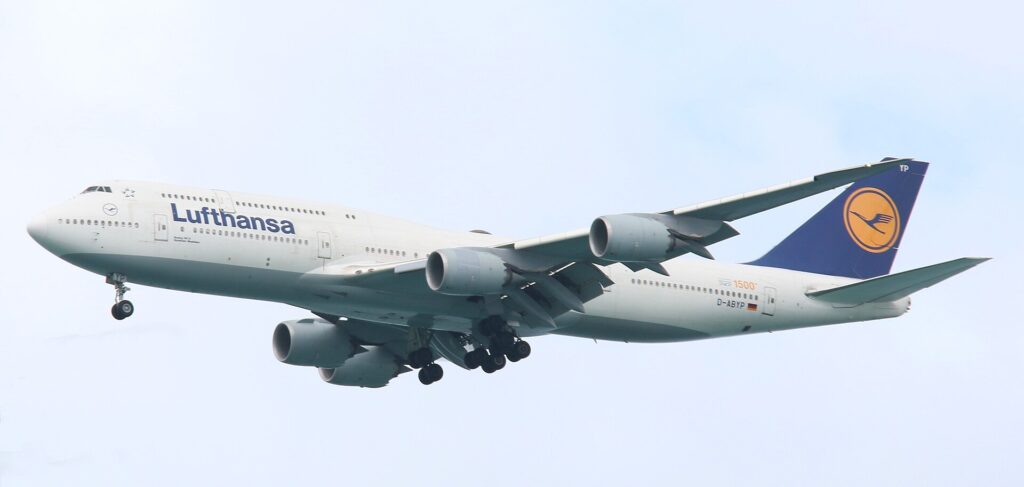
- Boeing 747. Boeing delivered the last one, a 747-8 freighter, to Atlas Air on 31 January 2023, after building 1,574. A few airlines, such as Lufthansa, still fly the 747-8 with passengers.
- Airbus A340 and Boeing 767. The four-engine A340 has mostly been retired. The 767 still flies with some airlines and is still built as a freighter and military tanker.
Why Airlines Use Widebody Aircraft
- Range. A widebody carries enough fuel to fly 12 to 18 hours nonstop. Narrowbodies cannot cover routes such as Delhi to New York or London to Singapore.
- Busy routes. When demand is high, one widebody flight can replace two narrowbody flights. That saves crew, fuel and airport slots, which matters at crowded airports such as London Heathrow.
- Cargo. The space under a widebody’s floor holds standard cargo containers. Airbus says an A350-900 can take 36 LD3 containers. Freight in the hold earns money on top of ticket sales.
- Premium cabins. The wider cabin has room for lie-flat business class seats with direct aisle access, which airlines sell at high fares on long flights.
Twin-engine widebodies can fly long routes over oceans because of ETOPS rules, which set how far they may be from a suitable airport at any point.
Widebody Aircraft in India
Air India is India’s main widebody operator. It flies the Boeing 777 and Boeing 787, and received its first Airbus A350-900 in December 2023.

IndiGo, India’s largest airline, flies mostly narrowbody A320neo-family jets. In 2025 it opened its first long-haul route, Mumbai to Manchester, with a Boeing 787-9 leased from Norse Atlantic Airways. In October 2025 Airbus said IndiGo’s firm orders had grown to 60 Airbus A350-900s.
Widebodies are sometimes used on busy domestic routes in India, usually between long-haul trips. If you want to know whether your flight uses a widebody, check the aircraft type shown in your booking or on the airline’s app.
A Short History of Widebody Aircraft
The Boeing 747 was the first widebody. It entered service with Pan Am in 1970. Boeing called it the airplane that “shrank the world”.
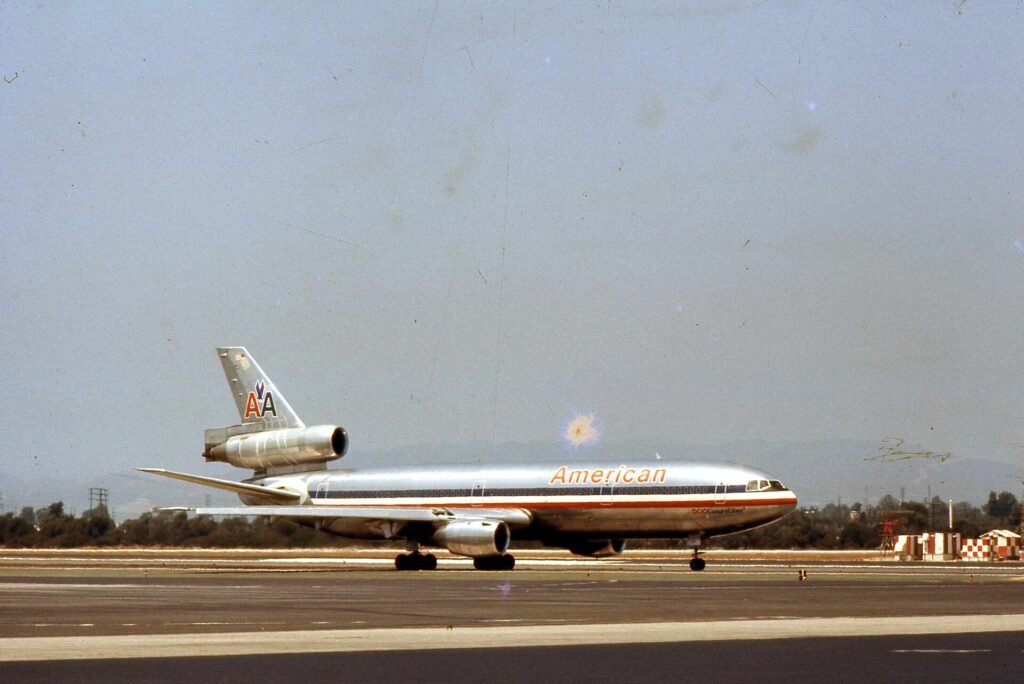
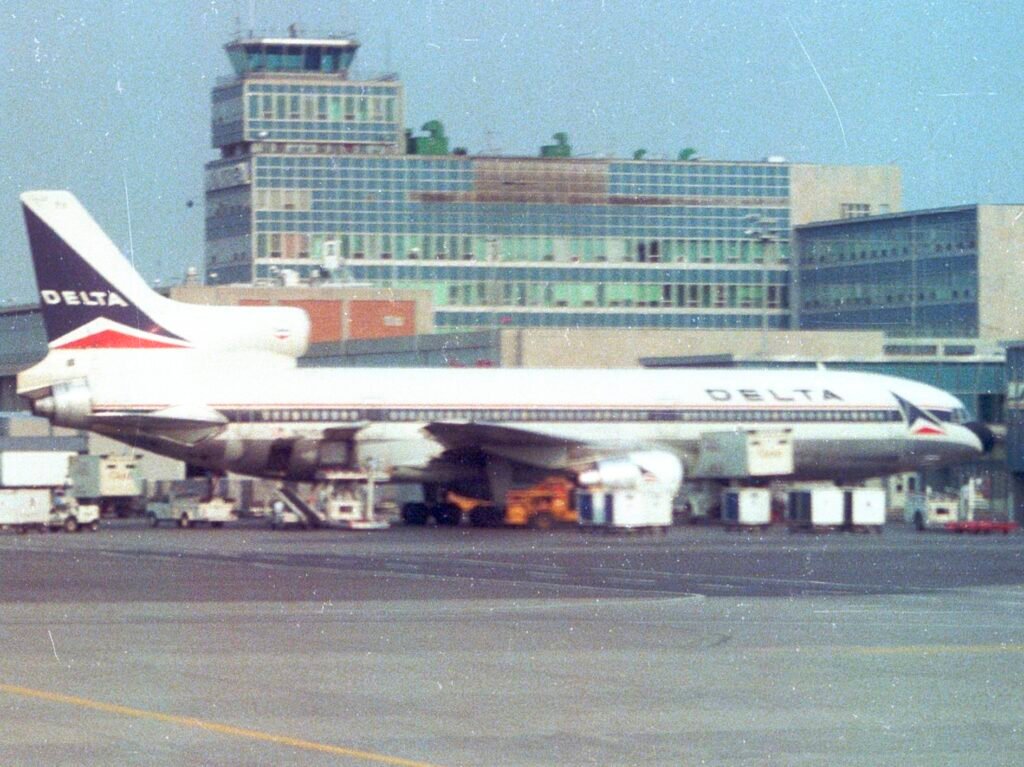
Two three-engine widebodies followed. The McDonnell Douglas DC-10 entered service in 1971. The Lockheed L-1011 TriStar began scheduled flights with Eastern Air Lines on 30 April 1972, and Lockheed built 250 of them, according to Lockheed Martin. The twin-engine Airbus A300, Airbus’s first aircraft, entered service in 1974.
Over the following decades, more reliable engines let airlines replace three and four-engine widebodies with twin-engine jets such as the 767, 777, A330, 787 and A350, which burn less fuel.
Frequently Asked Questions
What is the meaning of widebody aircraft?
A widebody aircraft is an airliner with two aisles in the passenger cabin. Its fuselage is wide enough for seven to ten seats in each row of economy class. It is also called a twin-aisle aircraft.
What is the difference between narrowbody and widebody aircraft?
A narrowbody has one aisle and up to six seats per row. A widebody has two aisles and seven or more seats per row. Widebodies carry more passengers, cargo and fuel, so they fly most long-haul routes.
What are some examples of widebody aircraft?
Common widebody aircraft include the Boeing 787 Dreamliner, Boeing 777, Boeing 747, Airbus A330, Airbus A350 and Airbus A380.
What is the largest widebody aircraft?
The Airbus A380 is the largest passenger aircraft ever built. It has two full decks. Airbus delivered the last A380 to Emirates in December 2021, and Emirates is its largest operator.
How many seats does a widebody aircraft have?
Most widebodies have between about 250 and 400 seats in a typical airline layout. Airbus lists the A330-900 at 287 to 303 seats and the A350-1000 at 375 to 400 seats in three classes. The A380 can carry more than 500.
Which widebody aircraft are used in India?
Air India flies the Boeing 777, the Boeing 787 and the Airbus A350-900. IndiGo started long-haul flights in 2025 with Boeing 787-9s leased from Norse Atlantic Airways and has ordered 60 Airbus A350-900s.
What was the first widebody aircraft?
The Boeing 747 was the first widebody airliner. It entered service with Pan Am in 1970. Boeing built 1,574 of them before production ended, with the last one delivered in January 2023.
Are widebody aircraft more comfortable?
They usually feel more spacious, with two aisles, more room to move and larger galleys and toilets. Lie-flat business class seats are also more common on widebodies. Seat width and legroom, however, are chosen by each airline.
Featured image: Julian Herzog (Website), CC BY 4.0, via Wikimedia Commons.
 Aircraft ComparisonsBoeing 737 MAX 8 vs 737-800: What Changed and Which Is Better? (2026)
 NewsMalaysia Airlines to Buy 10 Boeing 787-10 Dreamliners to Replace Its Airbus A350s From 2032
 AirportsAirports in Odisha: Bhubaneswar, Jharsuguda, Jeypore and More Ranked (2026 Data)
 NewsNew Visakhapatnam Airport at Bhogapuram to Charge Rs 890 Per Departing Domestic Passenger From 1 December
 AirportsAirports in Karnataka: Bengaluru, Mangaluru, Hubballi, Belagavi and More Ranked (2026 Data)
 Aircraft ComparisonsAirbus A350-900 vs Boeing 777-300ER: Which Long-Haul Jet Is Better? (2026)