
UDAN (Ude Desh ka Aam Nagrik) is the Indian government’s regional air connectivity scheme. It pays airlines to fly to small towns at low fares. As of 15 July 2026, 679 UDAN routes connect 95 airports, heliports and water aerodromes, and more than 1.68 crore passengers have flown under it.
In July 2026 the government launched Modified UDAN, a Rs 28,840 crore plan for the next ten years. Here is how UDAN works, what it has done so far and what changes in the new phase, using figures from the Press Information Bureau (PIB) and the Ministry of Civil Aviation.
UDAN at a Glance
| UDAN | |
|---|---|
| Full name | Regional Connectivity Scheme (RCS) – UDAN (Ude Desh ka Aam Nagrik) |
| Launched | October 2016; first flight Shimla-Delhi in April 2017 |
| Routes operating | 679 (as of 15 July 2026) |
| Airports, heliports, water aerodromes | 95 |
| Flights flown | More than 3.58 lakh |
| Passengers | More than 1.68 crore |
| Next phase | Modified UDAN, launched 4 July 2026, Rs 28,840 crore over FY 2026-27 to FY 2035-36 |
Source: PIB, 17 July 2026; launch details from the Ministry of Civil Aviation UDAN booklet.
Why UDAN Was Started
Air travel in India was long concentrated in a handful of big cities, and many smaller towns had no regular flights. UDAN was launched in October 2016 to connect small and medium cities with big cities and make flying affordable. India now has 165 operational airports, up from 74 in 2014, and the government says UDAN played a key role by opening new routes.
How UDAN Works
The scheme combines a fare cap for passengers with support for airlines and airports:
- Bidding: airlines bid for routes, and the airline that asks for the lowest subsidy wins the contract.
- Fare cap: under the original rules, a flight of about one hour by plane (around 500 km), or half an hour by helicopter, cost Rs 2,500. The capped fare applied to half the seats on each flight, with a minimum of 9 and a maximum of 40 seats.
- Viability Gap Funding (VGF): the government pays airlines part of the losses caused by the low fares.
- Concessions: the Airports Authority of India waived its airport fees on UDAN flights, and state governments provide security, electricity and fire-fighting services free of cost.
- Funding: part of the money comes from the RCS levy, a small fee on selected categories of domestic flights.
Sources: Ministry of Civil Aviation; PIB.
What UDAN Has Achieved
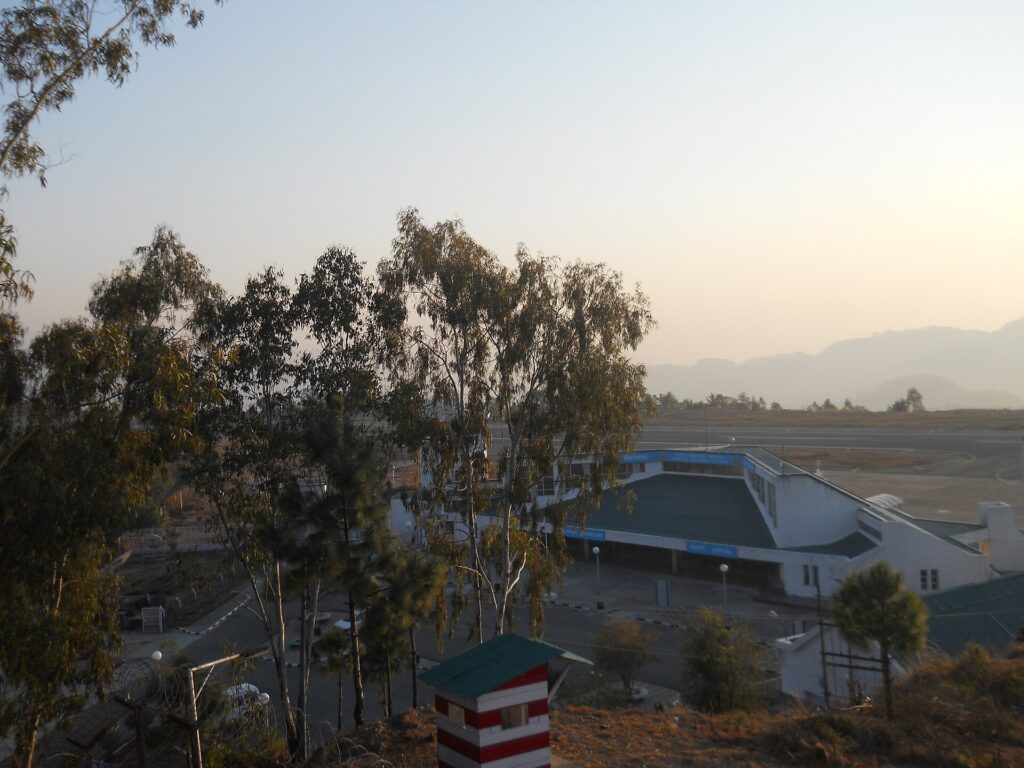
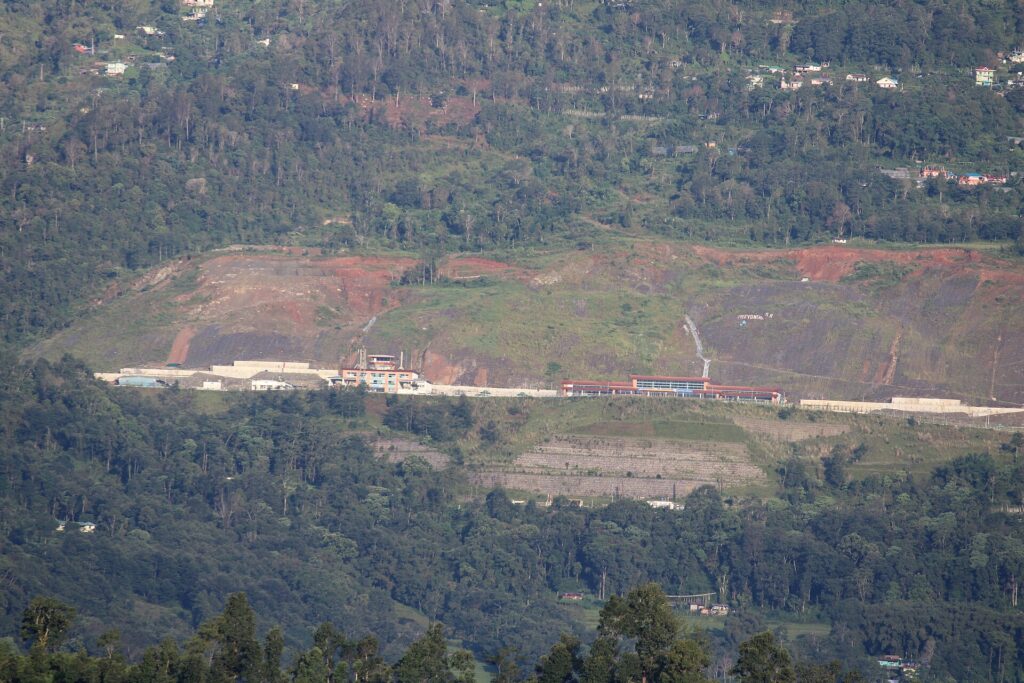
After nine years, the government reports 679 routes, 95 airports, heliports and water aerodromes, more than 3.58 lakh flights and over 1.68 crore passengers. It names remote, hilly and island places such as Tezpur, Pasighat, Diu, Pithoragarh and Rourkela as places that have benefited.
One example in the PIB report is the Vijayawada-Kadapa route: a trip that took 8 to 10 hours by road now takes about an hour by air. Airports have also added UDAN Yatri Cafes with affordable food, free Wi-Fi and Flybrary book corners.
Modified UDAN: The Next Phase
Modified UDAN was launched on 4 July 2026. It runs for ten years, from FY 2026-27 to FY 2035-36, with a total outlay of Rs 28,840 crore. It puts more weight on building airports and keeping them running, not only on new routes.
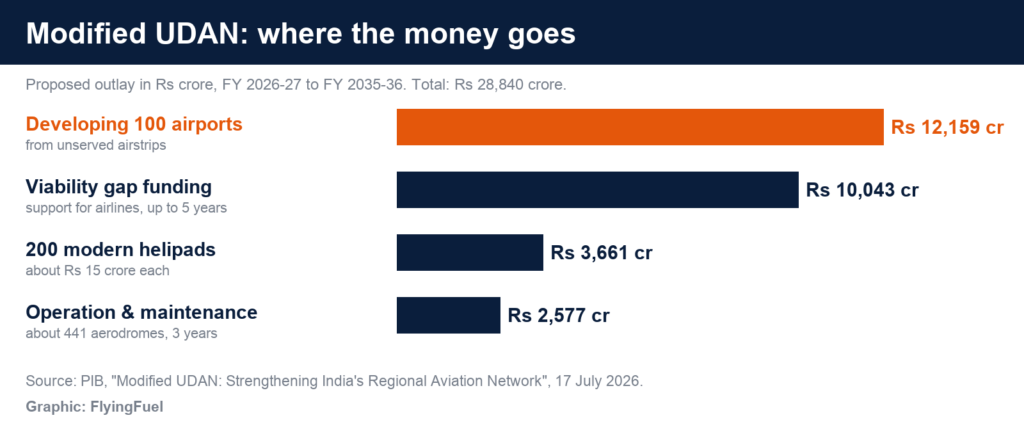
- 100 new airports: developed from existing unserved airstrips, with Rs 12,159 crore proposed over eight years.
- Viability Gap Funding: Rs 10,043 crore over ten years. Airlines get support for up to five years, tapering from the third year, and route exclusivity is limited to three years.
- 200 modern helipads: for places where airports are not practical, at about Rs 15 crore each and Rs 3,661 crore in total.
- Operation and maintenance support: Rs 2,577 crore for about 441 aerodromes, for three years, capped at Rs 3.06 crore a year per airport and Rs 0.90 crore a year per heliport or water aerodrome.
- Made-in-India aircraft: two HAL Dhruv helicopters for Pawan Hans and two HAL Dornier aircraft for Alliance Air.
Source: PIB, “Modified UDAN: Strengthening India’s Regional Aviation Network”. See also the Airports Authority of India UDAN page.
Which Aircraft Fly UDAN Routes?
The government says one challenge for regional flying has been the limited availability of small fixed-wing aircraft and helicopters suited to remote and difficult terrain. That is why Modified UDAN includes two HAL Dornier aircraft for Alliance Air and two HAL Dhruv helicopters for Pawan Hans. For the turboprops a big Indian airline flies alongside its jets, see IndiGo’s fleet.
UDAN and India’s Big Airports
UDAN is about the smallest end of the network. At the other end, new hubs such as Navi Mumbai International Airport are being built for the big metros. For a global comparison, see our list of the busiest airports in the world.
Frequently Asked Questions
What is the full form of UDAN?
UDAN stands for Ude Desh ka Aam Nagrik, which means “let the common citizen of the country fly”. Its official name is the Regional Connectivity Scheme (RCS) – UDAN.
When was the UDAN scheme launched?
The UDAN scheme was launched in October 2016. The first UDAN flight, from Shimla to Delhi, was flagged off by Prime Minister Narendra Modi in April 2017.
How many routes and airports are under UDAN?
As of 15 July 2026, 679 UDAN routes connect 95 airports, heliports and water aerodromes, according to the government. More than 3.58 lakh flights have carried over 1.68 crore passengers under the scheme.
What is the UDAN fare?
Under the original UDAN rules, the fare for a flight of about one hour by plane (around 500 km), or about half an hour by helicopter, was fixed at Rs 2,500. Airlines had to offer this fare on half the seats, with a minimum of 9 and a maximum of 40 seats per flight.
What is Modified UDAN?
Modified UDAN is the next phase of the scheme, launched on 4 July 2026. It runs from FY 2026-27 to FY 2035-36 with an outlay of Rs 28,840 crore and plans 100 new airports from unserved airstrips and 200 modern helipads.
How does UDAN pay airlines?
Through Viability Gap Funding (VGF), which covers part of an airline’s losses on a regional route while demand grows. Under Modified UDAN, airlines can get VGF for up to five years, tapering from the third year, and route exclusivity is limited to three years.
Who pays for UDAN?
Part of the money comes from within the aviation sector through the RCS levy, a small fee on selected categories of domestic flights. The government says this is a first-of-its-kind model.
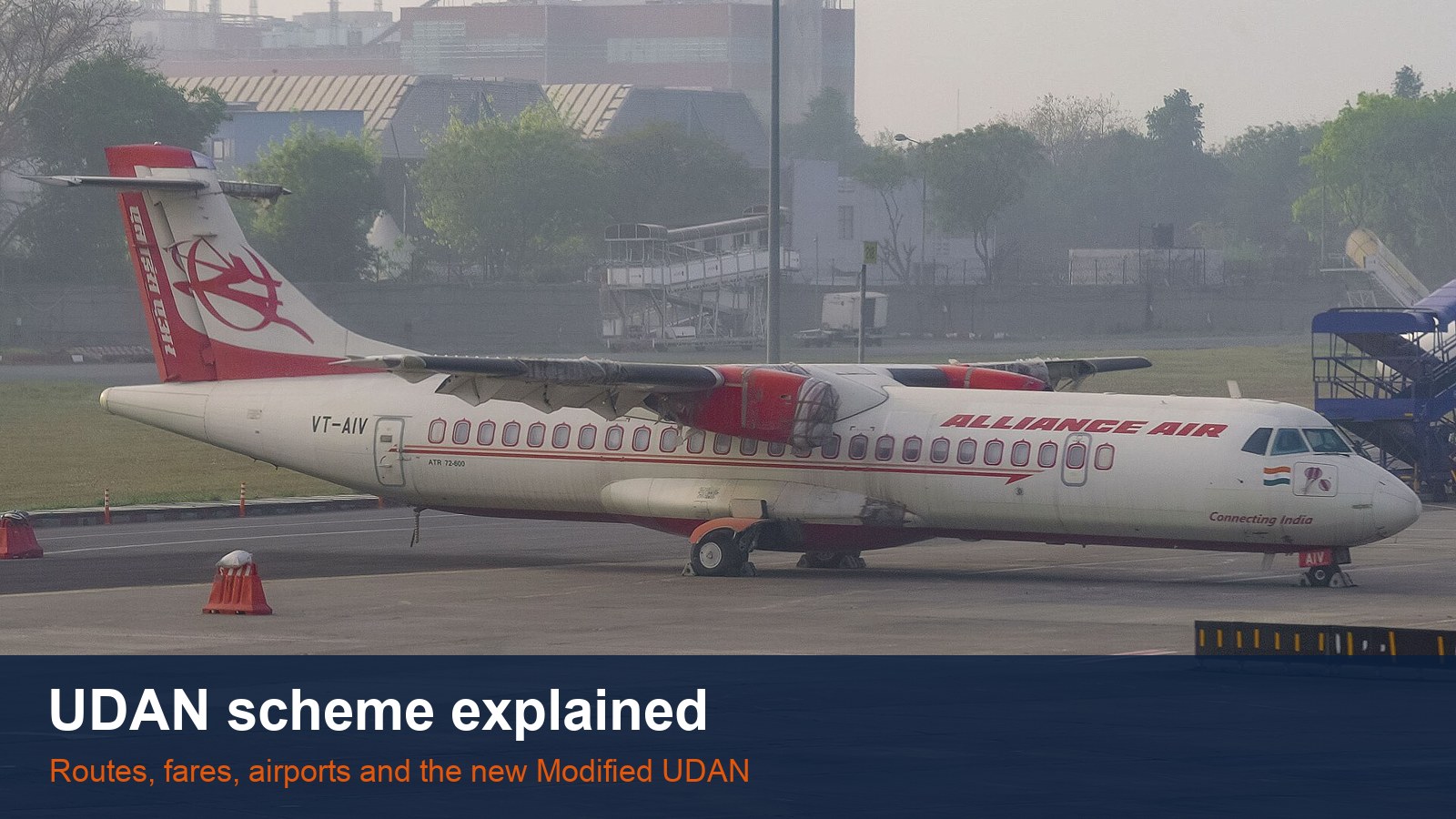
Featured image: FlyingFuel graphic using a photo of Alliance Air ATR 72-600 VT-AIV by Quintin Soloviev, CC BY 4.0, via Wikimedia Commons.
 GulfstreamGulfstream Business Jets: Every Model From the G300 to the G800 Explained (2026)
 NewsBombardier to Hire 800 in the US and Spend $270 Million on First Phase of Expansion
 NewsAll Passengers Flying to the US Must Sign an Ebola Travel Attestation From 3 November
 BombardierBombardier Business Jets: Every Global and Challenger Model Explained (2026)
 NewsSafran LEAP Engine Deliveries Rise 26% to 1,565 in First Nine Months of 2026
 NewsEmbraer Order Backlog Hits Record $35.7 Billion as E2 Jet Orders Grow