
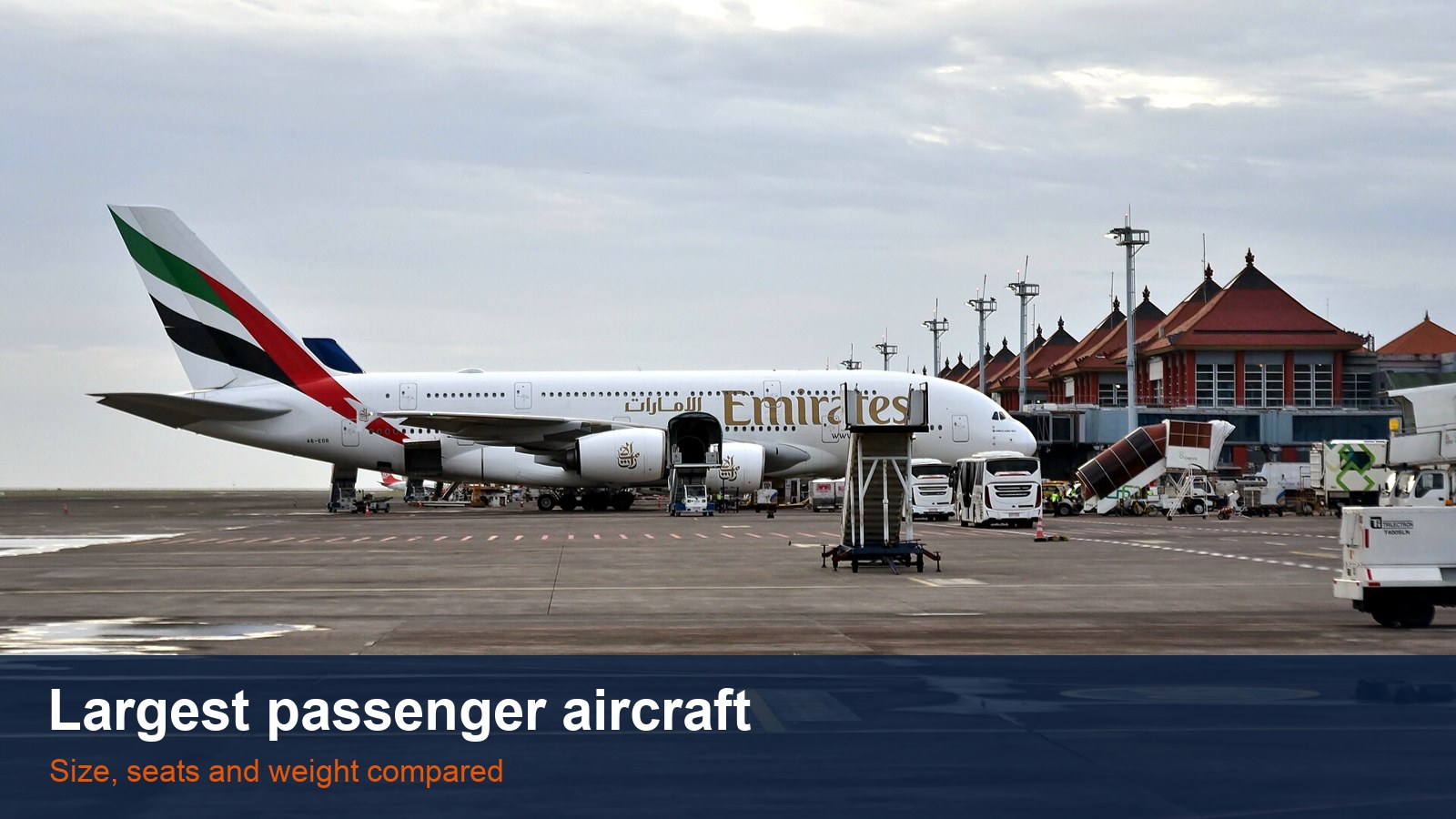
Which is the biggest passenger plane in the world? The short answer is the Airbus A380, the only full-length double-deck jet airliner. But “biggest” can mean the heaviest, the longest, the widest or the one with the most seats, and the answers are not always the same. In this guide we rank the largest passenger aircraft flying, or about to fly, in 2026.
Quick answer: the A380 is the largest by weight (575 tonnes), wingspan (79.75 m), cabin space and seats (up to 853). The Boeing 777-9 will be the longest at 76.7 m once it enters service; today the longest passenger jet flying is the Boeing 747-8 at 76.3 m.
If you are interested in cargo giants such as the Antonov An-225, see our separate list of the largest cargo planes in the world.
The Largest Passenger Aircraft: Quick Comparison
| # | Aircraft | Length | Wingspan | Max take-off weight | Seats | Status |
|---|---|---|---|---|---|---|
| 1 | Airbus A380-800 | 72.72 m | 79.75 m | 575 t | 525 typical; 853 max | Production ended 2021; 189 in service (May 2025) |
| 2 | Boeing 747-8 Intercontinental | 76.3 m | 68.4 m | 442 t | 467 (three-class) | Production ended 2023; 48 passenger aircraft built |
| 3 | Boeing 777-9 | 76.7 m | 71.8 m (64.8 m folded) | 351.5 t | 375 to 450 (two-class) | First delivery expected 2027 |
| 4 | Boeing 777-300ER | 73.9 m | 64.8 m | 351.5 t | 350 to 425 (two-class) | In service since 2004 |
| 5 | Airbus A350-1000 | 73.78 m | 64.75 m | 308 to 322 t | 375 to 400 (three-class); 480 max | In service since 2018 |
| 6 | Boeing 787-10 | 68.3 m | 60.1 m | 260.4 t | 300 to 375 (two-class) | In service since 2018 |
Sources: Wikipedia: Airbus A380; Boeing 747-8, 777, 777X and 787 specifications and Airbus A350 facts and figures, as compiled in our aircraft reviews.
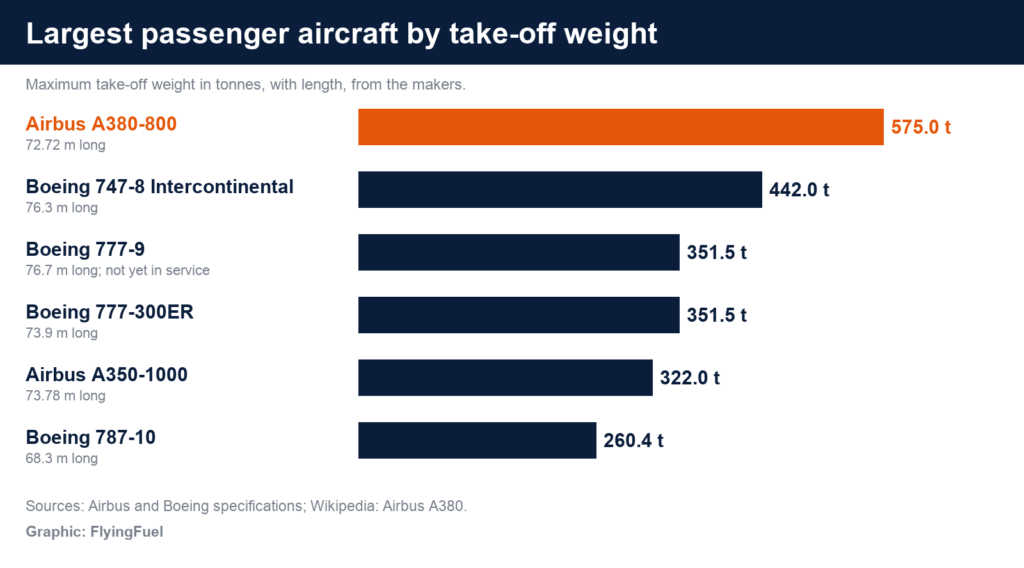
We ranked them by maximum take-off weight, the best single measure of how big an aircraft really is. By that measure the A380 is in a class of its own: it weighs 133 tonnes more than the next aircraft, the 747-8.
1. Airbus A380: The Superjumbo
The Airbus A380 is the world’s largest passenger airliner and the only one with two passenger decks along its whole length. According to Wikipedia, Airbus studies began in 1988, the programme was launched on 19 December 2000, and the first A380 flew on 27 April 2005. Singapore Airlines flew the first commercial service, Singapore to Sydney, on 25 October 2007.
| A380-800 fact | Figure |
|---|---|
| Length | 72.72 m |
| Wingspan | 79.75 m (wing area 845 m2) |
| Height | 24.09 m |
| Maximum take-off weight | 575 tonnes |
| Fuel capacity | 253,983 kg |
| Seats | 525 typical (three-class); 853 certified maximum |
| Range | About 8,000 nm |
| Engines | 4 x Rolls-Royce Trent 900 or Engine Alliance GP7200 |
| Cabin floor space | 550 m2, 40% more than the Boeing 747-8 |
| Built | 251, from 2003 to 2021 |
Source: Wikipedia: Airbus A380.
Inside, the A380 has 550 m2 of floor space across two decks, linked by wide stairways at the front and back. Wikipedia says it has 50% less cabin noise than the 747-400 and 60 cm more headroom, and economy seats up to 48 cm wide in a ten-across layout. Airlines used the space for features such as Emirates’ first-class showers and three-room first-class suites. Real layouts range from Korean Air’s 407 seats to Emirates’ two-class 615 seats.
The A380 has also been very safe: by December 2021 the fleet had carried over 300 million passengers on more than 800,000 flights with no hull-loss accidents. But it was a commercial failure for Airbus, which never recovered its estimated US$25 billion development cost. We explain why in why Airbus stopped making the A380, and how its biggest user plans to keep flying it in our Emirates A380 story.
2. Boeing 747-8 Intercontinental: The Longest Flying Today
The Boeing 747-8 is the final and longest version of the original jumbo jet. At 76.3 m it is the longest passenger aircraft in service today, and at 442 tonnes it is the heaviest aircraft Boeing has ever built. The passenger version, the 747-8 Intercontinental, seats 467 in three classes and flies about 7,790 nm on four GEnx-2B engines.
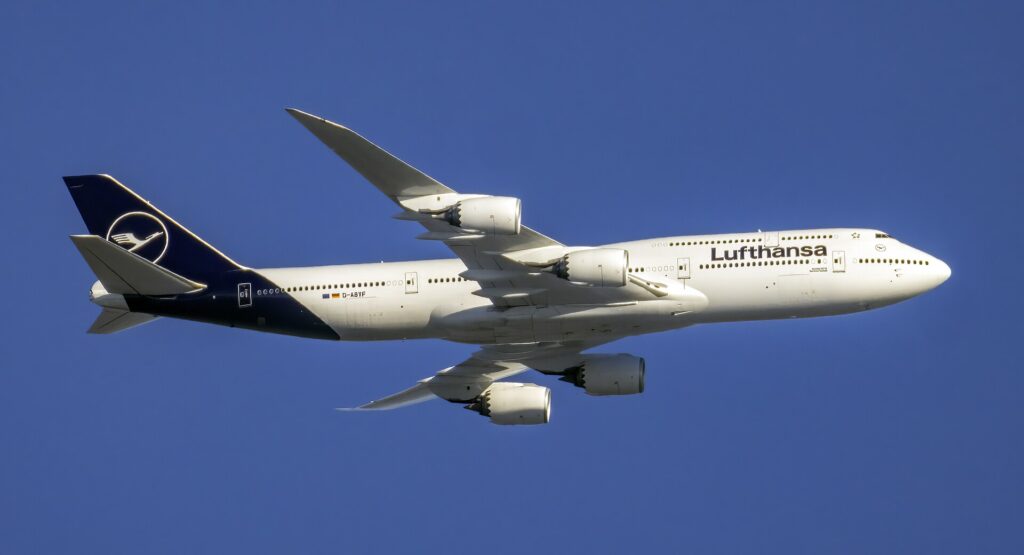
Lufthansa launched it with a Frankfurt to Washington flight on 1 June 2012, and Korean Air and Air China also ordered it. But airlines preferred cheaper-to-run twin-engine jets, so only 48 passenger 747-8s were built, along with 107 freighters. Boeing delivered the last 747, a freighter, to Atlas Air on 31 January 2023. Read our Boeing 747-8 review.
3. Boeing 777-9: The Longest Twinjet
The Boeing 777-9, part of the 777X family, will be the longest passenger aircraft ever built at 76.7 m, just ahead of the 747-8. Its 71.8 m wing is so long that the tips fold up on the ground to 64.8 m, so it fits the same airport gates as a 777-300ER. It carries 375 to 450 passengers in two classes on two giant GE9X engines, whose 134-inch fans are the largest on any airliner.
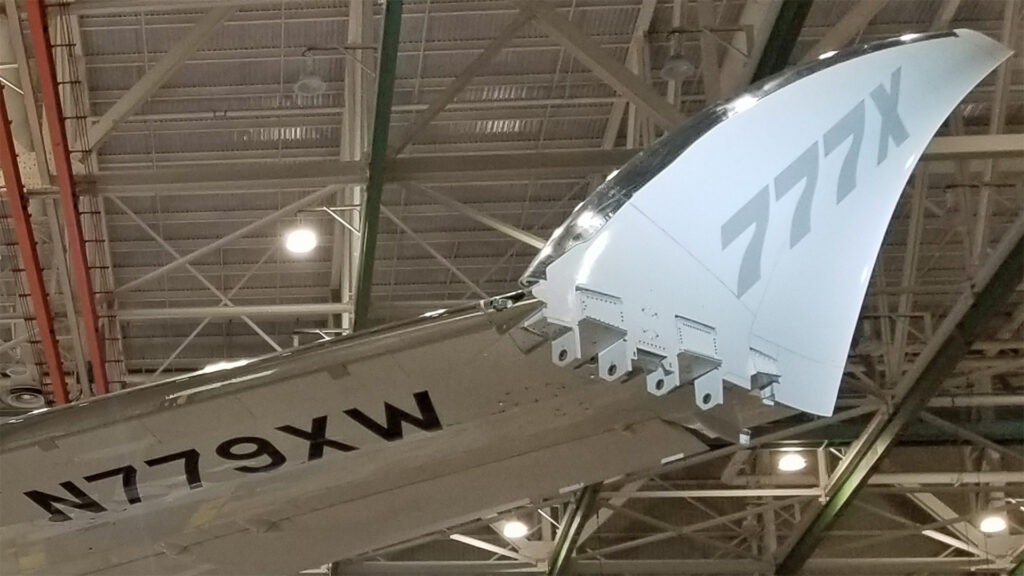
The 777-9 first flew on 25 January 2020, but certification has been delayed for years; Boeing expects first deliveries in 2027, with Lufthansa as the launch customer. Emirates has 270 on order to replace its 777-300ERs. See our 777-9 review and A350-1000 vs 777-9.
4. Boeing 777-300ER: The Workhorse
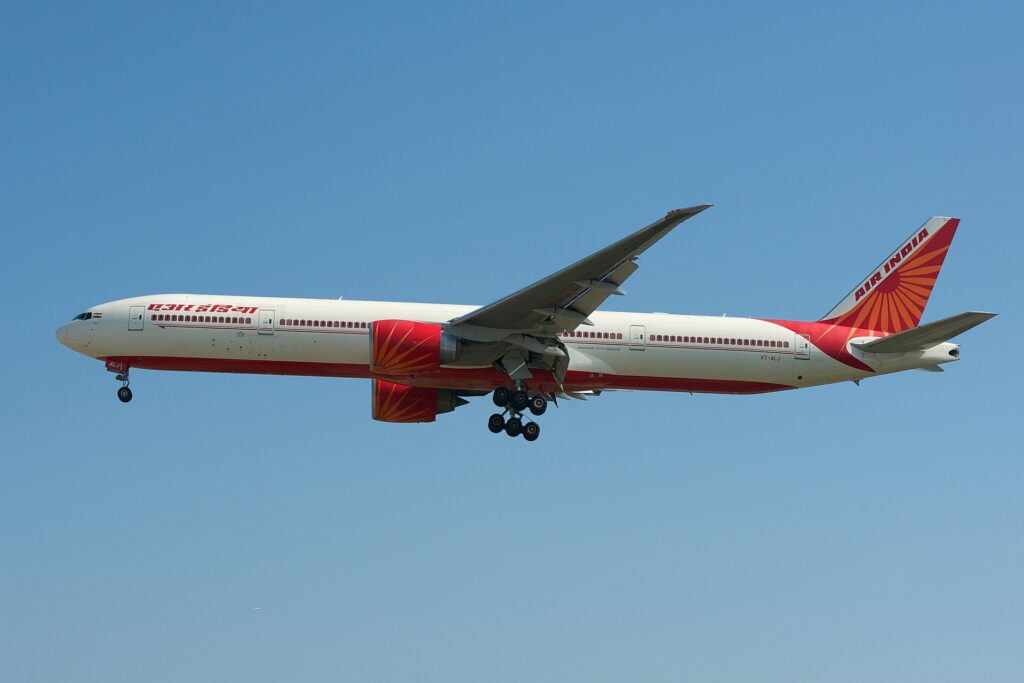
The Boeing 777-300ER is 73.9 m long and can take off at 351.5 tonnes, the same as the 777-9. It seats 350 to 425 in two classes and flies up to 7,500 nm on two GE90-115B engines, once the most powerful jet engines in service. With 833 delivered, it is the best-selling 777 model, and Air India had 19 in September 2026. Read our 777-300ER review.
5. Airbus A350-1000: The Biggest Airbus Twin
The Airbus A350-1000 is almost exactly as long as the 777-300ER at 73.78 m, but much lighter, at 308 to 322 tonnes, thanks to its carbon-fibre structure. Airbus lists 375 to 400 seats in three classes, and French Bee flies a 480-seat version. Its 8,100 nm range made it Qantas’s choice for Project Sunrise, nonstop flights from Sydney to London and New York. Read 777-300ER vs A350-1000.

6. Boeing 787-10: The Longest Dreamliner
The Boeing 787-10 is the smallest aircraft on this list, but still a big jet: 68.3 m long, with 300 to 375 seats in two classes. It trades range (7,500 nm) for capacity and is built only in Charleston, South Carolina, because its fuselage sections are too big to move to Everett. See 787-10 vs A350-900.
Largest by Each Measure
| Measure | Largest | Figure |
|---|---|---|
| Weight (max take-off) | Airbus A380 | 575 tonnes |
| Wingspan | Airbus A380 | 79.75 m |
| Length (in service) | Boeing 747-8 Intercontinental | 76.3 m |
| Length (all, including upcoming) | Boeing 777-9 | 76.7 m |
| Certified seats | Airbus A380 | 853 |
| Cabin floor space | Airbus A380 | 550 m2 |
| Largest twin-engine jet | Boeing 777-9 (upcoming); 777-300ER and A350-1000 (flying) | – |
Why Giant Four-Engine Jets Disappeared
The A380 and 747-8 were the last of the four-engine giants, and both are now out of production. The reason is economics. Large twin-engine jets such as the 777-300ER and A350-1000 carry 350 to 400 people on two engines instead of four, which costs less to run. Wikipedia says airlines also moved from hub-and-spoke networks, which suit giant aircraft, to point-to-point flights, which suit smaller widebodies flown more often. Read why twin-engine jets took over long-haul flying.
Wikipedia quotes AirInsight estimates from 2015: an A380 cost about US$50 per seat-hour, against US$44 for a 777-300ER and US$90 for a 747-400. Wikipedia adds that the A380’s cost per seat is expected to be matched by the A350-1000 and 777-9, which have much lower costs per flight.
Can You Fly These Giants From India?
- Airbus A380: not with an Indian airline, but foreign airlines bring it to India. Wikipedia notes that Emirates began A380 flights to Bengaluru in October 2022, the airport’s first A380 service.
- Boeing 777-300ER: yes, with Air India, which had 19 in September 2026. See our Air India fleet guide.
- Airbus A350-1000 and Boeing 787-10: not with Indian airlines yet; Air India’s A350s are A350-900s and its Dreamliners are 787-8s and 787-9s.
- Boeing 747-8 and 777-9: not in India. The passenger 747-8 was ordered by Lufthansa, Korean Air and Air China, and the 777-9 has not entered service yet.
Key Takeaways
- The Airbus A380 is the largest passenger aircraft: 575 tonnes, a 79.75 m wingspan and up to 853 seats.
- The Boeing 747-8 is the longest passenger jet flying today at 76.3 m; the 777-9 will take that title at 76.7 m.
- Both four-engine giants are out of production: the last A380 was delivered in 2021 and the last 747 in 2023.
- Big twins such as the 777-300ER, A350-1000 and upcoming 777-9 now do most of the heavy lifting on long routes.
Frequently Asked Questions
What is the largest passenger aircraft in the world?
The Airbus A380. It has a 79.75 m wingspan, a maximum take-off weight of 575 tonnes, two full-length passenger decks and is certified for up to 853 passengers. Airbus built it from 2003 to 2021.
What is the longest passenger aircraft?
The Boeing 777-9, at 76.7 m, once it enters service; Boeing expects first deliveries in 2027. Among aircraft flying passengers today, the Boeing 747-8 Intercontinental is the longest at 76.3 m. The A380 is shorter, at 72.72 m, but much bigger overall.
How many passengers can an A380 carry?
Up to 853 in an all-economy layout, its certified maximum. Airbus lists a typical three-class layout of 525 seats. Airline layouts range from Korean Air’s 407 seats to Emirates’ two-class 615 seats, averaging around 480 to 490.
Is the A380 still being made?
No. Airbus announced the end of production in February 2019 after Emirates cut its order. The last A380, the 251st, was delivered to Emirates on 16 December 2021.
Is the Boeing 747 still being made?
No. Boeing delivered the last 747, a 747-8 Freighter, to Atlas Air on 31 January 2023, after building 1,574 747s. Only 48 passenger 747-8s were built.
What is the largest twin-engine passenger aircraft?
The Boeing 777-9, the longest twinjet ever at 76.7 m, with a 71.8 m wingspan and folding wingtips. Until it enters service, the 777-300ER and A350-1000 are the largest twin-engine passenger jets flying.
Which airline has the most A380s?
Emirates, by far. It had 116 A380s in May 2025, out of 189 in service worldwide. British Airways, Singapore Airlines and Qantas were the next-largest operators.
Can I fly an A380 from India?
Yes, on foreign airlines. Wikipedia notes that Emirates began A380 flights to Bengaluru in October 2022, the airport’s first A380 service. Indian airlines do not fly the A380.
What is the largest aircraft ever built?
For cargo, the Antonov An-225 Mriya, which flew a 247-tonne record load in 2004; the only one was destroyed in 2022. See our list of the largest cargo planes. For passengers, it is the A380.
Featured image: FlyingFuel graphic using a photo of Emirates Airbus A380 A6-EOR at Denpasar, Bali by Bahnfrend, CC BY-SA 4.0, via Wikimedia Commons.
 GulfstreamGulfstream Business Jets: Every Model From the G300 to the G800 Explained (2026)
 NewsBombardier to Hire 800 in the US and Spend $270 Million on First Phase of Expansion
 NewsAll Passengers Flying to the US Must Sign an Ebola Travel Attestation From 3 November
 BombardierBombardier Business Jets: Every Global and Challenger Model Explained (2026)
 NewsSafran LEAP Engine Deliveries Rise 26% to 1,565 in First Nine Months of 2026
 NewsEmbraer Order Backlog Hits Record $35.7 Billion as E2 Jet Orders Grow