
If you want the biggest, longest-range private jet you can buy in 2026, the choice usually comes down to two aircraft: the Gulfstream G700 and the Bombardier Global 8000. Both carry up to 19 passengers across oceans, both cost around US$80 million, and both are the flagships of their makers. But they are built around different priorities.
Quick answer: the G700 wins on cabin space: 56 ft 11 in long, up to five living areas and 20 large windows. The Global 8000 wins on speed, range and cabin comfort at altitude: Mach 0.95, 8,000 nm and a 2,691 ft cabin altitude. Prices are almost the same. Choose the G700 for room, the Global 8000 for time.
Figures in this comparison come from the makers’ pages for the Gulfstream G700 and the Bombardier Global 8000, with dates and prices from Wikipedia. For the full story of each jet, read our Gulfstream G700 review and Bombardier Global 8000 review.
G700 vs Global 8000 at a Glance
| Gulfstream G700 | Bombardier Global 8000 | |
|---|---|---|
| Maker | Gulfstream (Savannah, Georgia, US) | Bombardier (Montreal, Canada) |
| Top speed (MMO) | Mach 0.935 | Mach 0.95 |
| Range at Mach 0.85 | 7,750 nm (14,353 km) | 8,000 nm (14,816 km) |
| Passengers | Up to 19 | Up to 19 |
| Sleeps | Up to 13 | Up to 8 |
| Cabin length (excl. baggage) | 56 ft 11 in (17.35 m) | 54 ft 5 in (16.59 m) |
| Cabin width / height | 8 ft 2 in / 6 ft 3 in | 8 ft / 6 ft 2 in |
| Living areas | Up to 5 | 4 |
| Cabin altitude at 41,000 ft | 2,840 ft | 2,691 ft |
| Engines | 2 x Rolls-Royce Pearl 700, 18,250 lbf | 2 x GE Passport, 18,920 lbf |
| Take-off distance (SL, ISA, MTOW) | 5,995 ft (1,827 m) | 5,760 ft (1,756 m) |
| Maximum altitude | 51,000 ft | 51,000 ft |
| Length / wingspan | 109 ft 10 in / 103 ft | 111 ft / 104 ft |
| First delivery | 23 April 2024 | 8 December 2025 |
| Equipped price (2023) | About US$79.9 million | About US$81 million |
Sources: Gulfstream: G700, Bombardier: Global 8000; dates and prices from Wikipedia: Gulfstream G700 and Wikipedia: Bombardier Global 7500. Bold marks the better figure.
Where They Come From
Neither jet is a clean-sheet design. Wikipedia says Gulfstream announced the G700 in October 2019 as a 10 ft stretch of the G650, with new Rolls-Royce Pearl 700 engines, bigger winglets and the fly-by-wire Symmetry flight deck from the G500 and G600. It first flew in February 2020, but certification took about two years longer than planned and the first deliveries came in April 2024.
The Global 8000 is a faster, longer-range version of the Global 7500, which entered service in December 2018. Wikipedia explains that Bombardier launched it in May 2022 with 300 nm more range, a higher top speed, more fuel and up to 7% more engine thrust, but the same cabin. It was certified in late 2025, and Bombardier now sells it in place of the 7500. More than 200 Global 7500s had been delivered by December 2024, so the 8000 builds on a well-proven airframe.
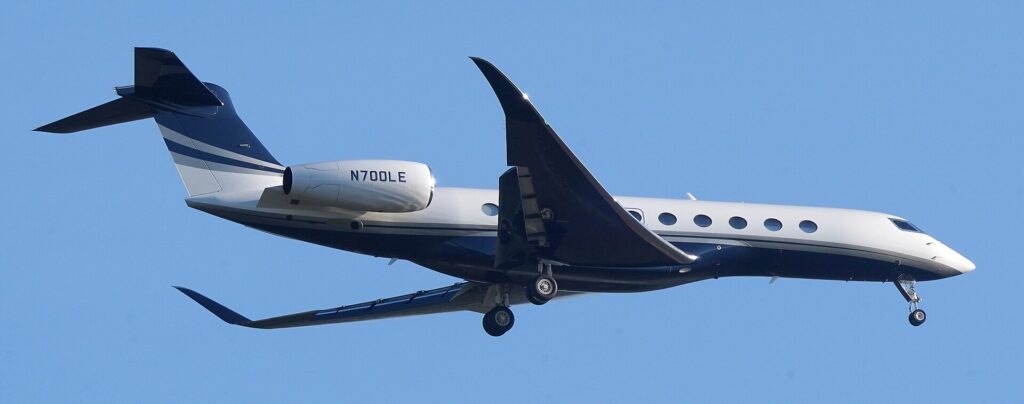
Cabin: The G700’s Big Advantage
This is the clearest difference between the two. The G700 cabin is 2 ft 6 in longer, 2 in wider and 1 in taller than the Global 8000’s, and Gulfstream calls it the largest in business aviation.
| Cabin | Gulfstream G700 | Bombardier Global 8000 |
|---|---|---|
| Length (excl. baggage) | 56 ft 11 in | 54 ft 5 in |
| Width | 8 ft 2 in (2.49 m) | 8 ft (2.44 m) |
| Height | 6 ft 3 in (1.91 m) | 6 ft 2 in (1.88 m) |
| Volume | 2,603 cu ft | Not published |
| Living areas | Up to 5 (layout dependent) | 4 suites, plus entrance and crew area |
| Windows | 20 Panoramic Oval Windows | Large rounded windows, six per suite |
| Bedroom | Grand Suite, optional shower | Principal suite, optional shower |
| Crew rest | Dedicated crew compartment (Ultragalley layout) | Optional crew rest area |
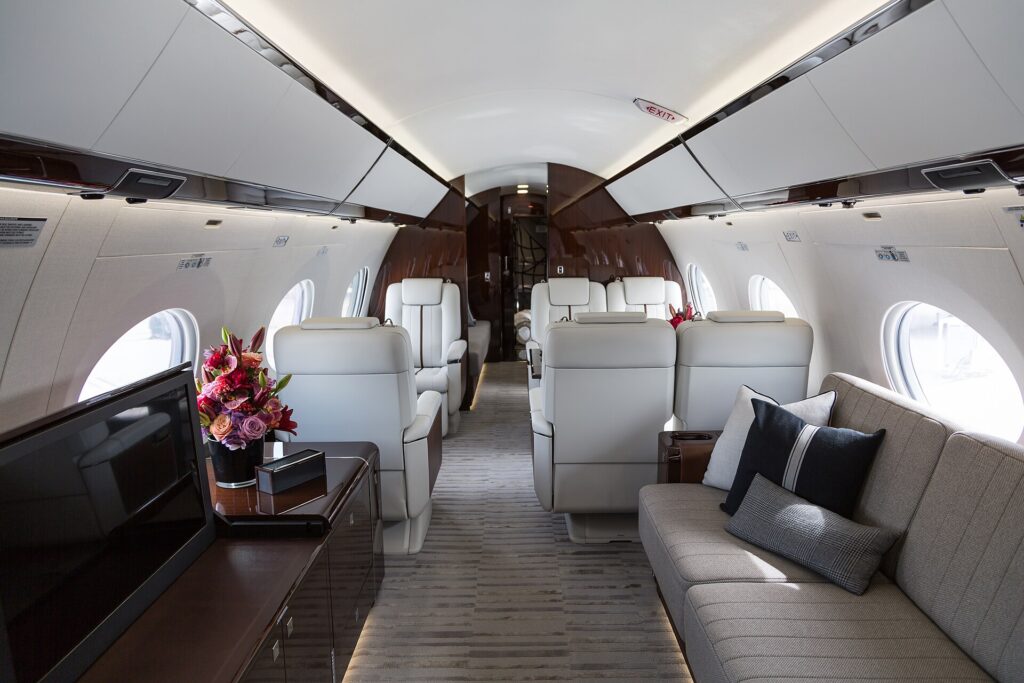
In practice, the extra length lets G700 owners add a fifth zone, or keep four larger ones with a full-size Ultragalley kitchen and a separate room for the crew. Gulfstream lists layouts sleeping up to 13 people. The Global 8000’s four equal suites (club, conference, entertainment and a principal bedroom) are still very spacious, and Wikipedia says the cabin can sleep eight.
Seats, light and air
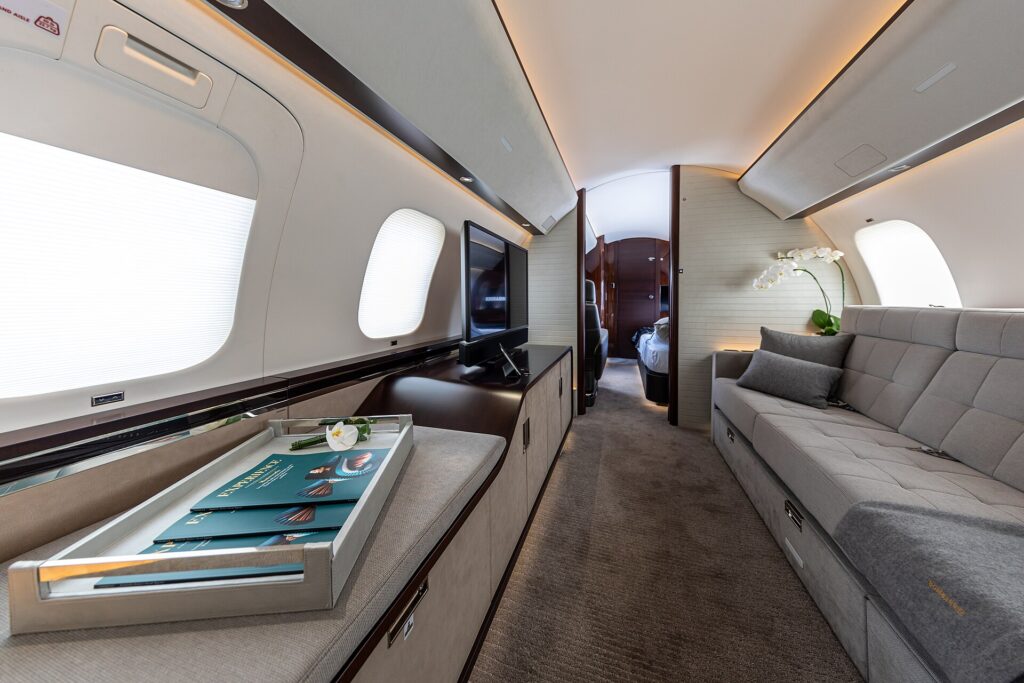
- Global 8000: Bombardier’s Nuage seats, which tilt their base into a “zero-gravity” recline; Soleil lighting that shifts colour to match the time at your destination to fight jet lag; and a Pũr Air HEPA filter that Bombardier says captures up to 99.99% of particles. Bombardier also claims the largest galley in business aviation.
- G700: handcrafted seats that convert into beds, 100% fresh, plasma-ionised air that Gulfstream says is replaced every two to three minutes, and 20 of the largest windows in business aviation.
- Wi-Fi: the G700 lists Jet ConneX Ka-band; the Global 8000 is built with JetWave hardware, with Starlink and Gogo Galileo offered.
Cabin Altitude: A Small Win for the Global 8000
Business jets fly higher than airliners, but their cabins feel much lower. At 41,000 ft, the Global 8000 cabin feels like 2,691 ft, which Bombardier says is the lowest in the industry; the G700 cabin feels like 2,840 ft. Both are far below the 6,000 to 8,000 ft of most airliners. The difference between the two jets is small, but on a 15-hour flight a lower cabin altitude means a little more oxygen and a little less tiredness. We explain why jets fly so high in why planes fly at 35,000 feet.
Speed and Range: The Global 8000 Leads
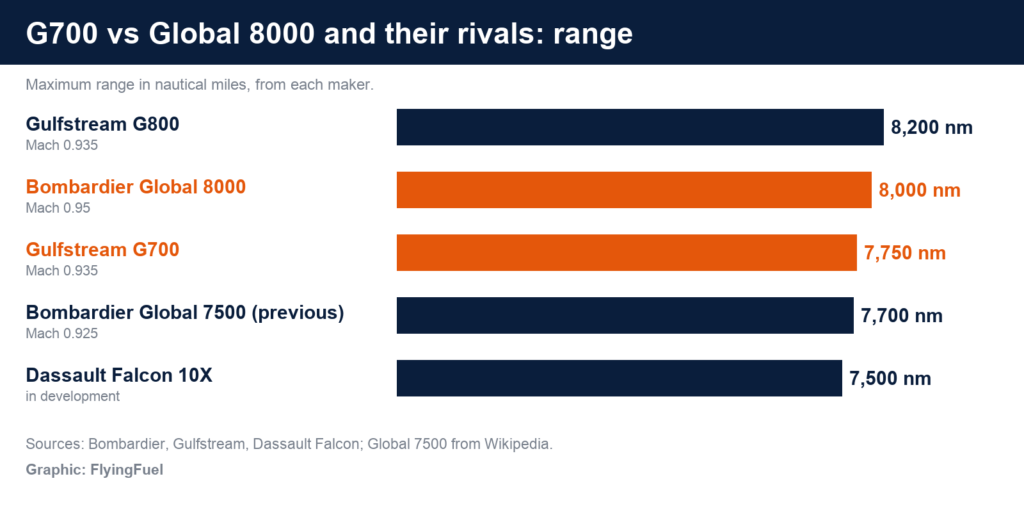
The Global 8000 is the fastest business jet in service, with a Mach 0.95 top speed and an “ultra-high-speed” cruise of Mach 0.92. A modified Global 7500 test aircraft even flew at Mach 1.015 in May 2021. The G700’s Mach 0.935 is the fastest of any Gulfstream, shared with the G800.
On range, the Global 8000 flies 8,000 nm and the G700 7,750 nm, both with 8 passengers and 4 crew at Mach 0.85. Gulfstream also quotes 6,650 nm for the G700 at Mach 0.90. Either jet can link London with Los Angeles, Dubai with New York or Mumbai with the US East Coast nonstop. The extra 250 nm matters mainly on the very longest routes, such as Singapore to the US East Coast, or on hot days with a full cabin.
Both families have set records. Wikipedia lists a Global 7500 flight of 8,225 nm from Sydney to Detroit in October 2019, and Gulfstream says the G700 holds more than 50 world speed records. If range is your only priority, look at the Gulfstream G800, which flies 8,200 nm with the G700’s wing and engines but a shorter cabin.
Engines
| Engines | Gulfstream G700 | Bombardier Global 8000 |
|---|---|---|
| Model | Rolls-Royce Pearl 700 | GE Passport |
| Thrust (each) | 18,250 lbf (81.20 kN) | 18,920 lbf (84.16 kN) |
| Bypass ratio | Above 6.5:1 | 5.6:1 |
| Overall pressure ratio | Above 50:1 | 45:1 |
| Notable feature | Improved BR725 with an extra low-pressure turbine stage | 52-inch fan machined as one piece (blisk) |
Sources: Wikipedia: Gulfstream G700, Wikipedia: Bombardier Global 7500 and the GE Passport article.
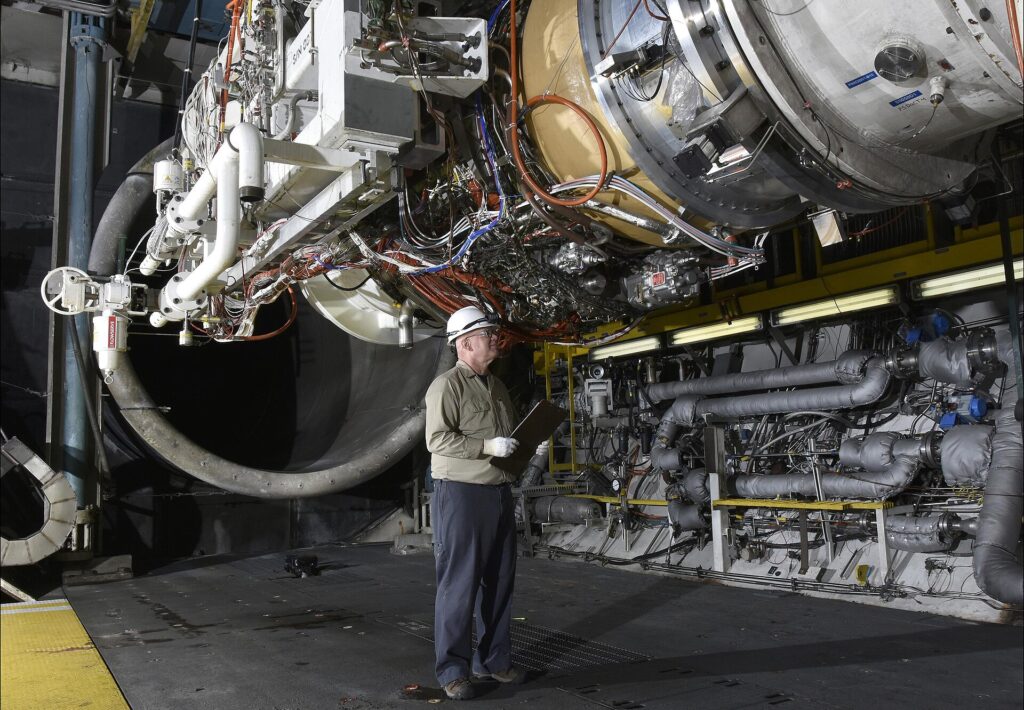
The Global 8000 has a little more thrust, which helps its higher top speed and shorter take-off run (5,760 ft against 5,995 ft at maximum weight). The Pearl 700 has the higher bypass and pressure ratios, which are the main levers for fuel efficiency; Rolls-Royce claimed 3-5% better fuel consumption than the BR725. Neither maker publishes a like-for-like fuel burn figure, so there is no fair way to say which jet is cheaper to fuel. For the basics of jet engines, see turbofan vs turboprop.
Cockpit and Safety Technology
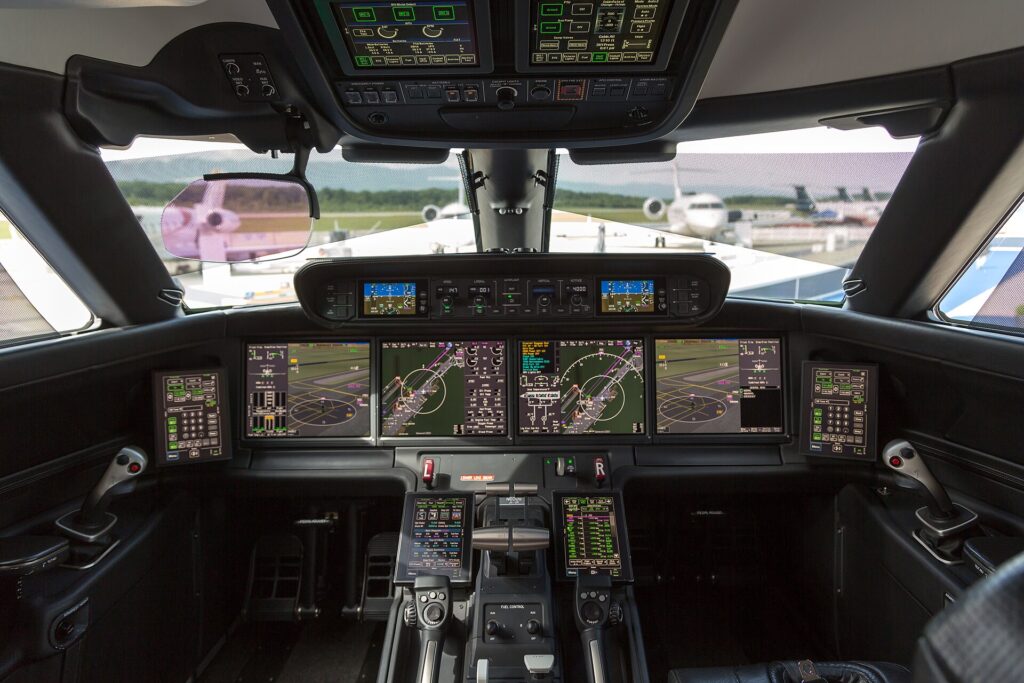
Both are fly-by-wire jets flown with side-sticks rather than a yoke, and both have head-up displays and vision systems for poor weather.
- G700, Symmetry flight deck: touch-screen controls based on Honeywell Primus Epic, active side-sticks that are electronically linked so each pilot feels the other’s inputs, a Combined Vision System on dual HUDs, and the Predictive Landing Performance System, which warns pilots before touchdown if they risk running off the runway.
- Global 8000, Bombardier Vision flight deck: four large displays, a HUD with Enhanced Vision (infrared camera) and Synthetic Vision, MultiScan weather radar with windshear detection, CPDLC datalink, and fly-by-wire based on the CSeries (now Airbus A220) system, with active load alleviation to smooth out turbulence.
On safety records, Wikipedia lists no accidents involving the G700, and no fatal accidents for the Global 7500 family that the 8000 is built on. Both are certified by the FAA; the G700 has also been certified in India by the DGCA. For passengers, the operator and its pilots matter far more than the choice between these two aircraft.
Price, Sales and Who Flies Them
There is almost nothing between them on price: about US$79.9 million for an equipped G700 and about US$81 million for a Global 8000, according to Wikipedia’s 2023 figures. NetJets’ 2022 order for four Global 8000s was valued at US$312 million. The real price depends on the interior, options and delivery slot.
| Gulfstream G700 | Bombardier Global 8000 | |
|---|---|---|
| Built / delivered | 135 G700s built by October 2026 (Wikipedia) | First delivered December 2025; 200+ Global 7500s before it |
| Launch / key customers | Qatar Executive (10), Flexjet (5), US Coast Guard | NetJets (launch customer); 7500 family flown by VistaJet and the Swiss government |
| Upgrade path | – | Global 7500s can be upgraded to 8000 standard |
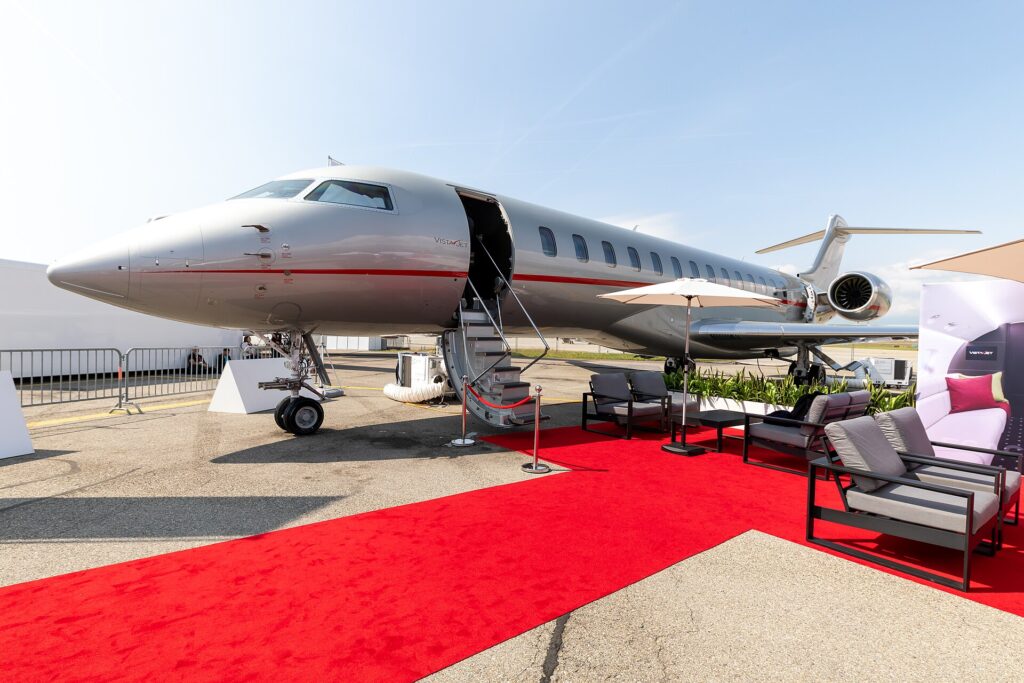
If you charter rather than buy, you are most likely to meet the G700 with Qatar Executive or Flexjet, and the Global 7500/8000 family with VistaJet or NetJets. For the whole range of each maker, see our guides to Gulfstream jets and Bombardier business jets, or start with private jet sizes explained.
Which Should You Choose?
- Choose the G700 if cabin space comes first: families, large teams, or flights where you want a separate crew rest room and a fifth living area. It also sleeps more people (up to 13).
- Choose the Global 8000 if time comes first: it is faster, flies 250 nm further, needs a slightly shorter runway and has the lower cabin altitude.
- Choose neither if pure range is the goal: the Gulfstream G800 flies 8,200 nm. And if you can wait, the Dassault Falcon 10X (expected around 2029) promises the widest cabin of the group.
Our Verdict
This is the closest contest in private aviation. The Gulfstream G700 is the more spacious aircraft, with the longest, widest and tallest cabin of any business jet in service, and it has a two-year head start in service with well over 100 delivered. The Bombardier Global 8000 is the faster, longer-range jet with the more restful cabin altitude, built on the proven Global 7500. At almost the same price, the right answer depends on how you fly: for comfort on board, the G700; for getting there sooner and further, the Global 8000. You can also see how they compare with the Dassault Falcon 10X in our Dassault Falcon guide.
Key Takeaways
- The G700 has the bigger cabin: 56 ft 11 in against 54 ft 5 in, up to five living areas and 20 windows.
- The Global 8000 is faster (Mach 0.95 against 0.935) and flies further (8,000 nm against 7,750 nm).
- The Global 8000 has the lower cabin altitude: 2,691 ft against 2,840 ft at 41,000 ft.
- Both carry up to 19 passengers and cost about US$80 million equipped (2023).
- The G700 entered service in April 2024; the Global 8000 in December 2025.
Frequently Asked Questions
Which is better, the Gulfstream G700 or the Bombardier Global 8000?
It depends on what matters to you. The G700 has the longer cabin (56 ft 11 in against 54 ft 5 in), up to five living areas and 20 windows. The Global 8000 is faster (Mach 0.95 against 0.935), flies further (8,000 nm against 7,750 nm) and has a lower cabin altitude (2,691 ft against 2,840 ft at 41,000 ft).
Which is faster, the G700 or the Global 8000?
The Global 8000. Its maximum operating speed is Mach 0.95, which Bombardier says makes it the fastest business jet in service. The G700 tops out at Mach 0.935, the fastest in Gulfstream’s range.
Which has the bigger cabin, the G700 or the Global 8000?
The G700. Its cabin is 56 ft 11 in long, 8 ft 2 in wide and 6 ft 3 in high, against 54 ft 5 in, 8 ft and 6 ft 2 in for the Global 8000. Gulfstream calls it the largest cabin in business aviation.
Which flies further, the G700 or the Global 8000?
The Global 8000: 8,000 nm (14,816 km) against 7,750 nm (14,353 km) for the G700, both with 8 passengers and 4 crew at Mach 0.85 with NBAA IFR reserves. Real range depends on weather and payload.
How much do the G700 and Global 8000 cost?
Wikipedia lists equipped prices of about US$79.9 million for the G700 and about US$81 million for the Global 8000 (2023 figures). Neither maker publishes list prices, and the interior changes the final cost.
What engines do the G700 and Global 8000 use?
The G700 has two Rolls-Royce Pearl 700 engines of 18,250 lbf each. The Global 8000 has two GE Passport engines of 18,920 lbf each.
How many passengers do the G700 and Global 8000 carry?
Both are certified for up to 19 passengers. The G700 can sleep up to 13 depending on the layout; Wikipedia says the Global 7500/8000 cabin can sleep eight.
When did the G700 and Global 8000 enter service?
The FAA certified the G700 on 29 March 2024 and the first two were delivered on 23 April 2024. Transport Canada certified the Global 8000 on 5 November 2025, the FAA on 19 December 2025, and the first was delivered on 8 December 2025.
Is the Global 8000 the same as the Global 7500?
It is a faster, longer-range development of the 7500, with the same cabin and outside shape. It adds 300 nm of range and a Mach 0.95 top speed, and existing 7500s can be upgraded to the 8000 standard.
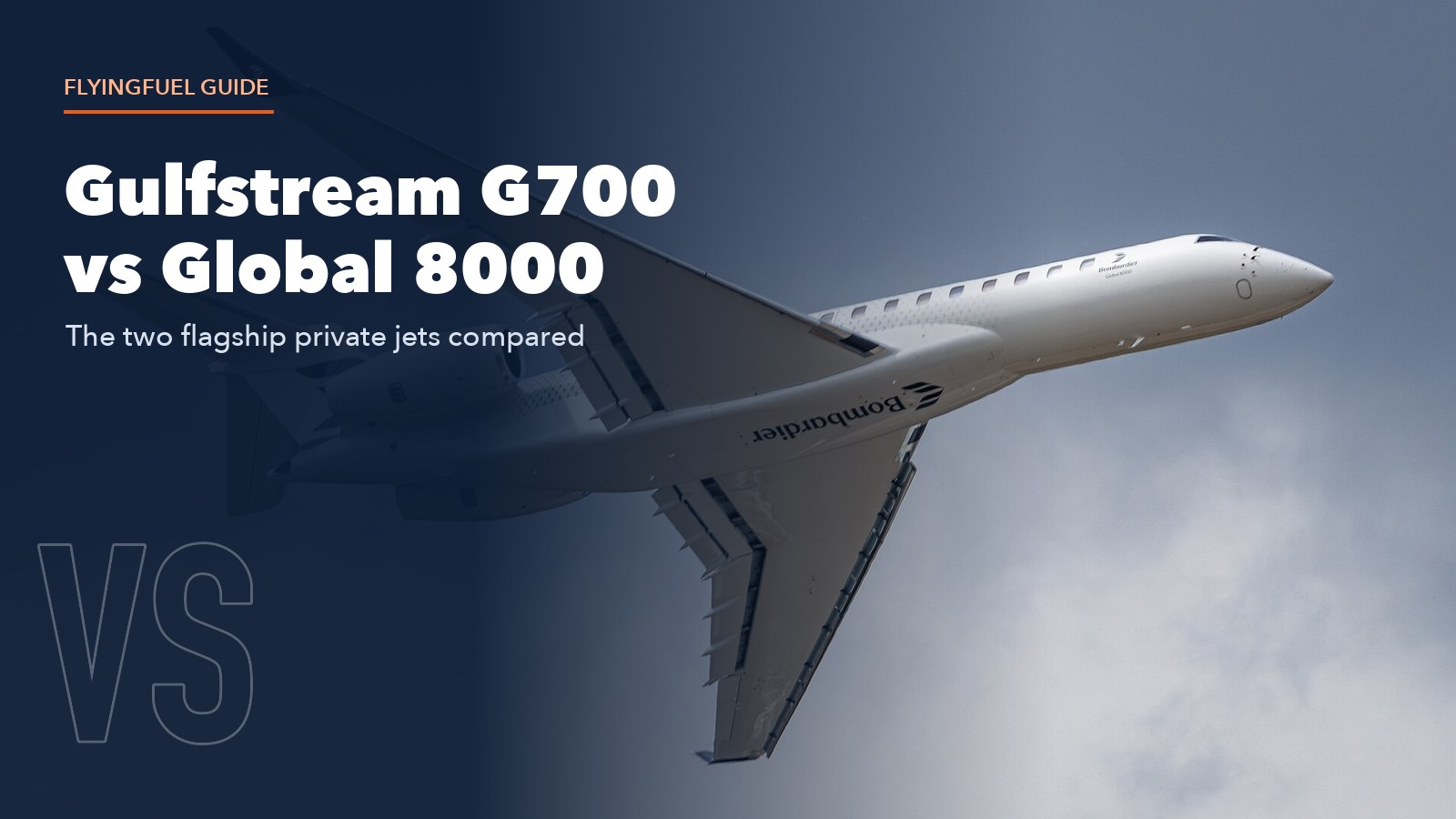
Featured image: FlyingFuel graphic using a photo of the Bombardier Global 8000 N100BD at the 2026 Farnborough Airshow by Oren Rozen, CC BY-SA 4.0, via Wikimedia Commons.
 Aircraft ComparisonsBoeing vs Airbus: How to Tell the Difference (Nose, Windows, Wings, Engines)
 Aircraft ComparisonsPilatus PC-24 vs Embraer Phenom 300E: Which Light Jet Is Better? (2026)
 PilatusPilatus PC-24 Review: The Jet That Lands on Grass and Gravel (2026)
 Aircraft ComparisonsBombardier Global 6500 vs Gulfstream G600: Same Range, Different Jets (2026)
 BombardierBombardier Global 6500 Review: Range, Cabin, Speed and Price (2026)
 Aircraft ComparisonsEmbraer Praetor 600E vs Bombardier Challenger 3500: Which Super-Midsize Jet Wins? (2026)