
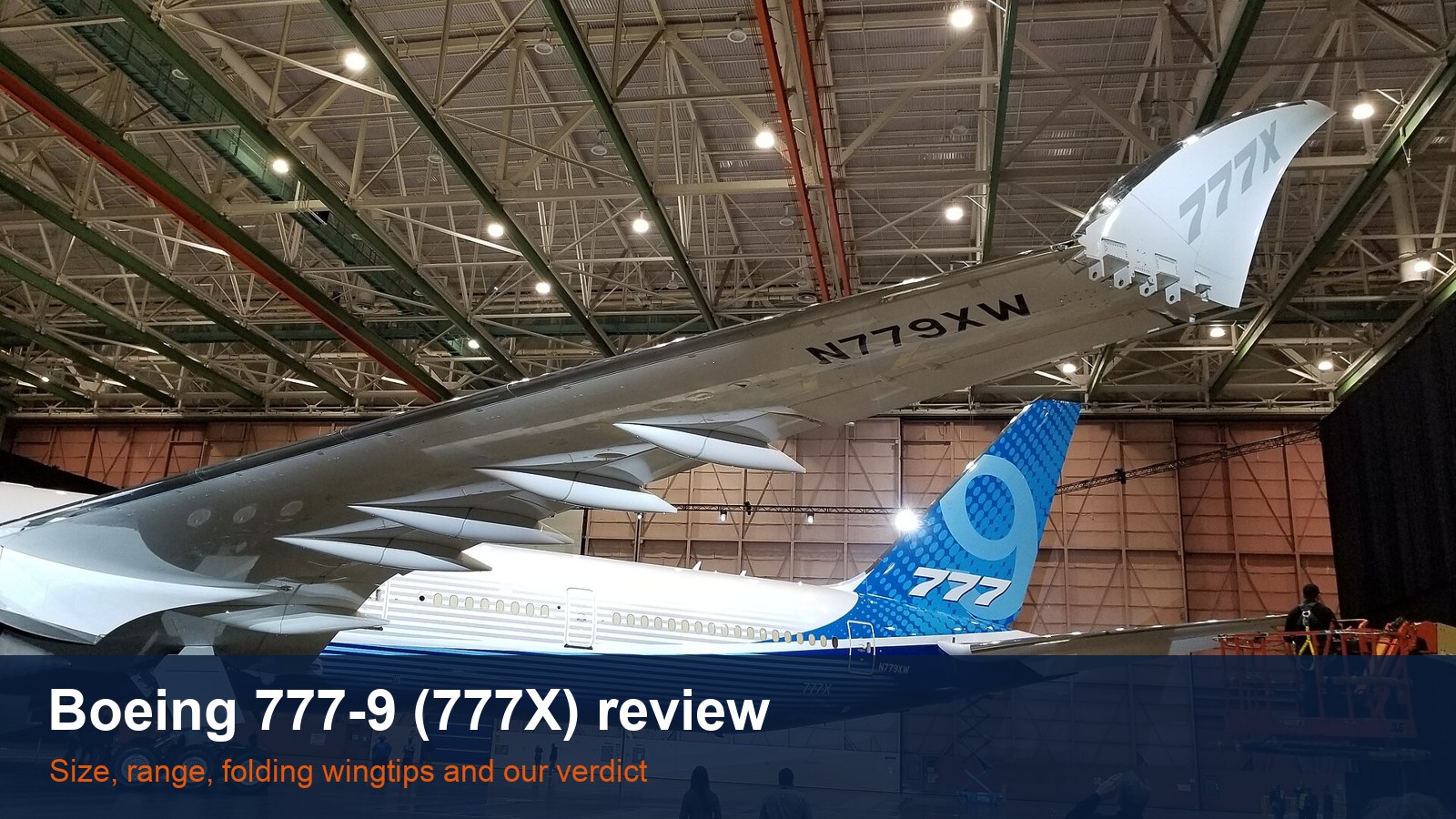
The Boeing 777-9 is the larger model of Boeing’s new 777X family and the biggest twin-engine airliner ever built. It combines the 777 fuselage with a brand-new carbon-fibre wing that folds at the tips, the GE9X, the largest commercial jet engine ever made, and a cabin with features borrowed from the 787 Dreamliner. As of October 2026 it is still being certified, with first delivery expected in 2027.
Our verdict in one line: the 777-9 is the most capable big twin Boeing has designed, with 375 to 450 seats, up to 8,000 nm of range and, Boeing says, 20% lower fuel use than the aircraft it replaces. It has not yet proven itself in service, and its first delivery is now about seven years later than planned. If it delivers on its promises, it will be the new king of busy long-haul routes.
In this review we explain everything simply: why the wingtips fold, what makes the GE9X special, what the cabin and cockpit will offer, how far it can fly, why it is so late, which airlines (including Air India) are waiting for it, and how it compares with the 777-300ER and Airbus A350-1000.
Boeing 777-9 Quick Facts
| Item | Boeing 777-9 |
|---|---|
| Type | Twin-aisle (widebody) twin-engine airliner |
| Seats (two-class) | 375 to 450 |
| Range | Up to 8,000 nm (14,820 km) |
| Length | 76.7 m (251 ft 9 in), the longest twinjet |
| Wingspan | 71.8 m in flight; 64.8 m with tips folded |
| Height | 19.5 m (64 ft 1 in) |
| Maximum take-off weight | 351,530 kg (775,000 lb) |
| Engines | 2 x GE Aerospace GE9X (134 in fan) |
| Fuel use | 20% lower than the aircraft it replaces (Boeing) |
| Noise | 40% smaller noise footprint than the aircraft it replaces (Boeing) |
| First flight | 25 January 2020, Paine Field, Everett |
| First delivery | Expected 2027 (Lufthansa is the launch customer) |
| Orders | 619 777X orders from 12 customers (November 2025) |
Sources: Boeing 777X technical specifications; Wikipedia: Boeing 777X.
What Is the 777X?
The 777X is the third generation of the Boeing 777. Boeing kept the basic 777 fuselage, but gave it a new composite wing, new engines, a wider interior and many technologies from the 787. Lufthansa became the launch customer on 18 September 2013 by selecting 34 777-9s. At the Dubai Airshow in November 2013 the programme was formally launched with 259 orders and commitments worth US$95 billion at list prices, from Emirates (150), Qatar Airways (50) and Etihad (25) as well as Lufthansa, according to its history. That was the largest commercial aircraft launch by value.
The family has two passenger models and a freighter:
- 777-9: the long one, 76.7 m, with 375 to 450 seats and 8,000 nm of range. This is the model being certified first.
- 777-8: a shorter (70.9 m) ultra-long-range version, with 350 to 425 seats and up to 9,500 nm of range.
- 777-8 Freighter: a cargo version with a maximum structural payload of 118 tonnes and a range of 5,000 nm with 110 tonnes, according to Boeing.
Boeing says the 777X will be “the world’s largest and most efficient twin-engine jet”, with 20% lower fuel use and emissions, a 40% smaller noise footprint than the aircraft it replaces and 10% lower operating costs than the competition.
The Folding Wingtips, Explained
The most eye-catching feature of the 777X is its wing. In aerodynamics, a longer, slimmer wing produces lift with less drag, so it saves fuel. Boeing gave the 777X a new carbon-fibre composite wing based on the 787’s, with a span of 71.8 m. Compared with the 777-300ER, the wing area grew from 4,702 to 5,562 sq ft and the aspect ratio (how long and slim a wing is) rose from 9:1 to 10:1.
The problem: a 71.8 m wingspan is too wide for the gates and taxiways that today’s 777s use, and would have put the aircraft in the same airport category (ICAO Code F) as the 747-8 and A380. Boeing’s solution is a folding wingtip of about 3.5 m (11 ft 3 in) on each side. After landing, the tips fold upward and the span shrinks to 64.8 m, exactly the same as a 777-300ER, so the 777-9 can use the same Code E gates.
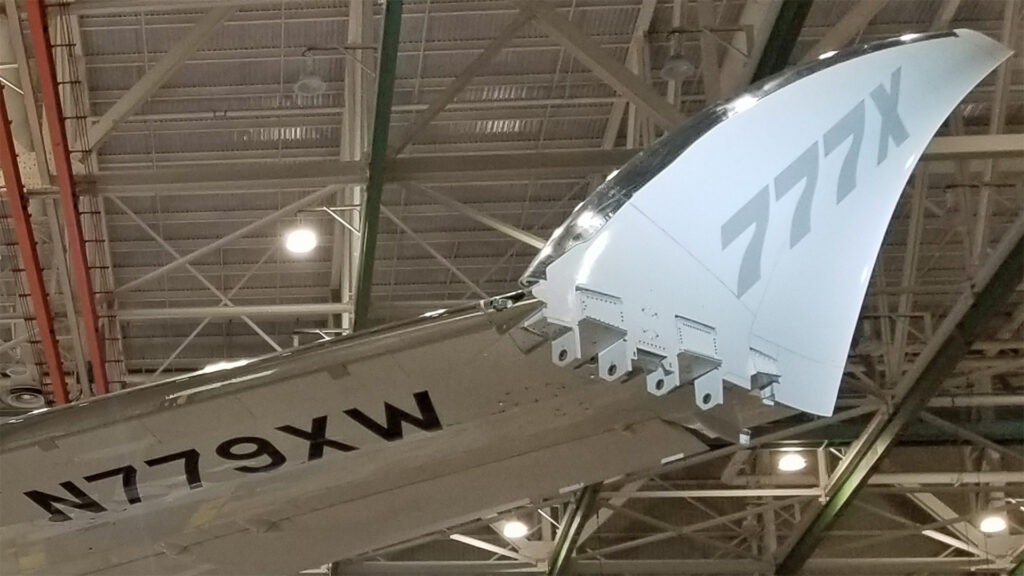
Folding wingtips had never been used on a commercial airliner, so the FAA wrote special conditions for them. The tips move only on the ground, and the rules require protection against taking off with them folded. The 777X is also the first commercial aircraft with “wingtip controls” in the cockpit. For more on why aircraft wings and wingtips look so different, see our A350-1000 vs 777-9 comparison.
The GE9X Engine: Record-Breaking Power
The 777X is powered by two GE Aerospace GE9X engines, developed only for this aircraft. It is a high-bypass turbofan, meaning a huge fan pushes most of the air around the engine core, which makes it efficient and quieter. If you want the basics, see our turbofan vs turboprop guide.
| Engine detail | GE9X (777X) | GE90-115B (777-300ER) |
|---|---|---|
| Fan diameter | 134 in (340 cm), largest of any commercial engine | 128 in (325 cm) |
| Fan blades | 16 carbon-fibre composite blades | 22 composite blades |
| Bypass ratio | About 10:1 | Lower |
| Overall pressure ratio | 61:1 | – |
| Hot-section materials | Ceramic matrix composites in combustor liners, nozzles and shroud | – |
| Fuel efficiency | 10% better than the GE90 | Baseline |
| Record thrust in testing | 134,300 lbf (Guinness World Record, 2017) | 127,900 lbf (2002 record) |
Sources: Wikipedia: General Electric GE9X; Wikipedia: General Electric GE90.
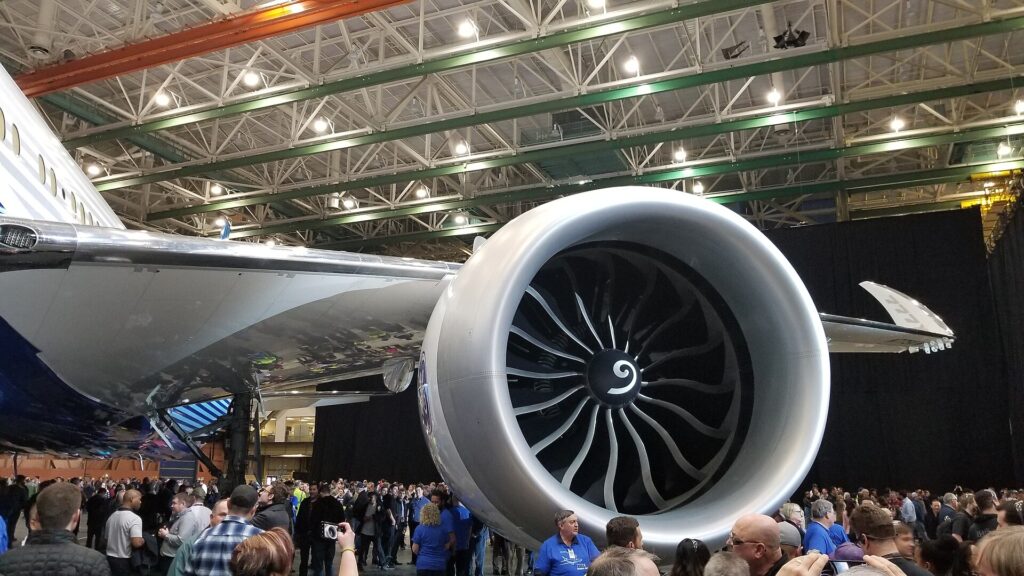
In simple words: the GE9X has fewer but bigger fan blades than the GE90 (16 instead of 22). Fewer blades make the engine lighter and more aerodynamically efficient. Ceramic matrix composites can endure higher temperatures than metal parts. Together with a higher bypass ratio and pressure ratio, these changes are how GE designed the engine to be 10% more fuel efficient than the GE90. The engine nacelle is 184 inches (4.7 m) wide, wider than the 3.95 m fuselage of an Airbus A320. On 10 November 2017 a test GE9X produced 134,300 lbf of thrust, a Guinness World Record, beating the GE90-115B’s 2002 record.
Inside the Cabin
Boeing describes the 777X cabin as wide and spacious, with new architecture and “innovations from the 787 Dreamliner”. The 777X interior is wider than earlier 777s, thanks to thinner cabin walls and better insulation, which allows 18-inch-wide seats in ten-abreast economy (3-4-3), according to Wikipedia.
Passengers will also get features first seen on the 787:
- Larger windows, which are dimmable, with an option for traditional shades.
- Higher ceilings, for a more open feeling.
- More humid air, which reduces dry eyes and throat on long flights.
- A lower cabin altitude of 6,000 ft, instead of the 8,000 ft typical of older jets, which Boeing says helps reduce fatigue.
As always, the airline decides seat pitch, seat type and the number of seats. Boeing’s airport planning document shows 426 seats in two classes or 357 in three classes, and Boeing’s product page quotes 375 to 450 in two classes.
The Cockpit
The 777X flight deck is similar to the 787’s, with large displays and head-up displays, and adds touchscreens that replace the cursor control devices pilots used before. It also has controls for the folding wingtips. Boeing says the 777X will offer seamless integration with the 777 and 787 families, which helps airlines that already fly those types to train pilots.
Range and Performance
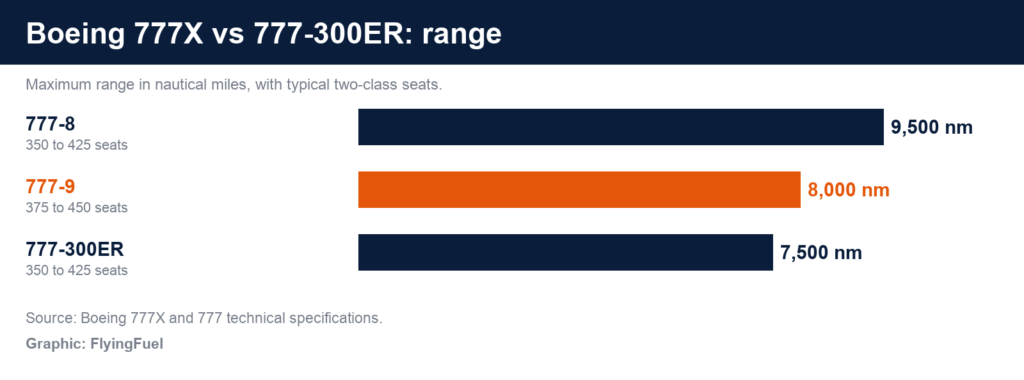
Boeing lists the 777-9 at up to 8,000 nautical miles (14,820 km) with 375 to 450 seats, 500 nm more than the 777-300ER while carrying more passengers. Its maximum take-off weight is 351,530 kg, the same as the 777-300ER; Boeing credits the new wing and engines for the extra efficiency. The 777-8 trades length for range, with up to 9,500 nm.
Why Is the 777X So Late?
The 777X was originally planned to enter service around 2020. Instead, first delivery is now expected in 2027, about seven years late. The main reasons, according to its development history:
- Certification problems: in a May 2021 letter the FAA cited an “uncommanded pitch event” in a test flight and a lack of “design maturity”, pushing certification back.
- Engine issues: GE9X compressor and other technical problems delayed the first flight to January 2020 and paused testing in 2022.
- Cracked engine mounts: in August 2024 Boeing grounded the 777X test fleet after a structural link between the engine and wing was found damaged, with cracks in the same part on other aircraft. Flight testing resumed on 16 January 2025.
- Strikes and other development problems: in October 2024 Boeing said delivery had slipped to 2026, and in October 2025 it slipped again to 2027, with extra charges estimated at US$2.5 billion to US$4 billion.
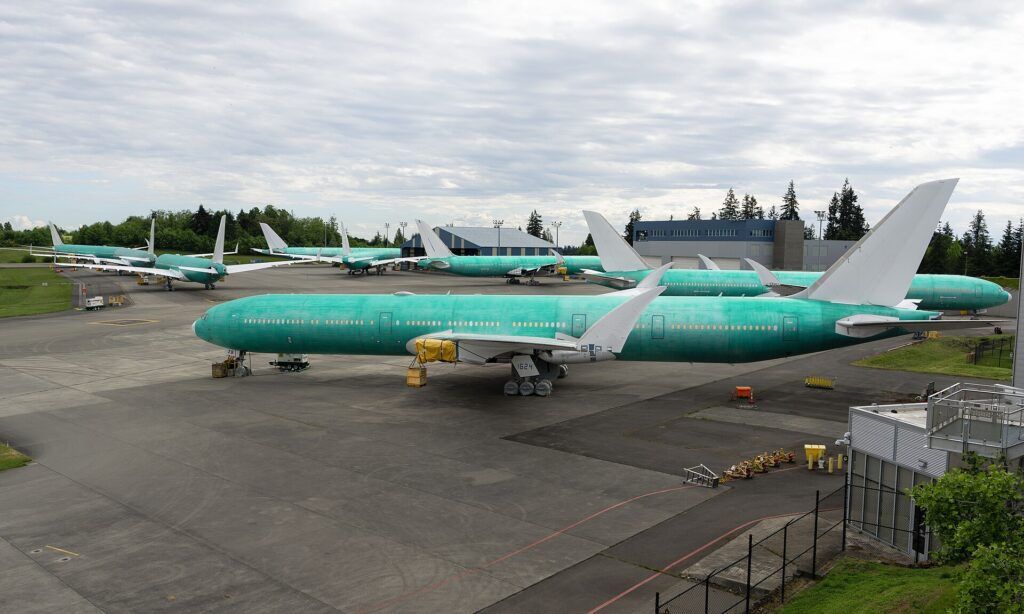
There has been progress. In November 2025 the FAA gave Boeing approval to begin Phase 3 of 5 of type inspection authorisation testing, and in May 2026 Boeing flew a test flight using Lufthansa’s passenger configuration. Completed but undelivered 777-9s are parked at Paine Field waiting for certification.
Who Has Ordered the 777-9?
- Emirates is the biggest customer, with 270 777-9s on order according to its November 2025 fleet table. They are expected to take over its A380 routes over time; see our Emirates fleet story.
- Lufthansa is the launch customer and should receive the first aircraft.
- Air India ordered 10 777Xs as part of its record 2023 order, confirmed at the Paris Air Show on 20 June 2023. They will join its 777-300ERs, 787s and A350s on long-haul routes; see our Air India fleet guide.
- Others include Qatar Airways, Etihad and freighter customers for the 777-8F. In total there were 619 777X orders from 12 customers in November 2025.
777-9 vs Its Rivals
777-9 vs Airbus A350-1000
| Boeing 777-9 | Airbus A350-1000 | Better | |
|---|---|---|---|
| Status | In certification; delivery expected 2027 | In service since February 2018 | A350 |
| Length | 76.7 m | 73.78 m | 777-9 (more room) |
| Wingspan | 71.8 m (64.8 m folded) | 64.75 m | Equal at the gate |
| Typical seats | 426 (two-class), 357 (three-class) | 375-400 (three-class), max 480 | 777-9 |
| Range | Up to 8,000 nm | 8,100 nm (9,000 nm version from 2030) | A350 |
| Maximum take-off weight | 351.5 t | 308-322 t | A350 (lighter) |
| Engine | GE9X, 134 in fan | Trent XWB-97, 118 in fan | 777-9 (newer, bigger) |
| Cabin altitude | 6,000 ft | 6,000 ft | Tie |
Sources: Boeing and Airbus specifications, as compiled in our A350-1000 vs 777-9 comparison.
The 777-9 is bigger in every dimension and carries more passengers. The A350-1000 is about 30 tonnes lighter, so it needs less fuel to move itself, and it is already flying. Airlines with very busy hubs such as Emirates prefer the 777-9’s capacity; others choose the A350-1000 for its lower weight and proven record.
777-9 vs 777-300ER
| Boeing 777-9 | Boeing 777-300ER | |
|---|---|---|
| Seats (two-class) | 375 to 450 | 350 to 425 |
| Range | Up to 8,000 nm | Up to 7,500 nm |
| Length | 76.7 m | 73.9 m |
| Wing | Composite, 71.8 m, folding tips | Aluminium, 64.8 m |
| Engines | GE9X | GE90-115B |
| Cabin | 787-style: bigger windows, 6,000 ft altitude | Older 777 cabin |
The 777-9 is the direct replacement for the 777-300ER: a little bigger, a little further, and much more efficient. Read our Boeing 777-300ER review for the aircraft it replaces.
Pros and Cons
Pros
- Largest twin-engine airliner, 375 to 450 seats
- 20% lower fuel use and 40% smaller noise footprint than the aircraft it replaces (Boeing)
- Long, efficient composite wing that still fits 777 gates thanks to folding tips
- GE9X: largest fan of any commercial engine, 10% more efficient than the GE90
- 787-style cabin: bigger windows, more humidity, 6,000 ft cabin altitude
- Wider interior allows 18-inch seats at ten across
- Commonality with 777 and 787 fleets
Cons
- Not yet certified; first delivery about seven years late
- Heavier than the A350-1000
- Only one engine option (GE9X)
- Folding wingtips add a new system that has never been used on an airliner before
- Ten-abreast economy will still feel busy on long flights
- Development problems have cost Boeing billions and hurt customer trust
Our Verdict
On paper, the 777-9 is a superb aircraft: the capacity of an older jumbo, the efficiency of a modern twin and a passenger cabin that borrows the best ideas from the 787. Its folding wingtips are a clever engineering answer to a real airport problem, and the GE9X is a remarkable engine.
But paper is all it has so far. Until it is certified and flying with Lufthansa, Emirates and Air India, our verdict comes with a big asterisk. If Boeing delivers in 2027 as promised, the 777-9 should become the new flagship of many long-haul fleets. If you fly Air India or Emirates in the next decade, there is a good chance you will board one. Compare it with today’s Dreamliner in our Boeing 787-9 review.
Frequently Asked Questions
When will the Boeing 777-9 enter service?
Boeing expects the first delivery in 2027, to launch customer Lufthansa. That is about seven years later than first planned. The FAA allowed Boeing to begin the third of five phases of type inspection authorisation testing in November 2025.
How many seats does the 777-9 have?
Boeing lists 375 to 450 seats in a typical two-class layout. Boeing’s airport planning document shows 426 seats in two classes or 357 in three classes.
What is the range of the Boeing 777-9?
Up to 8,000 nautical miles (14,820 km). The shorter 777-8 is planned to fly up to 9,500 nm.
Why does the 777X have folding wingtips?
Its long carbon-fibre wing spans 71.8 m, which is more efficient in flight but too wide for the gates used by today’s 777s. The tips fold up on the ground to reduce the span to 64.8 m, so the 777-9 fits the same airport gates as a 777-300ER.
What engine does the 777-9 use?
The GE Aerospace GE9X. Its 134-inch fan is the largest on any commercial engine, and in testing it set a Guinness World Record for thrust of 134,300 lbf. GE designed it to be 10% more fuel efficient than the GE90.
Is the 777-9 the biggest twin-engine jet?
Yes. At 76.7 m long, the 777-9 is longer than any other twin-engine airliner, including the 777-300ER (73.9 m) and the A350-1000 (73.78 m). Boeing says the 777X will be the world’s largest and most efficient twin-engine jet.
Has Air India ordered the 777-9?
Yes. Air India ordered 10 777Xs in its 2023 Boeing order, confirmed at the Paris Air Show on 20 June 2023.
Which airline has ordered the most 777Xs?
Emirates, with 270 777-9s on order according to its November 2025 fleet table. Across all customers there were 619 777X orders from 12 customers in November 2025.
Is the 777-9 better than the A350-1000?
The 777-9 is bigger, carries more passengers and has a more modern engine. The A350-1000 is lighter, already in service since 2018 and offered with more range. Airlines that need maximum seats choose the 777-9; those that want a proven, lighter jet now choose the A350-1000.
Featured image: FlyingFuel graphic using a photo of the Boeing 777X at its roll-out by Dan Nevill from Seattle, WA, United States, CC BY 2.0, via Wikimedia Commons.
 GulfstreamGulfstream Business Jets: Every Model From the G300 to the G800 Explained (2026)
 NewsBombardier to Hire 800 in the US and Spend $270 Million on First Phase of Expansion
 NewsAll Passengers Flying to the US Must Sign an Ebola Travel Attestation From 3 November
 BombardierBombardier Business Jets: Every Global and Challenger Model Explained (2026)
 NewsSafran LEAP Engine Deliveries Rise 26% to 1,565 in First Nine Months of 2026
 NewsEmbraer Order Backlog Hits Record $35.7 Billion as E2 Jet Orders Grow