
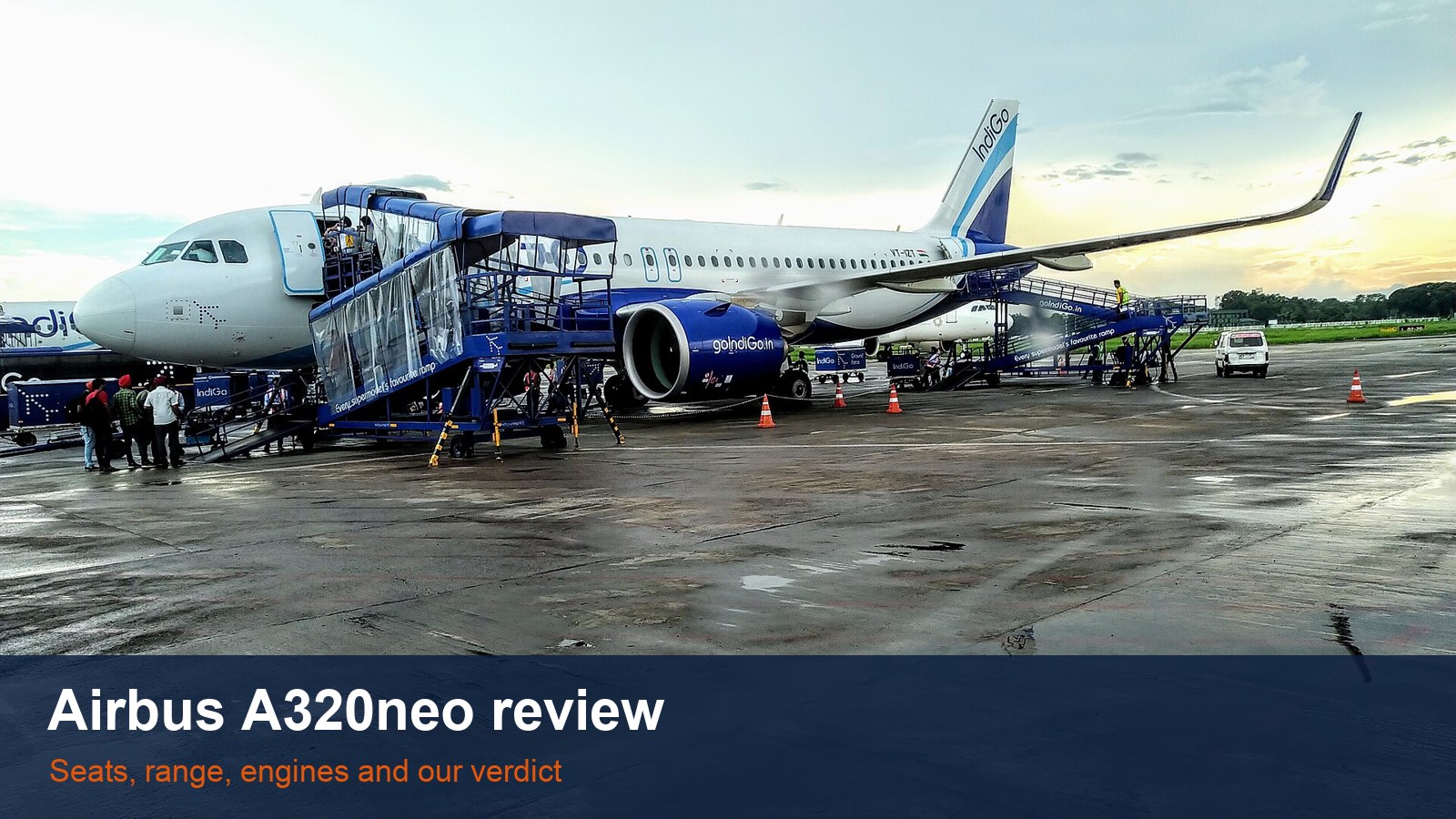
The Airbus A320neo is the best-selling airliner family of its generation and the aircraft most Indians fly on: IndiGo, India’s largest airline, operates more A320neo family jets than any other airline in the world. If you have flown domestically in India in the last few years, there is a very good chance you were on one.
Our verdict in one line: the A320neo is an excellent short- and medium-haul jet, with 150 to 180 seats in two classes (up to 194), a range of up to 3,400 nm, a cabin wider than the Boeing 737’s and at least 20% lower fuel burn per seat than the A320s it replaces. Its biggest weakness has not been the aircraft but some of its engines: Pratt & Whitney GTF problems have grounded many A320neo family jets, including in India.
In this review we explain everything step by step: what “neo” means, how to recognise one, what is inside the cabin and cockpit, the two engine choices and their problems in simple words, range and performance, safety, who flies it in India and how it compares with the Boeing 737 MAX 8.
Airbus A320neo Quick Facts
| Item | Airbus A320neo |
|---|---|
| Type | Single-aisle (narrowbody) twin-engine airliner |
| Seats (two-class) | 150 to 180 |
| Maximum seats | 194 |
| Range | Up to 3,400 nm (6,300 km) |
| Length | 37.57 m (123 ft 3 in) |
| Wingspan | 35.80 m (117 ft 5 in), with Sharklets |
| Height | 11.76 m (38 ft 7 in) |
| Cabin width | 3.70 m inside a 3.95 m fuselage |
| Maximum take-off weight | 79.0 tonnes |
| Fuel capacity | 26,730 litres |
| Engines | CFM LEAP-1A or Pratt & Whitney PW1100G (GTF) |
| Economy layout | 6 seats per row (3-3), about 18 in wide |
| First flight | 25 September 2014 |
| Entered service | 25 January 2016, Lufthansa |
| Family orders | 12,329 ordered, 4,800 delivered (September 2026) |
Sources: Airbus A320neo specifications and A320 Family facts and figures, as compiled in our A320neo vs 737 MAX 8 comparison; Wikipedia: Airbus A320neo family.
What Is the A320neo?
The original Airbus A320 entered service in 1988 and became one of the most successful airliners ever. Instead of designing a new aircraft, Airbus gave it new, much more efficient engines. “neo” stands for New Engine Option, and the older models were renamed A320ceo (“Current Engine Option”). For how these names work, see how Airbus and Boeing name their aircraft.
Airbus launched the A320neo programme on 1 December 2010. The aircraft first flew on 25 September 2014 and entered service with Lufthansa on 25 January 2016, according to its history. Airbus says the neo keeps “over 95 percent airframe commonality” with the A320ceo, which kept development risk low and makes it easy for airlines to mix old and new aircraft.
The family has three sizes: the small A319neo, the A320neo and the stretched A321neo, plus long-range versions of the A321 such as the A321XLR. By September 2026, more than 130 customers had ordered 12,329 A320neo family aircraft and 4,800 had been delivered. By 2019 the family held a 60% market share against the Boeing 737 MAX.
How the A320neo Looks: Exterior Design
The A320neo looks very much like the older A320, but a few details give it away:
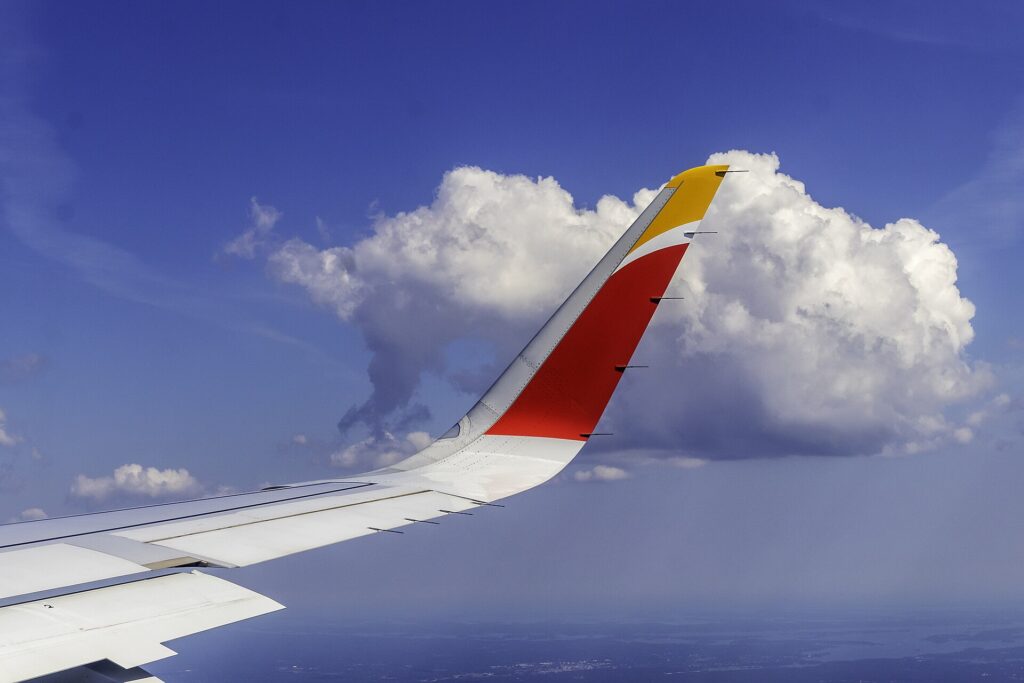
- Sharklets: a tall, curved, upswept wingtip. They are standard on the neo and optional on the ceo. Airbus fitted them to reduce drag and save fuel.
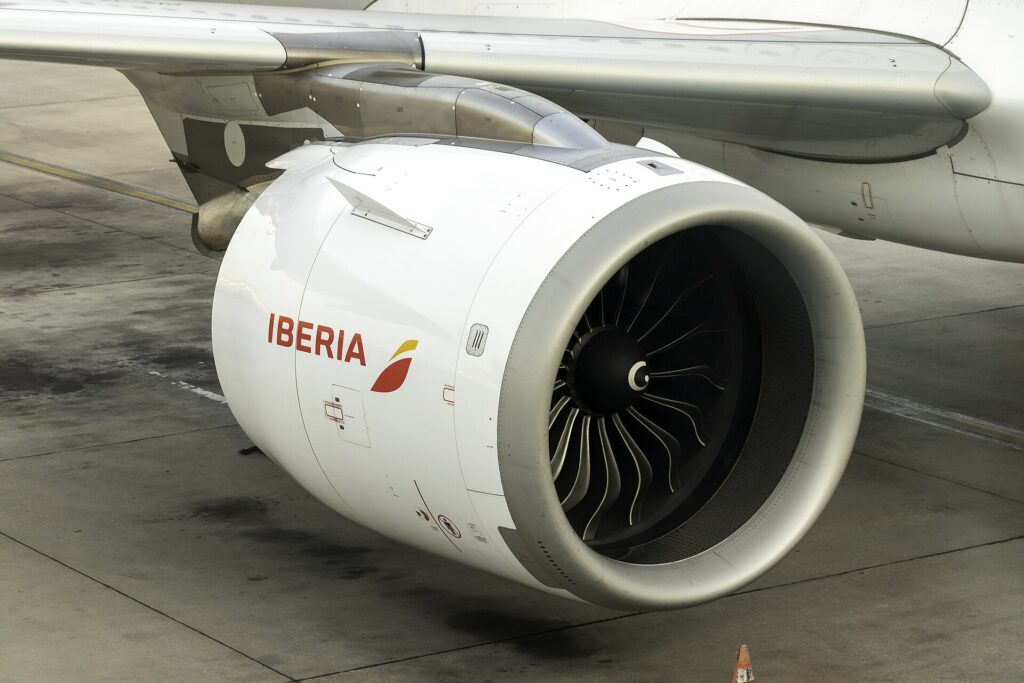
- Bigger engines: the neo’s new engines have bigger fans. The engine casing has a smooth rear edge, unlike the serrated chevrons on a 737 MAX.
- Round nose: the A320 family has a rounder nose than the Boeing 737.
- Weight: the neo is about 1.8 tonnes heavier than the ceo, but Airbus adjusted the flaps, slats and flight-control software so its take-off and landing performance stays the same.
Engines: LEAP-1A or Pratt & Whitney GTF?
Unlike the 737 MAX, the A320neo gives airlines a choice of two engines. Both are high-bypass turbofans: a large fan pushes most of the air around the engine core, which is quieter and burns less fuel. In March 2013, airlines’ choices between the two were almost equal. See our turbofan vs turboprop guide for how these engines work.
| Engine detail | CFM LEAP-1A | Pratt & Whitney PW1100G (GTF) |
|---|---|---|
| Maker | CFM International (GE Aerospace and Safran, 50-50) | Pratt & Whitney |
| Fan diameter | 78 in (198 cm) | 81 in (206 cm), 20 blades |
| Bypass ratio | High | 12.5:1 |
| Key idea | Woven carbon-fibre fan blades, ceramic turbine parts | A 3:1 gearbox lets the fan spin slower than the turbine |
| Also used on | Variants for the 737 MAX (LEAP-1B) and C919 (LEAP-1C) | Airbus A220, Embraer E2 |
Sources: Wikipedia: CFM International LEAP; Wikipedia: Pratt & Whitney PW1000G.
What is a geared turbofan?
In a normal turbofan, the fan and the low-pressure turbine are on the same shaft, so they spin at the same speed. That is a compromise: a big fan works best slowly, while a turbine works best fast. The Pratt & Whitney GTF puts a 3:1 gearbox between them. The fan turns at about 4,000 to 5,000 rpm while the low-pressure spool spins at 12,000 to 15,000 rpm, so each runs at its ideal speed. That allows a bigger, slower fan and a very high bypass ratio of 12.5:1.
The GTF engine problems
The GTF’s fuel efficiency won it many customers, but technical problems have hurt its reputation, according to the engine’s history:
- 2018 groundings: in February 2018, in-flight shutdowns caused by compressor aft hub and seal issues led EASA and Airbus to ground part of the GTF-powered A320neo fleet until replacement parts were available. Airbus stopped accepting the engines for a while, and deliveries resumed in May.
- Early engine removals in India: IndiGo and Go Air operate in a hot, humid, polluted and salty environment, and many engines had to be removed early from their aircraft.
- Powdered-metal defect: later, some engines were found to have been built with contaminated powdered metal. Each needed a repair taking 250 to 300 days, and airlines had to park aircraft while they waited. Some airlines chose the LEAP engine instead.
The LEAP-1A has had a much quieter record on the A320neo. For a passenger, there is no visible difference in comfort between the two engines; the problems mainly affected how many aircraft airlines could fly. Supply is improving: Safran reported LEAP deliveries up 26% in the first nine months of 2026.
Inside the Cabin
The A320neo’s biggest passenger advantage over its Boeing rival is width. Its cabin is 3.70 m wide inside a fuselage 3.95 m across, and Airbus says the A320 fuselage is 7 inches wider than the 737’s. Across a row of six seats and an aisle, that works out at roughly an inch more per seat. Economy seats at six across are typically about 18 inches wide.
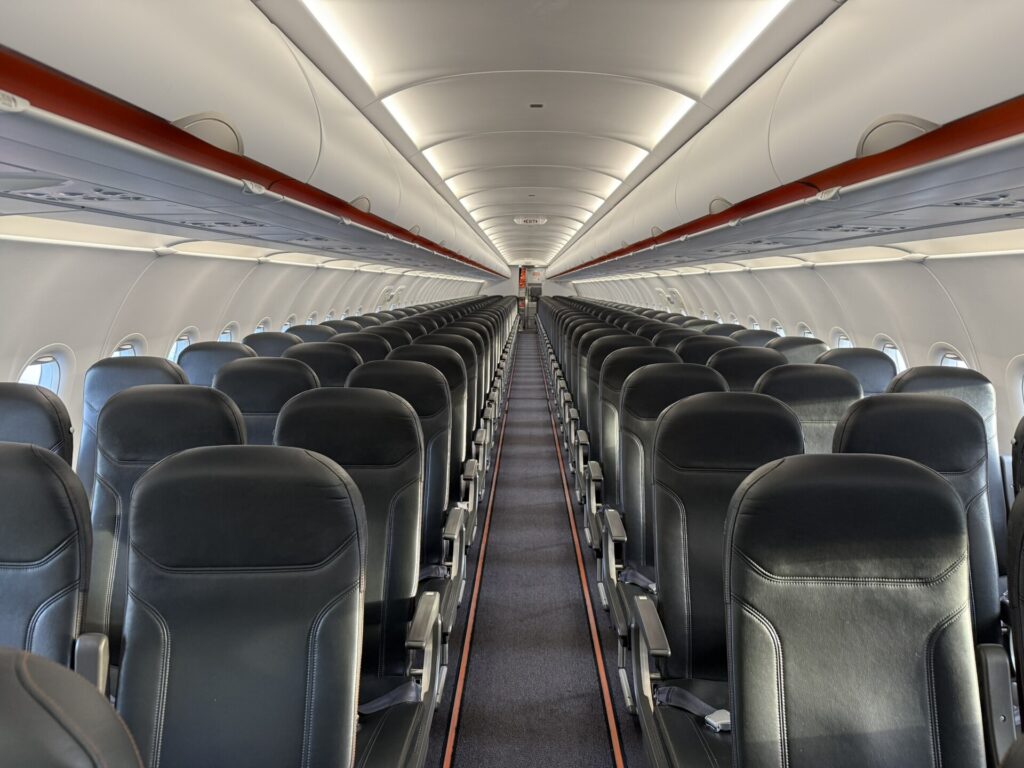
Airbus also offers cabin options that let airlines fit more people without cutting legroom, according to Wikipedia:
- Space-Flex: a redesigned rear galley that frees space for extra seats.
- Smart-Lav: a modular lavatory where two toilets can be turned into one wheelchair-accessible toilet during the flight.
Most of what you feel on board depends on the airline. IndiGo, for example, flies its A320neos with 180 or 186 all-economy seats. Seat pitch, padding, screens and charging ports are all the airline’s choice.
The Cockpit: Fly-by-Wire and Sidesticks
The A320 family uses fly-by-wire controls: the pilots’ inputs go to computers, which move the control surfaces and keep the aircraft within safe limits. Instead of a big yoke, each pilot has a small sidestick beside the seat.
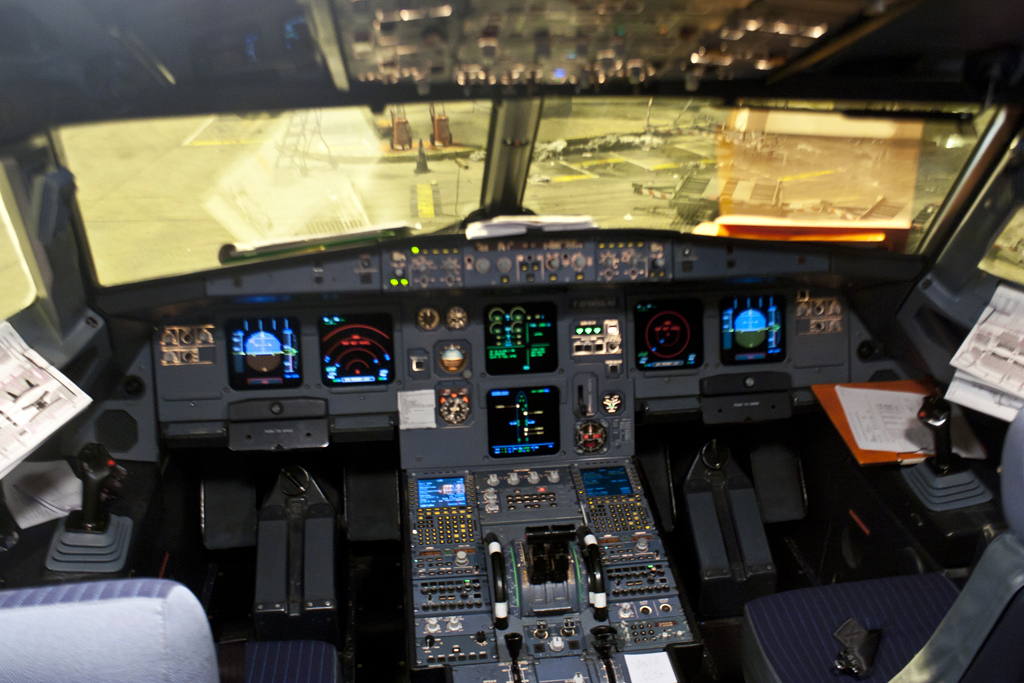
Airbus says all A320 Family aircraft share the same fly-by-wire flight controls, so pilots can move between the A319, A320 and A321 with little extra training. For airlines such as IndiGo that fly both the A320neo and the A321neo, that is a big saving in training and scheduling. See how the two compare in our A320neo vs A321neo guide.
Range and Performance
Airbus lists the A320neo at up to 3,400 nautical miles (6,300 km). That covers any domestic route in India and international flights such as Delhi to Singapore. With a maximum take-off weight of 79.0 tonnes and 26,730 litres of fuel, it is slightly lighter than the 737 MAX 8 but carries a little more fuel.
On fuel efficiency, Airbus says the A320neo delivers at least 20% lower fuel burn and CO2 emissions per seat than the previous-generation A320, and a 50% smaller noise footprint. Wikipedia gives a range of 15 to 20% depending on the comparison. For airlines flying thousands of short flights a day, that saving is the whole reason the neo exists.
Safety Record
The A320neo family has an excellent safety record. By its latest count, the global fleet had completed more than 20 million flights and 44 million block hours with one hull loss, an airport-safety accident with no fatalities on board (three people on the ground died). As of 2023 it had recorded 0.11 fatal hull-loss accidents per million take-offs, according to Wikipedia. The main reliability issue has been the Pratt & Whitney engine problems described above, which grounded aircraft for inspections and repairs rather than causing accidents.
The A320neo in India
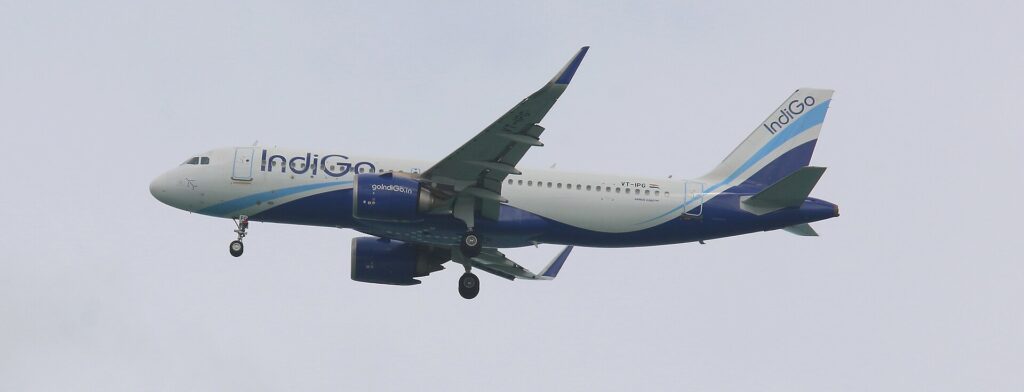
- IndiGo is the world’s largest A320neo family customer and operator, with 376 aircraft across the family in September 2026. On 30 June 2026 it had 174 A320neos, with 180 or 186 seats, flying domestic and short international routes. See our IndiGo fleet guide.
- Air India had 84 A320neos in September 2026, its largest single aircraft type, used on domestic and short international routes. See our Air India fleet guide.
A320neo vs Its Rivals
A320neo vs Boeing 737 MAX 8
| Airbus A320neo | Boeing 737 MAX 8 | Better | |
|---|---|---|---|
| Length | 37.57 m | 39.5 m | 737 MAX 8 (more seats) |
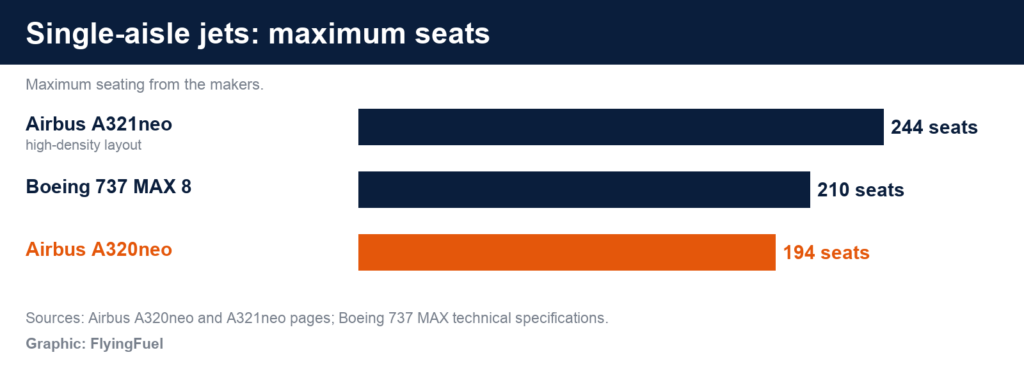
| Maximum seats | 194 | 210 | 737 MAX 8 |
| Range | 3,400 nm | 3,500 nm | 737 MAX 8 (slightly) |
| Maximum take-off weight | 79.0 t | 82.6 t | Depends |
| Fuel capacity | 26,730 L | 25,816 L | A320neo |
| Cabin width | 3.70 m (7 in wider fuselage) | Narrower | A320neo |
| Engine choice | 2 (LEAP-1A or PW GTF) | 1 (LEAP-1B) | A320neo |
| Flight controls | Fly-by-wire, sidestick | Conventional yoke | Depends on pilots |
| Fuel saving vs predecessor | At least 20% per seat | 20% | Tie |
Sources: Airbus and Boeing specifications, as compiled in our A320neo vs 737 MAX 8 comparison.
What the A320neo does better: a wider, more comfortable cabin, two engine choices, modern fly-by-wire controls and a family that stretches all the way to the long-range A321XLR. What the 737 MAX 8 does better: a few more seats, a little more range, and easy transition for airlines that already fly 737s. Read our Boeing 737 MAX 8 review for the full picture.
A320neo vs A320ceo
| A320neo | A320ceo | |
|---|---|---|
| Engines | LEAP-1A or PW1100G | Previous-generation engines |
| Fuel burn per seat | At least 20% lower (Airbus) | Baseline |
| Noise footprint | 50% smaller (Airbus) | Baseline |
| Wingtips | Sharklets standard | Sharklets optional |
| Weight | About 1.8 t heavier | Lighter |
| Airframe commonality | Over 95% | – |
IndiGo still flies 26 A320ceos alongside its neos, so you can compare them yourself on domestic routes.
Pros and Cons
Pros
- Wider cabin than the 737 (Airbus says 7 inches)
- At least 20% lower fuel burn per seat than the A320ceo
- 50% smaller noise footprint
- Two engine choices (LEAP-1A or GTF)
- Fly-by-wire with common cockpit across the A319, A320 and A321
- 3,400 nm range covers almost every short and medium route
- Excellent safety record: one hull loss in over 20 million flights
Cons
- Pratt & Whitney GTF problems grounded many aircraft
- Fewer maximum seats than the 737 MAX 8 (194 vs 210)
- Slightly less range than the 737 MAX 8
- Airlines needing more seats now often prefer the A321neo
- Comfort depends heavily on the airline; dense all-economy layouts are common
Our Verdict
The A320neo is one of the best short-haul airliners ever built. It took a proven design, added much more efficient engines and Sharklets, and kept everything pilots and engineers already knew. For passengers it offers the wider single-aisle cabin, for airlines it offers low fuel burn and a choice of engines, and its safety record is outstanding.
Its weak spot has been the Pratt & Whitney GTF engine, whose problems have kept many aircraft on the ground, especially in India. That is an engine problem rather than an aircraft problem, but it matters to airlines and to the passengers whose flights are cancelled. Overall, if you fly IndiGo or Air India domestically, the A320neo is a very good aircraft to be on. Need more seats? See our Airbus A321neo review.
Frequently Asked Questions
How many seats does an Airbus A320neo have?
Airbus lists 150 to 180 seats in a typical two-class layout and a maximum of 194. IndiGo flies its A320neos with 180 or 186 seats in an all-economy layout.
What does neo mean in A320neo?
“neo” stands for New Engine Option. The older A320s were renamed A320ceo, for Current Engine Option.
What is the range of the A320neo?
Up to 3,400 nautical miles (6,300 km), according to Airbus. That is enough for any domestic route in India and flights such as Delhi to Singapore.
Which engines does the A320neo use?
Airlines choose either the CFM International LEAP-1A, with a 78-inch fan, or the Pratt & Whitney PW1100G geared turbofan (GTF), with an 81-inch fan and a 12.5:1 bypass ratio.
Why were IndiGo A320neos grounded?
Some Pratt & Whitney PW1100G engines had problems. In 2018 in-flight shutdowns caused by compressor seal issues led to groundings, and later some engines were found to have been made with contaminated powdered metal, needing repairs that took 250 to 300 days. Airlines flying GTF-powered aircraft, including IndiGo, had to park aircraft while engines were inspected and repaired.
Is the A320neo safe?
Yes. The A320neo family has completed more than 20 million flights and 44 million block hours with one hull loss, an airport-safety accident with no fatalities on board.
How many A320neo does IndiGo have?
IndiGo had 174 A320neos on 30 June 2026, and is the world’s largest A320neo family operator, with 376 aircraft across the family in September 2026.
Is the A320neo better than the 737 MAX 8?
They are close. The A320neo has a wider cabin (Airbus says 7 inches wider than the 737), two engine choices and fly-by-wire controls. The 737 MAX 8 is longer, seats more at maximum (210 vs 194) and flies slightly further (3,500 vs 3,400 nm).
What is the difference between the A320neo and A321neo?
The A321neo is the stretched version of the A320neo. It carries more passengers (up to 244 against 194) and, in its long-range versions, flies further. Both share the same cockpit and type rating.
Featured image: FlyingFuel graphic using a photo of IndiGo Airbus A320neo VT-ITZ by SlowPhoton, CC BY-SA 4.0, via Wikimedia Commons.
 Embraer Executive JetsEmbraer Business Jets: Phenom 100EX, Phenom 300EV, Praetor 500E and 600E Explained (2026)
 NewseasyJet to Fit Starlink Wi-Fi Across Its Airbus Fleet From 2027
 NewsFAA Proposes Fan Blade Checks on Every CFM56-7B Engine After 737 Blade Failure
 Dassault FalconDassault Falcon Jets: Every Model From the 2000LXS to the 10X Explained (2026)
 GulfstreamGulfstream Business Jets: Every Model From the G300 to the G800 Explained (2026)
 NewsBombardier to Hire 800 in the US and Spend $270 Million on First Phase of Expansion