
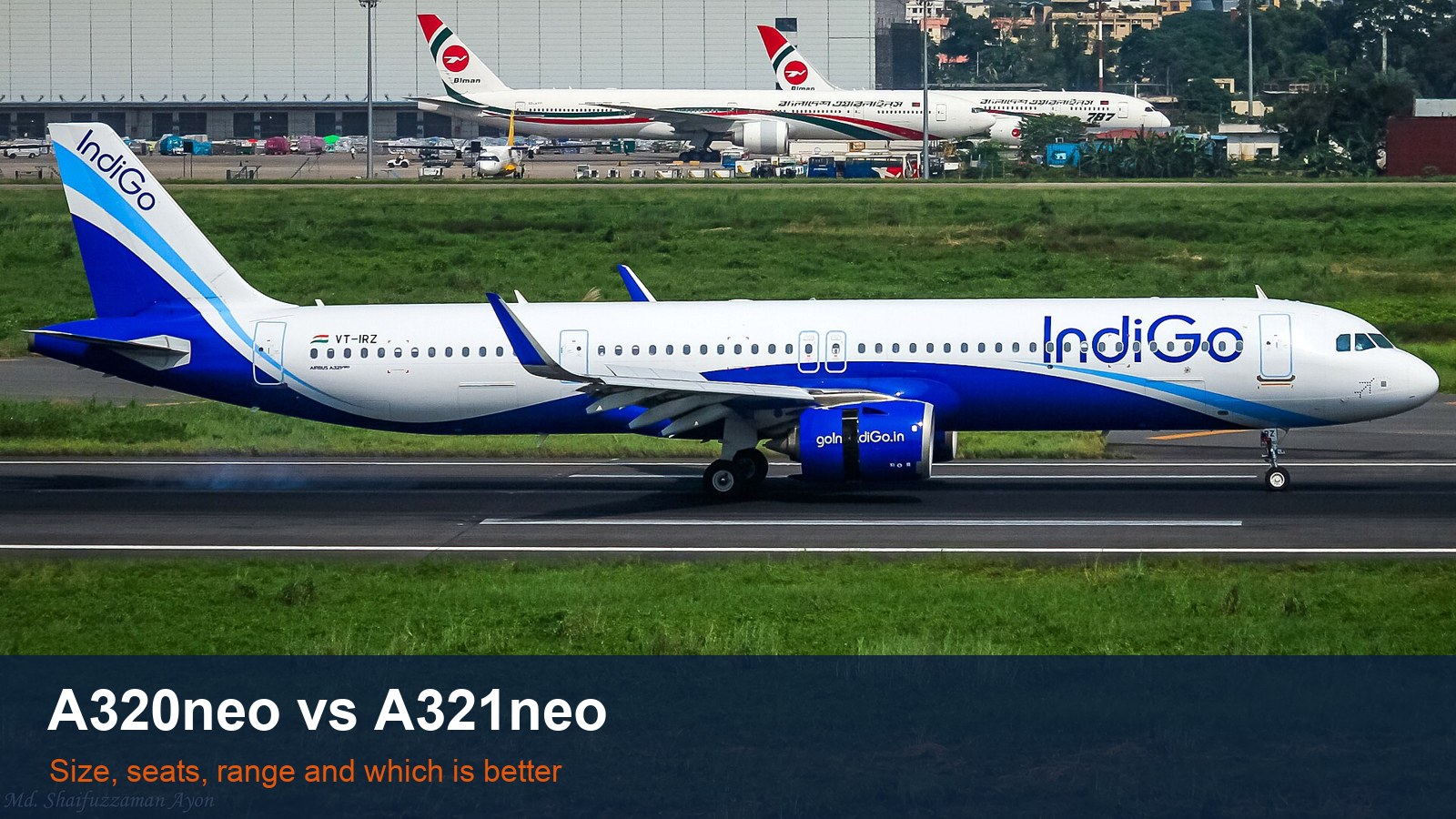
If you fly in India, you have almost certainly flown on an Airbus A320neo or an A321neo. They are the biggest aircraft types at both IndiGo and Air India. They look almost the same from the terminal window, so what is actually different, and why do airlines buy both?
Quick answer: the A321neo is a stretched A320neo. It is about 7 m longer, carries up to 244 passengers against 194, flies further (up to 4,000 nm against 3,400) and can take off heavier. Everything else, from the cabin width and cockpit to the engine choices, is the same. Airlines use the A320neo where they cannot fill bigger aircraft, and the A321neo on busy routes or long thin ones.
In this guide we compare them step by step. For each aircraft in depth, see our A320neo review and A321neo review.
A320neo vs A321neo: Quick Comparison
| Item | Airbus A320neo | Airbus A321neo |
|---|---|---|
| Seats (two-class) | 150 to 180 | 180 to 220 |
| Maximum seats | 194 | 244 (EASA, with Cabin Flex) |
| Range | Up to 3,400 nm (6,300 km) | Up to 4,000 nm (7,400 km) |
| Length | 37.57 m | 44.51 m |
| Wingspan | 35.80 m, with Sharklets | 35.80 m, with Sharklets |
| Height | 11.76 m | 11.76 m |
| Cabin width | 3.70 m | 3.70 m |
| Maximum take-off weight | 79.0 tonnes | 97 tonnes |
| Engines | CFM LEAP-1A or Pratt & Whitney PW1100G | CFM LEAP-1A or Pratt & Whitney PW1100G-JM |
| Cockpit | Fly-by-wire, sidestick | Same |
| First flight | 25 September 2014 | 9 February 2016 |
| In service | 25 January 2016, Lufthansa | 31 May 2017, Virgin America |
| Long-range versions | – | A321LR, A321XLR |
Sources: Airbus A320neo page; Airbus A321neo page; Wikipedia: Airbus A320neo family; Wikipedia: Airbus A321neo.
One Family, Two Sizes
The A320neo and A321neo belong to the A320neo family, Airbus’s updated single-aisle jets. “neo” stands for New Engine Option. Compared with the older A320ceo and A321ceo, they have new engines and Sharklet wingtips, and Airbus says they burn at least 20% less fuel per seat. Airbus has sold more than 12,000 aircraft across the A320neo family. Our guide to aircraft names explains where these model numbers come from.
The A320neo came first: it flew on 25 September 2014 and entered service with Lufthansa on 25 January 2016. The A321neo first flew from Hamburg on 9 February 2016 and entered service with Virgin America on 31 May 2017.
Because they share so much, airlines can run both with the same pilots, engineers and spare parts. That is the main reason IndiGo and Air India fly large numbers of both.
Size and Looks: How to Tell Them Apart
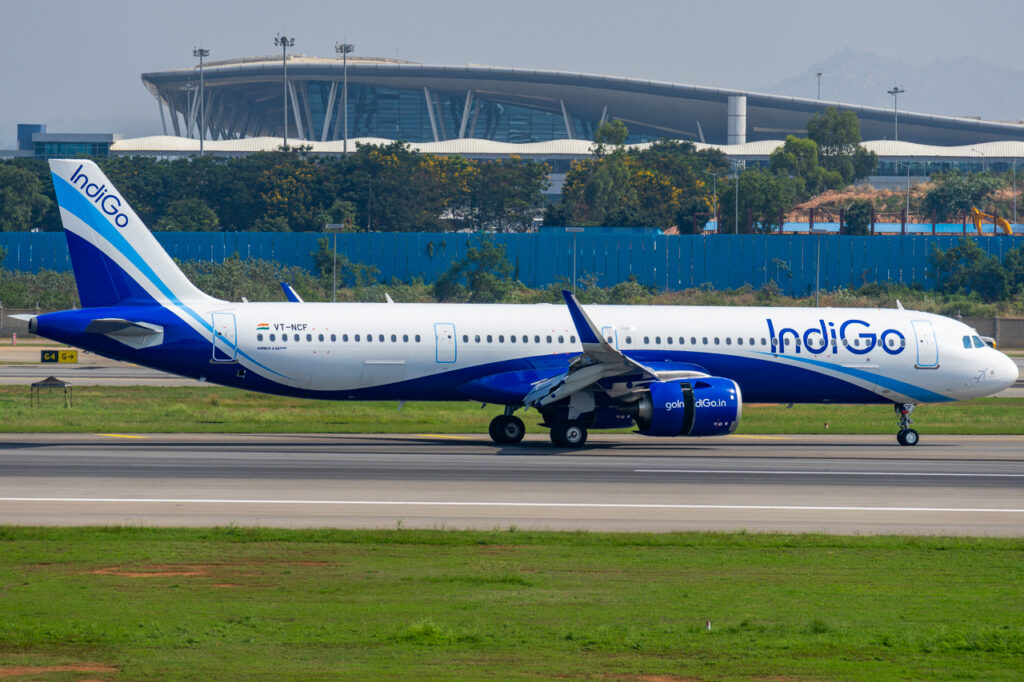
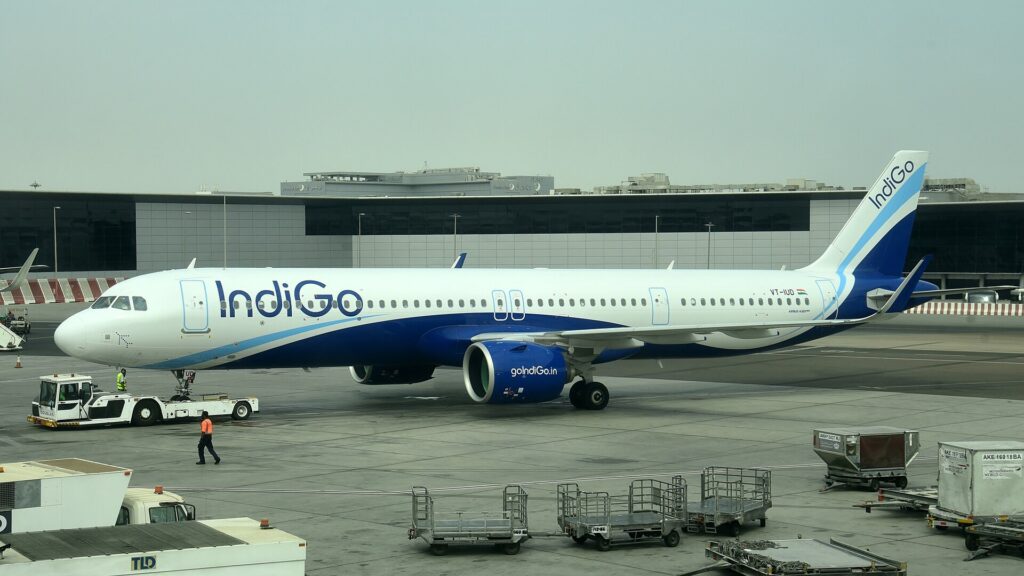
The A321neo is 44.51 m long, almost 7 m longer than the A320neo at 37.57 m. Both have the same 35.80 m wingspan and the same height. So the A321neo looks long and slim for its wing, while the A320neo looks more compact.
- Length: count the windows between the wing and the front door. The A321neo has many more rows ahead of the wing.
- Doors: most A321neos built since 2020 have Cabin Flex, with two small overwing exits on each side instead of a full-size door ahead of the wing, as in our featured photo.
- Wingtips and engines: identical. Both have the tall Sharklet wingtip and the same engine choices.
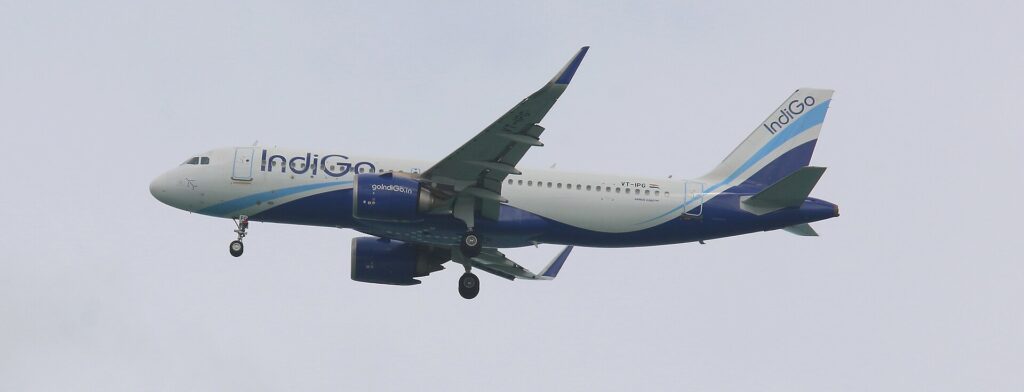
Seats and Cabin
Inside, the two cabins have the same 3.70 m width, wider than the Boeing 737’s, with six economy seats per row (3-3), each about 18 inches wide. The A321neo simply has more rows.
| A320neo | A321neo | |
|---|---|---|
| Typical two-class seats | 150 to 180 | 180 to 220 |
| Maximum seats | 194 | 244 |
| IndiGo layout | 180 or 186 seats | 222 or 232 seats (220 with IndiGoStretch) |
Sources: Airbus; our IndiGo fleet guide.

Why the A321neo can carry 244 people: Cabin Flex
Exits decide how many passengers an aircraft may carry, because everyone must be able to get out quickly in an emergency. In 2015 Airbus introduced Airbus Cabin Flex (ACF) for the A321neo. It replaces the second pair of doors with two pairs of overwing exits and moves the rear-middle doors further back. With larger Type C exits, Europe’s EASA allows up to 244 passengers. The US FAA does not recognise those exit types and limits US-registered A321neos to 200. Airbus says a 240-seat layout improves fuel burn per seat by about 6%. Cabin Flex has been the standard A321neo layout since 2020.
One downside for passengers: with up to 220 to 240 people sharing one aisle, boarding and getting off a full A321neo takes longer than on an A320neo.
Engines Explained
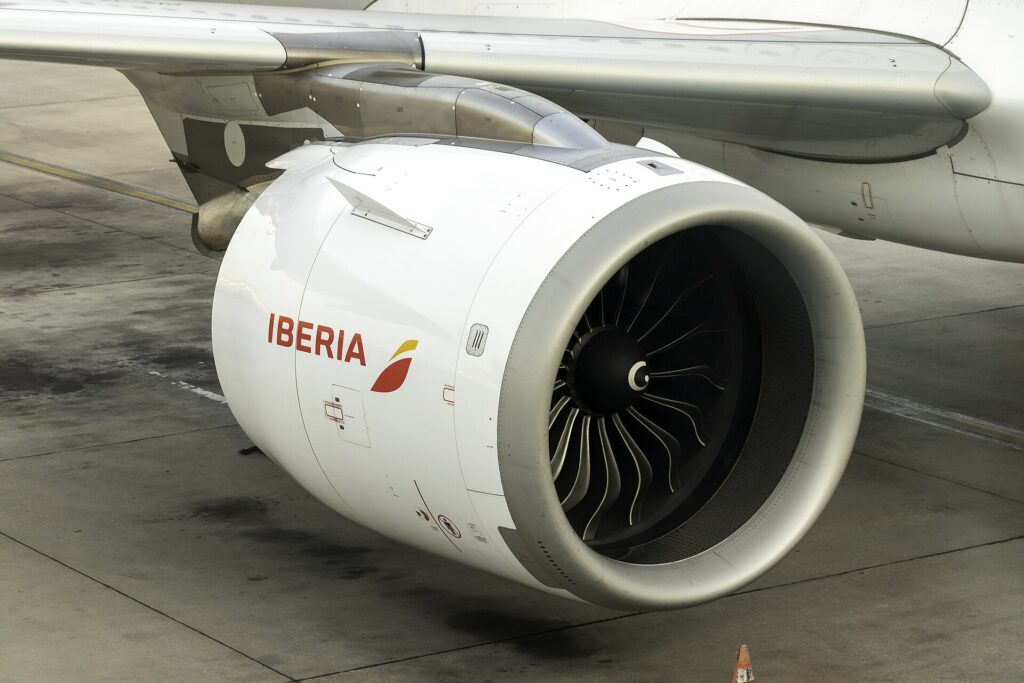
Both aircraft offer the same two engine families: the CFM International LEAP-1A and the Pratt & Whitney PW1100G geared turbofan (GTF). The A321neo uses more powerful versions to lift its extra weight; the family’s engines range from 24,500 to 35,000 lbf of thrust. Our turbofan vs turboprop guide explains how these engines work.
| Engine detail | CFM LEAP-1A | Pratt & Whitney PW1100G (GTF) |
|---|---|---|
| Fan diameter | 78 in (198 cm) | 81 in (206 cm), 20 blades |
| Bypass ratio | High | 12.5:1 |
| Key idea | Woven carbon-fibre fan blades, ceramic turbine parts | A 3:1 gearbox lets the fan spin slower than the turbine |
Source: our A320neo review, from Wikipedia: CFM LEAP and Airbus A320neo family.
The GTF has caused problems for both models. Some PW1100G engines were built with contaminated powdered metal, and each needed a repair taking 250 to 300 days. Airlines flying GTF-powered A320neos and A321neos, including IndiGo, had to park aircraft while engines were inspected and repaired.
Cockpit: Exactly the Same
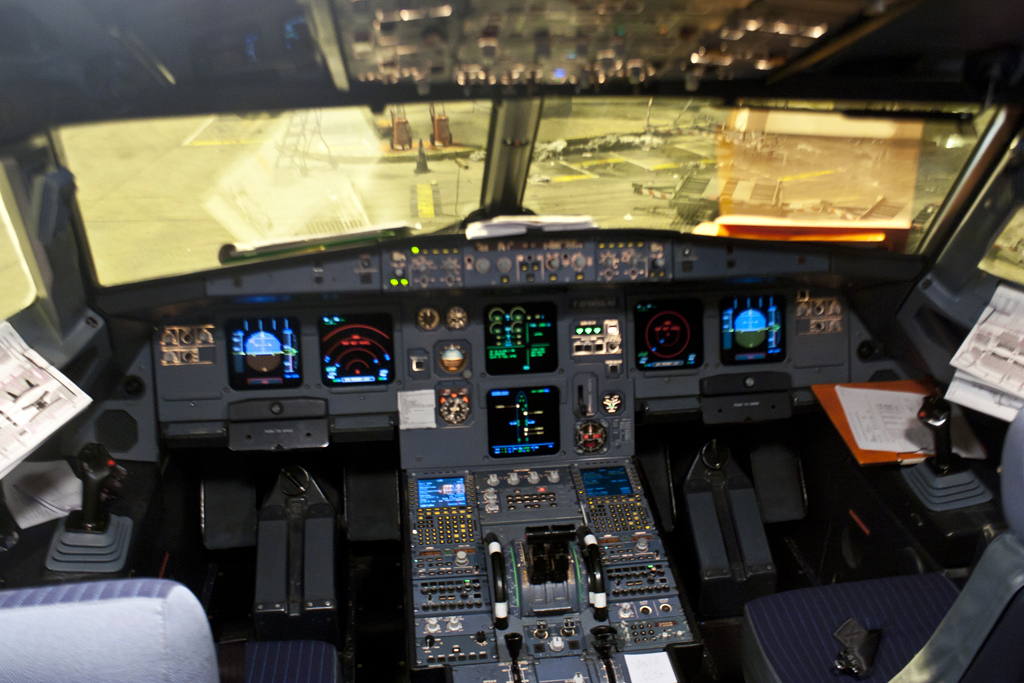
Both have the same A320 family flight deck: fly-by-wire controls, a sidestick beside each pilot and the same displays. Airbus says all A320 family aircraft share the same flight controls, so pilots can move between the A319, A320 and A321 with little extra training. For an airline, this means one pool of pilots can fly both, which is a big saving.
Range and Weight
Airbus lists the A320neo at up to 3,400 nm (6,300 km) and the A321neo at up to 4,000 nm (7,400 km). The A321neo gets its extra range from a much higher maximum take-off weight: 97 tonnes against 79 tonnes. The A320neo carries 26,730 litres of fuel.
The A321neo also has two long-range versions that the A320neo does not: the A321LR, which adds up to three removable fuel tanks in the cargo hold, and the A321XLR, with a permanent 12,900-litre rear tank, a 101.5-tonne take-off weight and up to 4,700 nm of range. IndiGo flies the XLR from Mumbai and Delhi to Athens; see our A321XLR guide.
For most Indian domestic flights, both have more than enough range. The A320neo’s 3,400 nm covers India, the Gulf and much of Southeast Asia.
Which Is More Efficient?
It depends on how you measure:
- Per seat: the A321neo usually wins, because it spreads a similar wing, cockpit and crew over many more passengers. Airbus says the A321neo gives about 20% better fuel efficiency per passenger than the older A321ceo, and Cabin Flex adds about 6% more at 240 seats.
- Per flight: the A320neo burns less fuel, because it is smaller and lighter. If an airline cannot fill an A321neo, the empty seats cost money and the A320neo is the cheaper choice.
That is why airlines treat them as a team rather than rivals: the A321neo for busy routes and peak times, the A320neo for thinner routes and smaller airports.
India: IndiGo and Air India
| Airline | A320neo | A321neo |
|---|---|---|
| IndiGo (30 June 2026) | 174, with 180 or 186 seats | 176, with 222 or 232 seats (220 with IndiGoStretch) |
| Air India (September 2026) | 84, its largest single type | 10 |
Sources: our IndiGo fleet and Air India fleet guides.
IndiGo is the world’s largest A320neo family customer and operator, with 376 aircraft across the family in September 2026. On 30 June 2026 the A321neo, with 176 aircraft, was its largest type, just ahead of the A320neo with 174, a sign of how much IndiGo relies on bigger single-aisle jets. Air India, by contrast, relies mostly on the A320neo, with a small A321neo fleet.
How They Compare With Boeing
Boeing’s rival to the A320neo is the 737 MAX 8, with up to 210 seats and 3,500 nm of range. Its answer to the A321neo is the 737 MAX 10, with up to 230 seats and 3,100 nm, which the FAA certified on 20 October 2026. Read A320neo vs 737 MAX 8 and A321neo vs 737 MAX 10 for the full comparisons.
Which Is Better?
| Area | A320neo | A321neo | Better |
|---|---|---|---|
| Seats | Up to 194 | Up to 244 | A321neo |
| Range | 3,400 nm | 4,000 nm (4,700 nm XLR) | A321neo |
| Fuel per seat | Higher | Lower | A321neo |
| Fuel per flight | Lower | Higher | A320neo |
| Boarding time | Shorter | Longer when full | A320neo |
| Cabin width and comfort | Same | Same | Tie |
| Cockpit and pilots | Same | Same | Tie |
Our Verdict
Neither aircraft is simply “better”. The A321neo is the more capable aircraft: more seats, more range and lower cost per seat, which is why it is IndiGo’s biggest type and has more than 7,000 orders worldwide. The A320neo is the more flexible one: cheaper per flight and easier to fill on thinner routes.
For passengers, the two feel almost identical: the same wide single-aisle cabin, the same 3-3 seats and the same quiet new engines. The main difference you may notice is a longer wait to board and leave a full A321neo.
Frequently Asked Questions
What is the difference between the A320neo and A321neo?
The A321neo is a longer version of the A320neo: 44.51 m against 37.57 m, almost 7 m more. It carries more people (up to 244 against 194), flies further (up to 4,000 nm against 3,400 nm) and has a higher take-off weight (97 tonnes against 79 tonnes). The wing span, cabin width, cockpit and engine choices are the same.
How many more seats does the A321neo have?
About 30 to 50 more. Airbus lists the A320neo at 150 to 180 seats in two classes (194 maximum) and the A321neo at 180 to 220 (244 maximum with Cabin Flex). IndiGo flies its A320neos with 180 or 186 seats and its A321neos with 222 or 232.
Can pilots fly both the A320neo and A321neo?
Yes. All A320 family aircraft share the same cockpit and flight controls, so pilots can move between the A319, A320 and A321 with little extra training.
Which is more fuel efficient?
Per seat, the A321neo, because it carries many more passengers for a similar wing and engines; Airbus says Cabin Flex with 240 seats improves fuel burn per seat by about 6%. Per flight, the smaller A320neo burns less fuel, so it is cheaper when an airline cannot fill the bigger aircraft.
What is A321neo Cabin Flex?
A door layout standard since 2020 that replaces the second pair of doors with two pairs of small overwing exits and moves the rear doors further back. It lets airlines fit more seats; EASA allows up to 244 passengers.
Which has more range, the A320neo or A321neo?
The A321neo: up to 4,000 nm against 3,400 nm for the A320neo. The A321LR also flies 4,000 nm with extra tanks, and the A321XLR up to 4,700 nm.
How many A320neos and A321neos does IndiGo have?
On 30 June 2026 IndiGo had 174 A320neos and 176 A321neos, making the A321neo its largest aircraft type.
How many A320neos does Air India have?
Air India had 84 A320neos in September 2026, its largest single aircraft type, and 10 A321neos.
Is the A321neo more comfortable than the A320neo?
The seats and cabin width are the same, so comfort depends on the airline’s seat pitch. A full A321neo has more people sharing one aisle, so boarding and getting off can take longer.
Featured image: FlyingFuel graphic using a photo of IndiGo Airbus A321neo VT-IRZ at Dhaka by Md Shaifuzzaman Ayon, CC BY-SA 4.0, via Wikimedia Commons.
 GulfstreamGulfstream Business Jets: Every Model From the G300 to the G800 Explained (2026)
 NewsBombardier to Hire 800 in the US and Spend $270 Million on First Phase of Expansion
 NewsAll Passengers Flying to the US Must Sign an Ebola Travel Attestation From 3 November
 BombardierBombardier Business Jets: Every Global and Challenger Model Explained (2026)
 NewsSafran LEAP Engine Deliveries Rise 26% to 1,565 in First Nine Months of 2026
 NewsEmbraer Order Backlog Hits Record $35.7 Billion as E2 Jet Orders Grow