
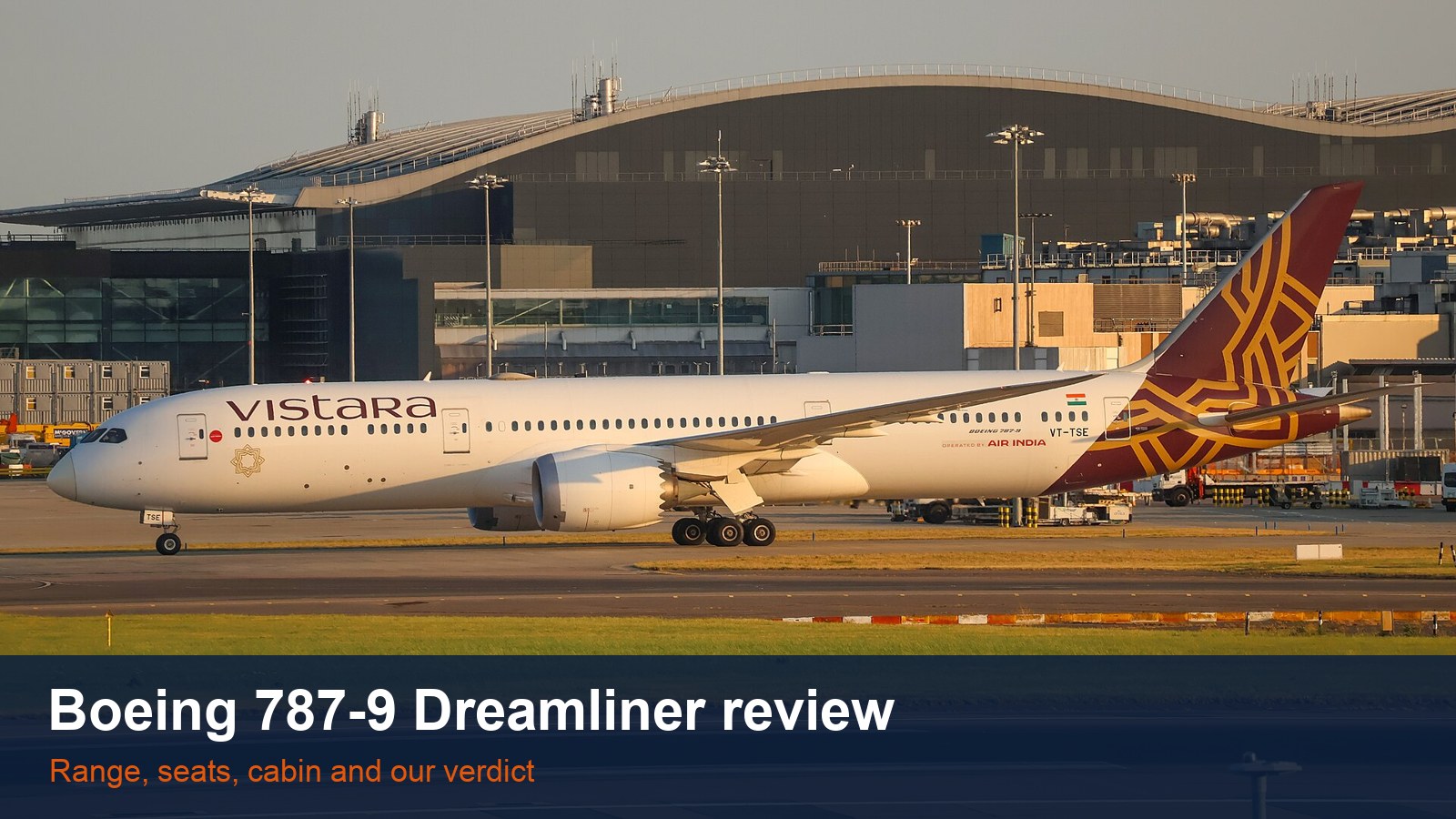
The Boeing 787-9 Dreamliner is the middle model of Boeing’s 787 family and the one with the longest range. It is the long-haul jet that made “point-to-point” flying normal: big enough to carry about 300 people, efficient enough to fly them nonstop between cities that could never fill a jumbo jet. In India it flies with Air India.
Our verdict in one line: the 787-9 is one of the best long-haul aircraft flying, with 250 to 325 seats in two classes, up to 8,300 nm of range, a choice of GE or Rolls-Royce engines and the most passenger-friendly cabin features of its generation: big dimmable windows, a lower cabin altitude and more humid air. Its weak points are a slightly narrower cabin than the A350 and a rough production and engine history.
In this review we explain the 787-9 step by step: what makes its body different, how to recognise it, what you get inside the cabin and cockpit, how its two engine options compare, how far it flies, its safety record, who flies it in India and how it stacks up against the Airbus A350-900 and its own 787 siblings.
Boeing 787-9 Quick Facts
| Item | Boeing 787-9 |
|---|---|
| Type | Twin-aisle (widebody) twin-engine airliner |
| Seats (two-class) | 250 to 325 |
| Maximum seats (exit limit) | 420 |
| Range | Up to 8,300 nm (15,370 km) |
| Length | 62.8 m (206 ft 1 in) |
| Wingspan | 60.1 m (197 ft 3 in) |
| Height | 17.0 m (55 ft 10 in) |
| Maximum take-off weight | 259,220 kg (571,500 lb) |
| Fuel capacity | 126,429 litres |
| Lower-deck cargo | 172.4 m3 (36 LD3 containers) |
| Cruise speed | Mach 0.85 |
| Engines | GE Aerospace GEnx-1B or Rolls-Royce Trent 1000 |
| Economy layout | Usually 9 per row (3-3-3); some airlines use 8 (2-4-2) |
| First flight | 17 September 2013 |
| Entered service | August 2014 (Air New Zealand was the launch customer) |
Sources: Boeing 787 technical specifications; Boeing 787 airport planning document; Wikipedia: Boeing 787 Dreamliner.
What Is the 787-9 Dreamliner?
Boeing announced the aircraft as the 7E7 on 29 January 2003, after dropping its faster “Sonic Cruiser” idea, and the focus switched to efficiency. The programme was launched on 26 April 2004 with an order for 50 aircraft from All Nippon Airways (ANA). After long delays the first 787-8 flew on 15 December 2009 and entered service with ANA in October 2011, according to the aircraft’s history.
The 787-9 is a stretched 787-8: 6.1 m longer, with more seats and more range. The prototype first flew on 17 September 2013. Launch customer Air New Zealand took its first 787-9 on 8 July 2014 and flew its first commercial 787-9 service, Auckland to Sydney, on 9 August 2014.
Boeing says the 787 has more than 2,450 orders from 90 customers, more than 1,300 delivered, has opened more than 550 new nonstop routes and serves about 500,000 passengers every day.
What Makes the 787 Different: The Carbon-Fibre Body
Most older airliners are built from aluminium sheets riveted together. The 787 was the first production airliner whose fuselage is made of one-piece carbon-fibre composite barrel sections instead of aluminium panels held by thousands of fasteners. Boeing says about 50% of the airframe by weight is composite.
Why does this matter? Composites are lighter, so there is less weight to lift and carry. They also resist corrosion and do not suffer from metal fatigue the way aluminium does, which means fewer inspections and less time in the hangar. Boeing says these choices, together with better aerodynamics and engines, give airlines a 25% reduction in fuel use compared with the aircraft the 787 typically replaces.
The 787 is also a “more electric” aircraft. Older jets take hot, compressed “bleed air” from the engines to pressurise and heat the cabin. The 787 is bleedless: it uses electric compressors for cabin air and electric pumps for four of its six hydraulic power sources. Less energy is taken from the engines, which saves fuel.
How to recognise a 787
- Cockpit windows: a distinctive four-window cockpit.
- Wings: long wings with a smooth, swept-back “raked” wingtip and no winglet.
- Engines: large engines with serrated chevrons on the back edge of the nacelle to reduce noise.
Inside the Cabin: Why Passengers Like the 787
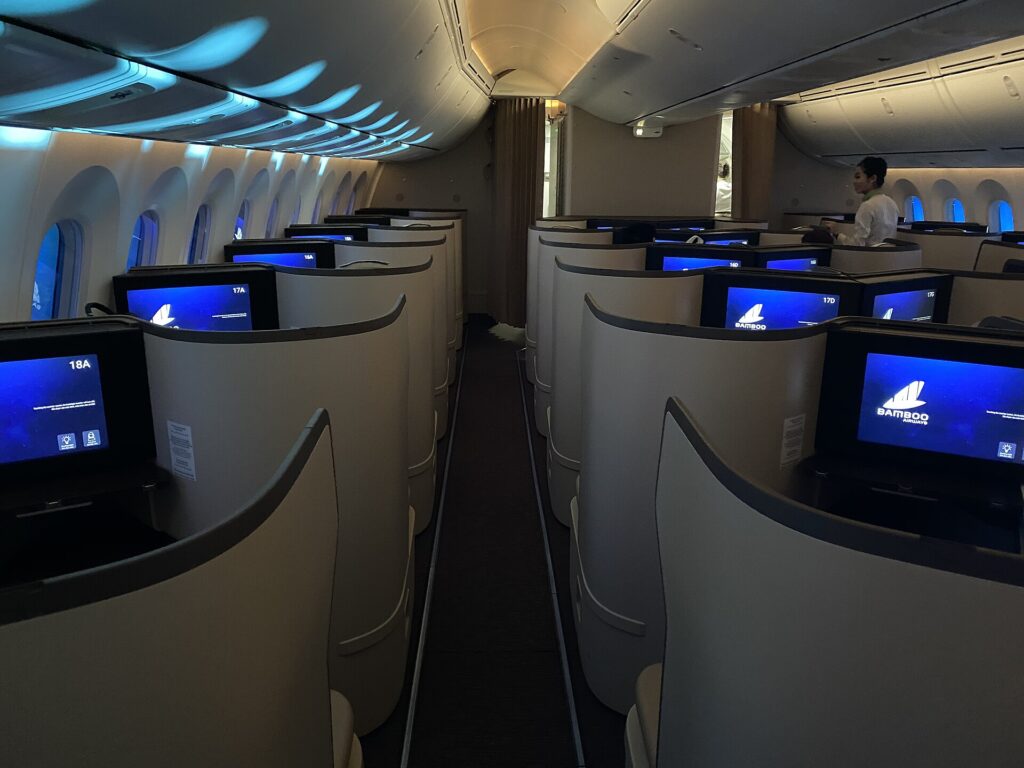
Boeing designed the 787 cabin around research on how the human body reacts to long flights. These are the features you will notice, according to Boeing:
1. A lower cabin altitude
Every airliner cabin is pressurised, but not to sea level. Older jets usually keep the cabin at the equivalent of about 8,000 ft. Because its composite body avoids the metal fatigue problems that come with higher cabin pressure, the 787 cabin can be kept at 6,000 ft, 2,000 ft lower. Boeing says this reduces common long-haul symptoms such as fatigue and jet lag. For why the aircraft itself cruises so high, see why planes fly at 35,000 feet.
2. More humid, cleaner air
Dry cabin air makes your eyes, throat and skin uncomfortable. The 787’s humidity can be set according to the number of passengers, allowing about 15% humidity compared with about 4% on earlier aircraft, according to the aircraft’s design history. Composites do not corrode, so more humidity is not a problem for the structure. Boeing also adds extra filtration to remove odours and contaminants.
3. The biggest windows, with no shades
Boeing says the 787 has the largest windows of any widebody airplane flying today. Instead of a plastic shade, each window is electronically dimmable: you press a button and the glass gradually darkens, while still letting you see outside. The crew can also dim all windows together.
4. A smoother, quieter ride
Boeing says the 787’s smoother ride technology automatically detects and counters turbulence to reduce the bumps passengers feel. The engine chevrons and other measures reduce noise inside and outside. For more on bumpy flights, read how dangerous turbulence really is.
5. LED lighting and large bins
A full-colour LED system lets airlines imitate sunrise and sunset, or set soft lighting at mealtimes. Large overhead bins and an open cabin design add to the feeling of space.

The one weakness: seat width
The 787 cabin is about 18 ft (5.5 m) wide at armrest level, 15 inches wider than the Airbus A330 but narrower than the A350; Airbus says its A350 cabin is 25 cm wider. Some airlines fit eight seats per row in economy (2-4-2), but most fit nine (3-3-3). At nine across, economy seats can be up to 17.5 inches wide; at eight across, up to 19 inches. If you can, check your airline’s seat map before booking.
Premium cabins vary even more. Business class layouts such as 1-2-1, where every seat has aisle access, are common, but the seat itself is chosen by the airline.
The Cockpit
The 787 has fly-by-wire flight controls, similar in design to the Boeing 777: the pilot’s inputs are sent electronically to computers that move the control surfaces. Pilots still use a control yoke, not a sidestick. Boeing says the flight deck has large LCD displays, dual head-up displays (flight data projected on glass in front of each pilot) and electronic flight bag capability.
Because the 787 and 777 cockpits have a common layout and similar handling, Boeing says pilots can move between the two types with minimal extra training. That helps airlines like Air India that fly both.
Engines: GEnx-1B or Trent 1000?
Unlike the 737 MAX or the A350, the 787 gives airlines a choice of two engines. Both are high-bypass turbofans: a giant fan pushes most of the air around the engine core, which makes them efficient and quiet.
| Engine detail | GE Aerospace GEnx-1B | Rolls-Royce Trent 1000 |
|---|---|---|
| Fan diameter | 111.1 in (282 cm) | 2.85 m |
| Bypass ratio | About 9:1 | Over 10:1 |
| Take-off thrust (787 versions) | 69,800 to 76,100 lbf | 62,264 to 81,028 lbf |
| Design | Derived from the GE90, with swept composite fan blades and a composite fan case | Three-spool Trent layout; newer Trent 1000 TEN version |
| Known issues | – | Turbine blade cracking found in 2016 grounded up to 44 aircraft |
Sources: Wikipedia: General Electric GEnx; Wikipedia: Rolls-Royce Trent 1000.
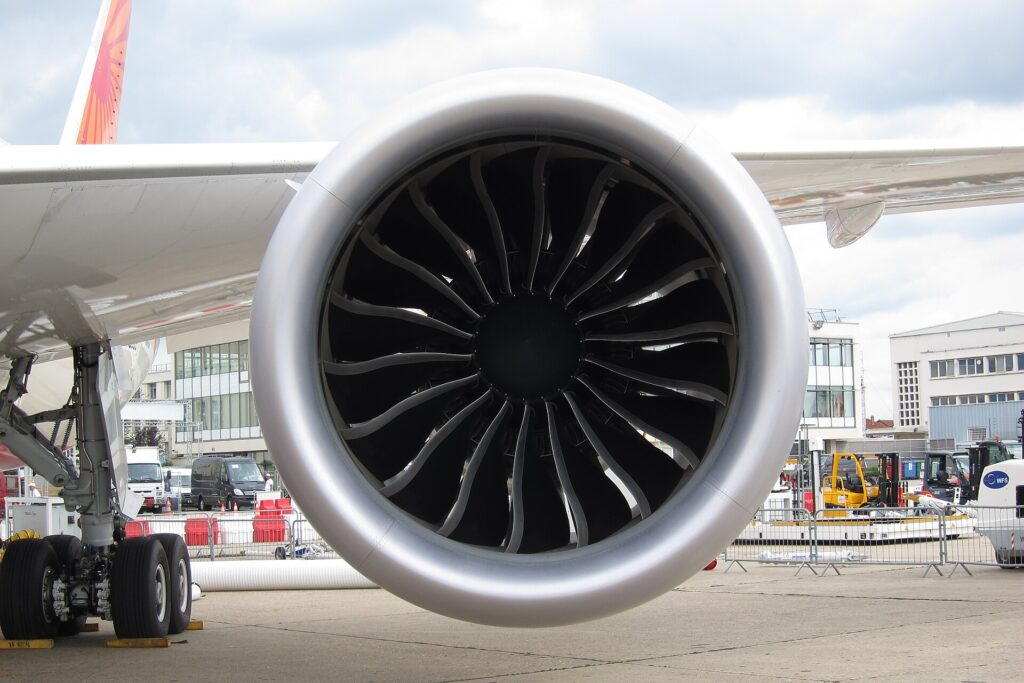
The Trent 1000 had a difficult period: corrosion-related fatigue cracking of intermediate-pressure turbine blades was discovered in early 2016, grounding as many as 44 aircraft and costing Rolls-Royce at least GBP 1.3 billion. Rolls-Royce later introduced the improved Trent 1000 TEN, which it says burns up to 3% less fuel. Having two suppliers lets airlines compare offers and is one reason the 787 sold so well. Twin-engine jets like this can fly far from diversion airports under ETOPS rules, part of the story of why twin-engine jets took over long-haul flying.
Range and Performance
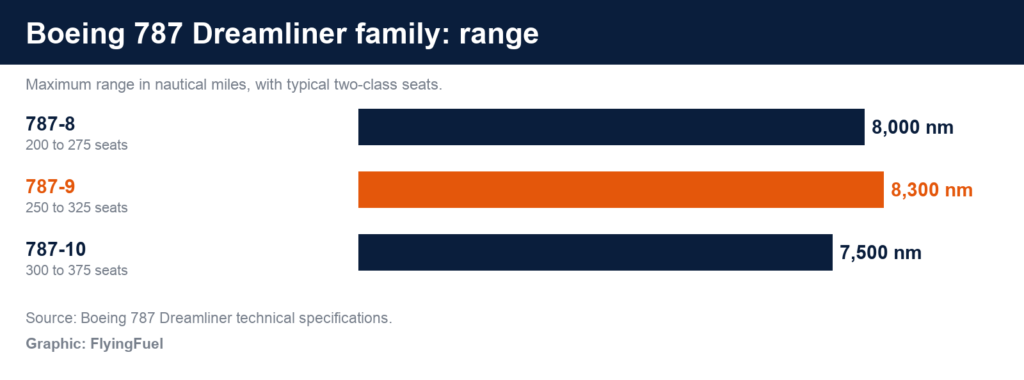
Boeing lists the 787-9 at up to 8,300 nautical miles (15,370 km). That includes a higher maximum take-off weight cleared by the FAA in March 2026, which Boeing says added more than 300 nm. That is enough to fly nonstop from Delhi or Mumbai to anywhere in Europe. For the very long routes that twin-engine jets now fly, see the longest flights in the world.
It cruises at Mach 0.85, has a maximum take-off weight of 259,220 kg and carries 126,429 litres of fuel. Below the passengers it holds 36 LD3 cargo containers (172.4 m3), useful extra income for airlines on long routes.
The 787 Family: 787-8, 787-9 and 787-10
| Model | Seats (two-class) | Range | Length | Max take-off weight |
|---|---|---|---|---|
| 787-8 | 200-275 | 8,000 nm | 56.7 m | 227,930 kg |
| 787-9 | 250-325 | 8,300 nm | 62.8 m | 259,220 kg |
| 787-10 | 300-375 | 7,500 nm | 68.3 m | 260,360 kg |
Source: Boeing 787 technical specifications. All three share a 60.1 m wingspan and the same two engine choices.
The 787-9 is the “sweet spot”: it carries about 50 more people than the 787-8 and flies further than both its siblings. The 787-10 carries the most passengers but gives up 800 nm of range. For the detailed comparison, see 787-9 vs 787-10.
Safety Record and Problems
The 787 has had three notable troubles, according to its operational history:
- Battery fires (2013): lithium-ion battery problems caused fires on some early aircraft. The FAA grounded all 787s in January 2013 until it approved a revised battery design in April 2013.
- Production quality (2019 to 2022): quality problems slowed production, and from January 2021 to August 2022 deliveries almost completely stopped while Boeing fixed them.
- Air India Flight 171 (2025): on 12 June 2025 an Air India 787-8, VT-ANB, crashed shortly after take-off from Ahmedabad on its way to London Gatwick. All but one of the 242 people on board died, along with 19 people on the ground. It was the first fatal crash and first hull loss of a 787. The preliminary report by India’s Aircraft Accident Investigation Bureau said both engines shut down after their fuel control switches moved from RUN to CUTOFF; the cause of that movement is still under investigation, and the report did not recommend any action for Boeing or 787 operators.
Before 2025 the 787 had flown for nearly 14 years without a fatal accident. The final AI171 report will be important reading, and we will update this review when it is published.
The 787-9 in India
Air India had 10 Boeing 787-9s in September 2026, alongside 26 787-8s, according to its fleet media kit. Most of its 787-9s came from Vistara, which merged into Air India, and some still wear Vistara colours, like the aircraft in our featured image. Air India received its first brand-new 787-9 built for the airline in January 2026 and put it on the Mumbai to Frankfurt route from 1 February 2026. See our Air India fleet guide for the full picture.
787-9 vs Its Rivals
787-9 vs Airbus A350-900
| Boeing 787-9 | Airbus A350-900 | Better | |
|---|---|---|---|
| Length | 62.8 m | 66.8 m | A350 (more space) |
| Wingspan | 60.1 m | 64.75 m | Both fit ICAO Code E gates |
| Maximum seats | 420 | 440 | A350 |
| Range | 8,300 nm | Up to 8,500 nm | A350 (slightly) |
| Maximum take-off weight | 259 t | Up to 283 t | 787 (lighter, less fuel per trip) |
| Cabin width | About 5.5 m | 5.7 m (25 cm wider, Airbus) | A350 |
| Windows | Largest, electronically dimmable | Conventional with shades | 787 |
| Cabin altitude | 6,000 ft | 6,000 ft | Tie |
| Engine choice | 2 (GEnx-1B or Trent 1000) | 1 (Trent XWB-84) | 787 |
Sources: Boeing and Airbus specifications, as compiled in our 787-9 vs A350-900 comparison.
What the 787-9 does better: lighter, so it usually burns less fuel per flight; two engine options; bigger dimmable windows. What the A350-900 does better: more seats, a wider cabin with wider economy seats, and a little more range on its heaviest version. Airlines often use the 787-9 on thinner routes and the A350-900 on busier ones.
787-9 vs the older jets it replaces
The 787 was designed to replace aircraft such as the Boeing 767 and Airbus A330 on long routes. Boeing targeted about 20% lower fuel burn than the 767 at launch, and today claims a 25% reduction versus the aircraft the 787 typically replaces. Passengers also get a cabin 15 inches wider than the A330’s, a lower cabin altitude and bigger windows.
Pros and Cons
Pros
- Longest range in the 787 family (8,300 nm)
- 25% less fuel than the jets it typically replaces (Boeing)
- Lower 6,000 ft cabin altitude and more humid air
- Largest windows of any widebody, with electronic dimming
- Smoother ride technology and quieter cabin
- Choice of GE or Rolls-Royce engines
- Composite body resists corrosion and fatigue, cutting maintenance
Cons
- Narrower cabin than the A350; 3-3-3 economy can feel tight
- Fewer seats than the A350-900 and 787-10
- Trent 1000 engine problems grounded aircraft from 2016
- Production quality problems halted deliveries in 2021-2022
- Economy comfort depends heavily on the airline’s seat choice
Our Verdict
The 787-9 is the sweet spot of the Dreamliner family and one of the defining long-haul jets of its era. For airlines it combines long range, low fuel burn and the flexibility to open routes a bigger jet could not fill. For passengers it offers the things you actually feel after 12 hours: a lower cabin altitude, more humid air, huge windows and a smoother ride.
It is not perfect. Nine-abreast economy is tighter than on an A350, and the programme has had battery, engine and production problems. But as a complete package, it is very hard to beat. If you are flying Air India to Europe, you have a good chance of experiencing one. Compare it with Boeing’s single-aisle workhorse in our Boeing 737 MAX 8 review.
Frequently Asked Questions
How many seats does a Boeing 787-9 have?
Boeing lists 250 to 325 seats in a typical two-class layout, with an exit limit of 420 passengers. Most airlines fit nine economy seats per row (3-3-3).
What is the range of the 787-9?
Up to 8,300 nautical miles (15,370 km), the longest of the three 787 models. That figure includes a higher maximum take-off weight cleared by the FAA in March 2026, which Boeing says added more than 300 nm.
Why is it called the Dreamliner?
Dreamliner is Boeing’s name for the 787 family. The aircraft was first announced as the 7E7 in January 2003 and launched in April 2004 with an order for 50 aircraft from All Nippon Airways.
Why do people feel less tired on a 787?
Its composite body lets the cabin be pressurised to an altitude of 6,000 ft instead of the 8,000 ft typical of older jets, and the air can be kept more humid. Boeing says this reduces symptoms such as fatigue on long flights.
What engines does the 787-9 use?
Airlines choose either the GE Aerospace GEnx-1B, with a 111.1-inch fan, or the Rolls-Royce Trent 1000, with a 2.85 m fan and a bypass ratio over 10:1.
Does the 787 have window shades?
No pull-down shades. The 787 has electronically dimmable windows: passengers press a button to darken or lighten the glass. Boeing says they are the largest windows of any widebody airliner flying today.
Is the 787-9 safe?
The 787 family has carried more than a billion passengers. Its only fatal accident is Air India Flight 171, a 787-8, on 12 June 2025. India’s Aircraft Accident Investigation Bureau’s preliminary report found the fuel control switches had moved to CUTOFF, said the cause of that was under investigation, and did not recommend any action for Boeing or 787 operators.
Does Air India fly the 787-9?
Yes. Air India had 10 Boeing 787-9s in September 2026, most of them from Vistara. It received its first new 787-9 built for Air India in January 2026 and put it on the Mumbai to Frankfurt route.
Is the 787-9 better than the A350-900?
They are close rivals. The A350-900 is bigger, carries more passengers and has a slightly wider cabin. The 787-9 is lighter, usually burns less fuel per flight and offers a choice of two engines. Which is better depends on the airline’s routes.
Featured image: FlyingFuel graphic using a photo of Boeing 787-9 VT-TSE in Vistara livery by S5A-0043, CC BY 4.0, via Wikimedia Commons.
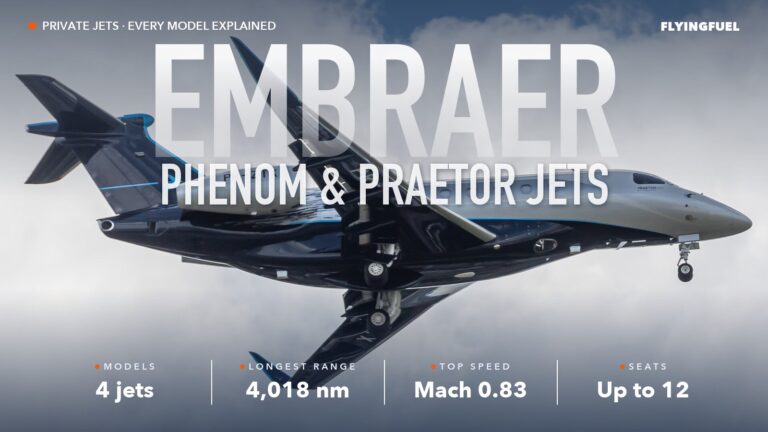 Embraer Executive JetsEmbraer Business Jets: Phenom 100EX, Phenom 300EV, Praetor 500E and 600E Explained (2026)
 NewseasyJet to Fit Starlink Wi-Fi Across Its Airbus Fleet From 2027
 NewsFAA Proposes Fan Blade Checks on Every CFM56-7B Engine After 737 Blade Failure
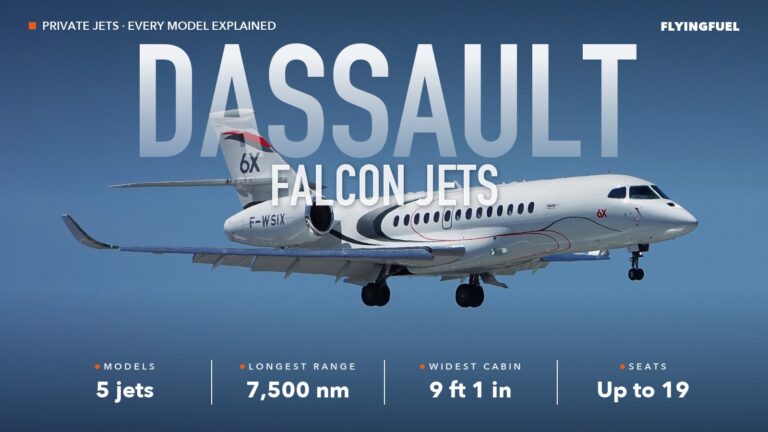 Dassault FalconDassault Falcon Jets: Every Model From the 2000LXS to the 10X Explained (2026)
 GulfstreamGulfstream Business Jets: Every Model From the G300 to the G800 Explained (2026)
 NewsBombardier to Hire 800 in the US and Spend $270 Million on First Phase of Expansion